



Colombo, Sri lanka, 11-13 March 2026 — A representative of the Scientific-Information Centre of the Interstate Commission on Sustainable Development (SIC ICSD) actively participated in the “Asia-Pacific and Central Asia Regional Workshop on Enhanced Transparency and Regional Cooperation for Climate Actions,” aimed at strengthening the capacity of countries across Asia and Central Asia to enhance climate transparency and foster regional cooperation.
The workshop was organized by the Food and Agriculture Organization of the United Nations Regional Office for Asia and the Pacific (RAP) and the Regional Office for Europe and Central Asia (REU/SEC), in cooperation with the Government of Sri Lanka, with support from the GEF Global CBIT_AFOLU+ project and the Federal Ministry for Economic Cooperation and Development of Germany. The event served as an important platform for exchanging experiences, aligning approaches, and preparing countries in the region for further engagement in international climate processes, including the upcoming COP31.
Government officials, national climate focal points, farmer organizations, development partners and research institutions came together to exchange knowledge and strengthen collaboration on climate transparency and reporting within agrifood systems.
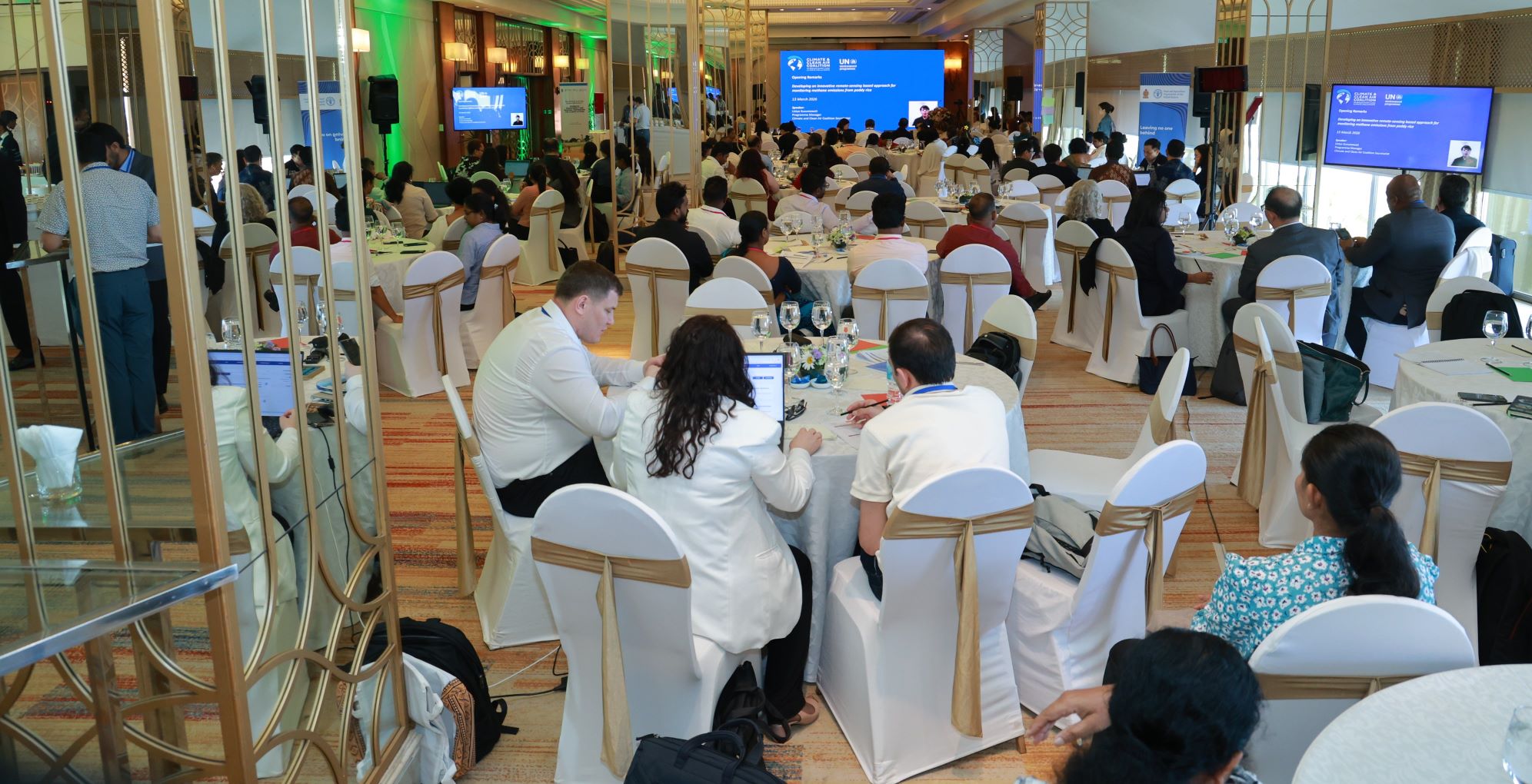 Participants of the event. Photocredit to event organizers.
The primary objective of the workshop was to support countries in enhancing their readiness to implement the Enhanced Transparency Framework (ETF), particularly in relation to the preparation of Biennial Transparency Reports (BTRs), as well as to strengthen capacities for monitoring and implementing climate actions in agrifood systems within the framework of updated Nationally Determined Contributions (NDC 3.0).
During thematic sessions, participants discussed key outcomes of COP30 and their implications for agrifood systems, as well as the increasing requirements for transparency in climate reporting. Particular attention was given to integrating mitigation and adaptation measures into NDC 3.0 implementation processes and ensuring coherence between climate policies and financing mechanisms.
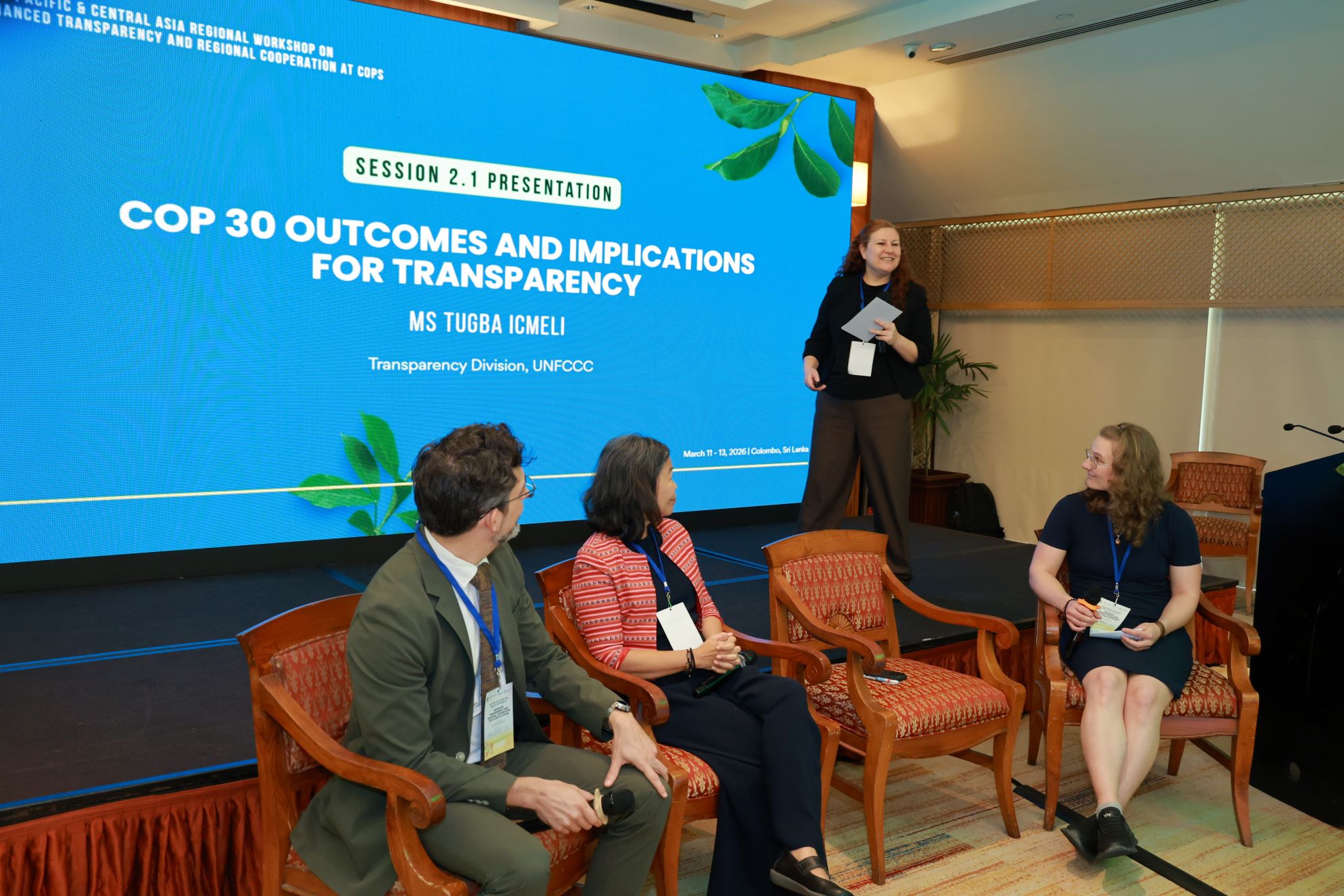 Presentations from the event. Photocredit to event organizers.
Discussions on practical country experiences in preparing initial BTRs generated significant interest. Representatives shared lessons learned on institutional coordination, data collection and verification, development of technical expertise, and the preparation of improvement plans. Participation of the SIC ICSD representative in these discussions facilitated knowledge exchange between Central Asia and other regions and contributed to strengthening professional networks.
Through group work, participants developed preliminary BTR roadmaps and identified key national capacity-building needs. Special focus was placed on strengthening greenhouse gas inventory systems, tracking progress on NDC implementation, and improving adaptation reporting.
Dedicated sessions also addressed opportunities for enhanced interregional collaboration and coordination of country positions within climate negotiations, as well as the identification of regional priorities and key messages in preparation for COP31. Participants emphasized the importance of coordinated action and knowledge exchange to enhance the effectiveness of engagement in global climate processes.
The participation of SIC ICSD in the workshop reflects the Centre’s commitment to strengthening regional cooperation, advancing scientific and methodological approaches, and supporting national efforts in climate transparency and sustainable development. The knowledge and practical tools acquired during the workshop will contribute to further improving climate reporting practices and fulfilling international commitments of Central Asian countries.
The event supports the achievement of:
| Priority Area of REP4SD No 4 dedicated to SDG 13: “Take urgent action to combat climate change and its impacts” |
| 4.3 Assessment of climate risks and vulnerabilites through the application of corresponding models of a climate change impact on water resources, terrestrial ecosystems and natural disasters, tackling the development of state policies and strategies in this area. |