



Ashgabat, Turkmenistan, 8-9 April 2024 — A two-day seminar on “Climate Change Adaptation Tools in Water and Agriculture” was held within the framework of the project “Advancing the National Adaptation Planning Process in Turkmenistan,” implemented by the United Nations Development Programme (UNDP) with financial support from the Green Climate Fund (GCF), in cooperation with the Ministry of Environmental Protection of Turkmenistan. The event was organized in partnership with the Scientific Information Center of the Interstate Coordination Water Commission (SIC ICWC) and the Scientific Information Center of the Interstate Commission on Sustainable Development (SIC ICSD).
The seminar marked the final stage of a series of capacity-building events aimed at integrating climate change adaptation measures into water resources planning processes. Launched in June 2023, the series targeted members of coordination mechanisms and decision-makers, contributing to strengthening their capacity for sustainable water resources management under changing climatic conditions.
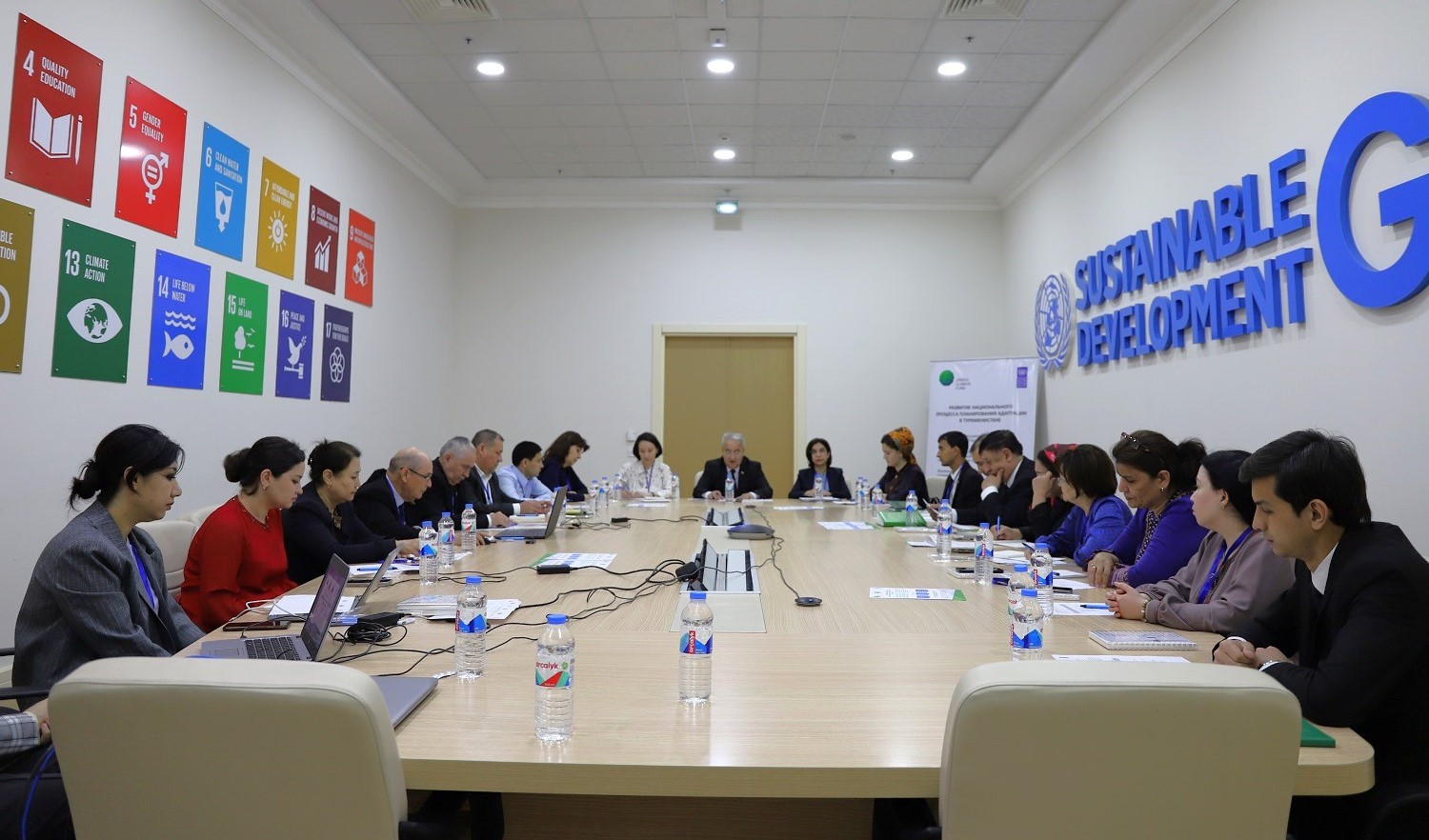 Seminar participants. Photocredit to UNDP Project.
During the seminar, participants examined key aspects of the formation, allocation, and protection of water resources at global, regional, and national levels. Particular attention was given to practical adaptation tools applied in the water and agricultural sectors, as well as to enhancing the resilience of these sectors to the impacts of climate change.
The event brought together representatives from a wide range of government bodies and institutions of Turkmenistan, including legislative and executive authorities, профильные ministries and agencies, research institutions, and specialized services. This cross-sectoral participation enabled a comprehensive consideration of adaptation challenges and fostered strengthened inter-agency cooperation.
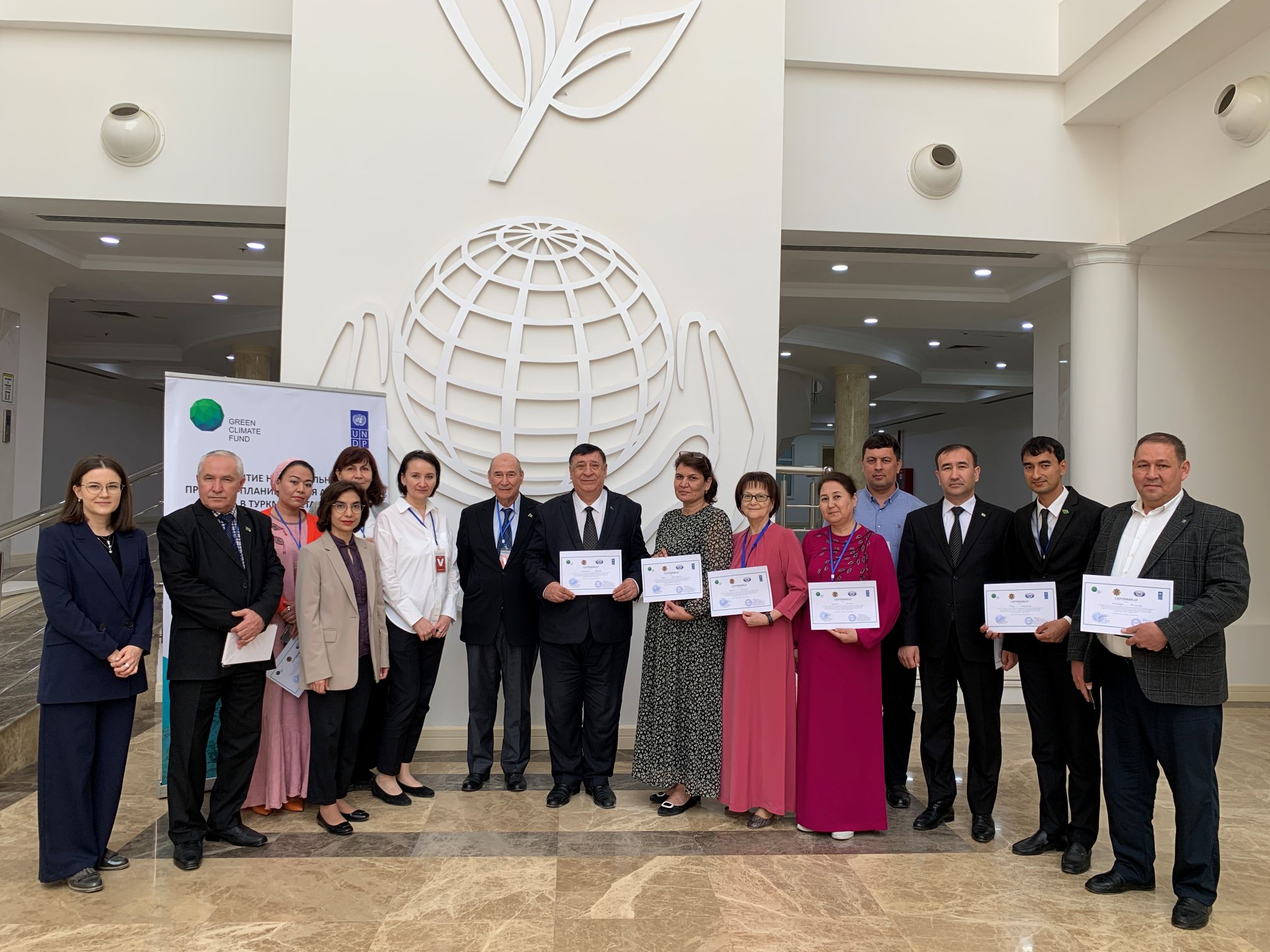 Seminar participants. Photocredit to UNDP Project.
Within the thematic sessions, leading experts presented modern approaches to drought mitigation, improving the efficiency of irrigated agriculture, and ensuring rational water use. Special emphasis was placed on the potential of renewable energy sources to enhance water availability, as well as on the application of geoinformation systems in water and land resource management. Discussions also addressed operational and institutional aspects of irrigation infrastructure.
The practical component of the seminar included interactive exercises designed to consolidate knowledge and assess participants’ understanding of key approaches to integrating adaptation measures into water resources planning. This facilitated the synthesis of results from the entire series of events and helped identify further steps to strengthen national capacity.
The seminar represented an important contribution to advancing a systemic approach to climate change adaptation in Turkmenistan. Participants emphasized the importance of continued collaboration in implementing modern water and agricultural management tools aimed at enhancing the resilience of the country’s economy and ecosystems to climate-related risks.
The event supports the achievement of:
| Priority area of REP4SD No 1 dedicated to SDG 4 on “Ensuring inclusive and equitable quality education and promoting lifelong learning op-opportunities for all” |
| 1.1 Capacity building of existing institutions including training, retraining and professional development of personnel in the field of climate change adaptation for interested government agencies, academic and private sectors, NGOs, etc., considering international experience. |
| Priority Area of REP4SD No 2 dedicated to SDG 6 on "Ensure Availability and Sustainable Management of Water and Sanitation for All" |
| 4.3 Assessment of climate risks and vulnerabilites through the application of corresponding models of a climate change impact on water resources, terrestrial ecosystems and natural disasters, tackling the development of state policies and strategies in this area. |