



Chisinau, Republic of Moldova, 22-24 April 2024 – A representative of the Secretariat of the Interstate Commission on Sustainable Development (ICSD Secretariat) participated in the Interregional Meeting on Drought and Land Degradation Neutrality (LDN), organized by the Secretariat of the United Nations Convention to Combat Desertification (UNCCD) with the support of the Global Water Partnership (GWP). The meeting brought together representatives from 15 countries of Central and Eastern Europe, the Northern Mediterranean and Central Asia, as well as representatives of international organizations, scientific institutions and relevant government authorities.
A key milestone of the meeting was the official launch of the Community of Learning and Practice on Drought Management for Central and Eastern Europe and the Northern Mediterranean (CLP CEE & NM). The new regional platform has been established under the global UNCCD initiative to promote knowledge exchange, capacity development and enhanced cooperation among countries on drought risk management and strengthening resilience to land degradation.
The initiative is being implemented pursuant to a decision of the fifteenth session of the Conference of the Parties to the UNCCD (COP15), which mandated the UNCCD Secretariat to facilitate the establishment of regional Communities of Learning and Practice as mechanisms for peer learning, experience sharing and capacity-building on drought risk reduction and resilience. The outcomes of these regional platforms will be presented at the sixteenth session of the Conference of the Parties to the UNCCD (COP16).
During the three-day meeting, participants discussed contemporary approaches to drought management, the achievement of Land Degradation Neutrality (LDN) and the promotion of sustainable land management practices. Particular attention was given to the development of national drought management plans, strengthening drought monitoring and early warning systems, expanding the use of geographic information systems (GIS) and digital land mapping, and integrating land degradation and climate resilience considerations into national planning processes.
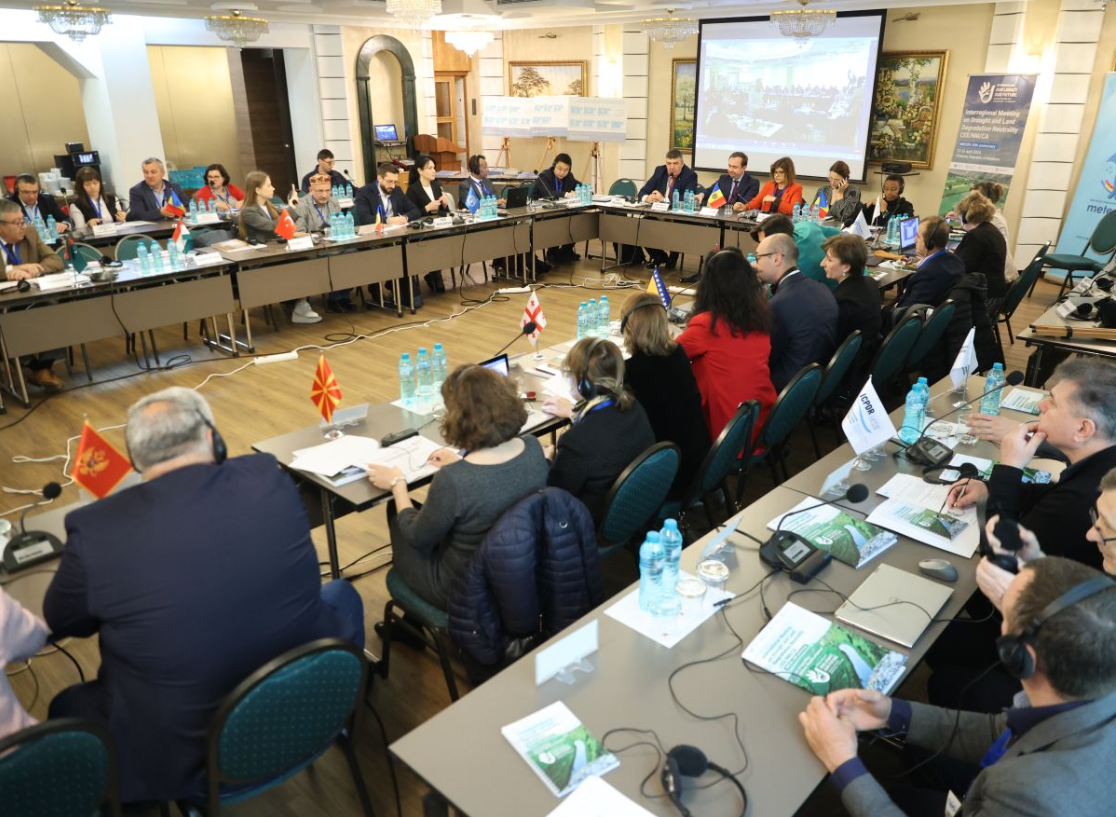 Participants of the Interregional Meeting on Drought and Land Degradation Neutrality. Photocredit to organizers of the event.
During the thematic working sessions, participating countries exchanged national experiences in combating land degradation, implementing climate change adaptation measures and enhancing the resilience of natural ecosystems. Participants emphasized the importance of strengthening both horizontal and vertical coordination among government institutions, scientific organizations, international partners and local communities, while further promoting regional knowledge-sharing and the exchange of good practices.
The representative of the ICSD Secretariat actively contributed to the expert discussions by presenting the experience of regional cooperation among the Central Asian countries in the fields of sustainable natural resource management, environmental monitoring and the implementation of joint climate change adaptation initiatives. During the discussions, participants highlighted the importance of building upon existing regional cooperation mechanisms to promote coordinated approaches to drought risk reduction, improve sustainable land management and strengthen ecosystem resilience across the region.
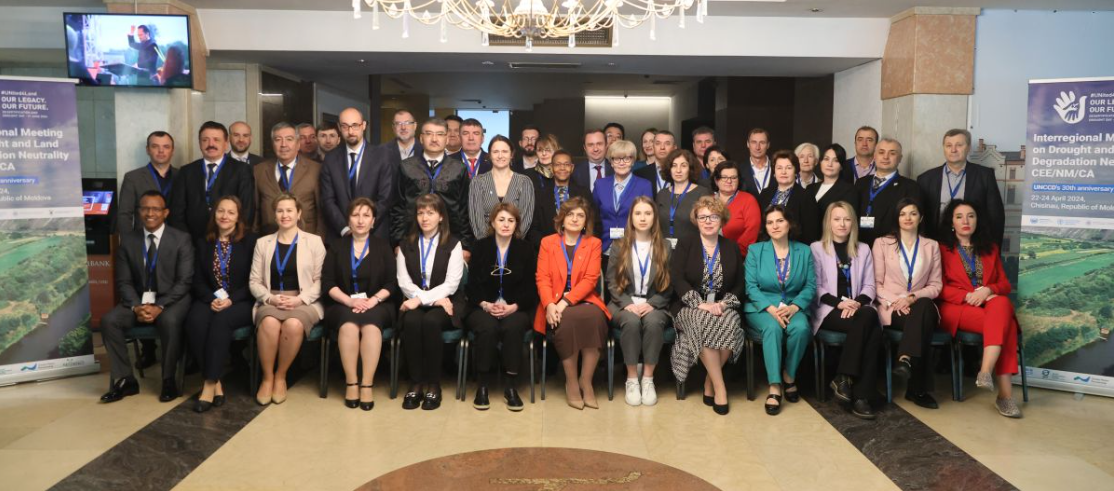 Participants of the Interregional Meeting on Drought and Land Degradation Neutrality. Photocredit to organizers of the event.
At the conclusion of the meeting, participants reaffirmed the importance of the newly established UNCCD Community of Learning and Practice as an effective platform for strengthening regional cooperation, facilitating knowledge exchange and jointly developing practical solutions to address land degradation and drought risk management. Participants also expressed their commitment to further expanding professional cooperation, strengthening regional expert networks and advancing joint initiatives aimed at enhancing the resilience of countries in the region to the impacts of climate change.
At the close of the Interregional Meeting, participants adopted the Chisinau Declaration, reaffirming their shared commitment to strengthening international cooperation under the United Nations Convention to Combat Desertification (UNCCD) and implementing integrated measures to achieve Land Degradation Neutrality (LDN). The Declaration places particular emphasis on enhancing cooperation in drought risk management, developing national and regional action plans, strengthening awareness and capacities of relevant stakeholders, and mobilizing international technical and financial support. Participants welcomed the establishment of the Community of Learning and Practice on Drought Management for Central and Eastern Europe and the Northern Mediterranean (CLP CEE & NM) as a new regional platform for knowledge exchange and collaborative solutions, while calling for continued international dialogue on land degradation, sustainable land management and strengthening ecosystem resilience to climate change.
The participation of the representative of the ICSD Secretariat in the Interregional Meeting and the adoption of the Chisinau Declaration directly contribute to the implementation of the priorities of the Regional Environmental Programme for Sustainable Development of Central Asia (REP4SD-CA) 2020-2030, particularly those related to promoting innovative approaches to preventing land degradation, advancing sustainable land management, strengthening regional cooperation and knowledge exchange, and enhancing the capacities of the Central Asian countries to implement their commitments under the three Rio Conventions—the United Nations Convention to Combat Desertification (UNCCD), the United Nations Framework Convention on Climate Change (UNFCCC), and the Convention on Biological Diversity (CBD).
The event supports the achievement of:
| Priority Area No 5 of REP4SD dedicated to SDG 15: “Protect, restore and promote sustainable use of terrestrial ecosystems” |
| 5.1.7 use of modern monitoring methods to account for flora and fauna species, ecosystem conditions, land resources. |
| Priority area No 6 of REP4SD dedicated to SDG 17: “Strengthen the means of implementation and revitalize the Global Partnership for Sustainable Development” |
| 6.1 Involvement of the region into implementation of global environmental conventions, programmes and initiatives. |