



Ashgabat, Turkmenistan, 23 June 2026 — Representatives of the Secretariat of the Interstate Commission on Sustainable Development of Central Asia (ICSD) participated in the National Water Policy Dialogue in Turkmenistan, dedicated to advancing the implementation of Integrated Water Resources Management (IWRM) and strengthening intersectoral cooperation within the country's water sector. Held at the Archabil Hotel in Ashgabat, the event brought together approximately 25 representatives of relevant government institutions, research organizations, international partners and civil society organizations.
The National Dialogue was convened to promote a coordinated inter-agency vision for the further development of water resources management in Turkmenistan. Discussions focused on national priorities for the development of the water sector, strengthening the legislative and institutional framework, enhancing resilience to the impacts of climate change, and promoting the application of Integrated Water Resources Management principles through the adaptation of international good practices.
Particular attention was devoted to strengthening regional cooperation within initiatives supporting the low-carbon and climate-resilient transformation of the water-energy-land nexus in Central Asia. Representatives of relevant ministries and agencies of Turkmenistan, together with international organizations, including the United Nations Economic Commission for Europe (UNECE), the Organisation for Economic Co-operation and Development (OECD), the German Agency for International Cooperation (GIZ), the Food and Agriculture Organization of the United Nations (FAO), UNESCO, and regional scientific institutions, exchanged experience on improving water resources management, promoting water-saving technologies, adapting to climate change, and strengthening institutional capacities.
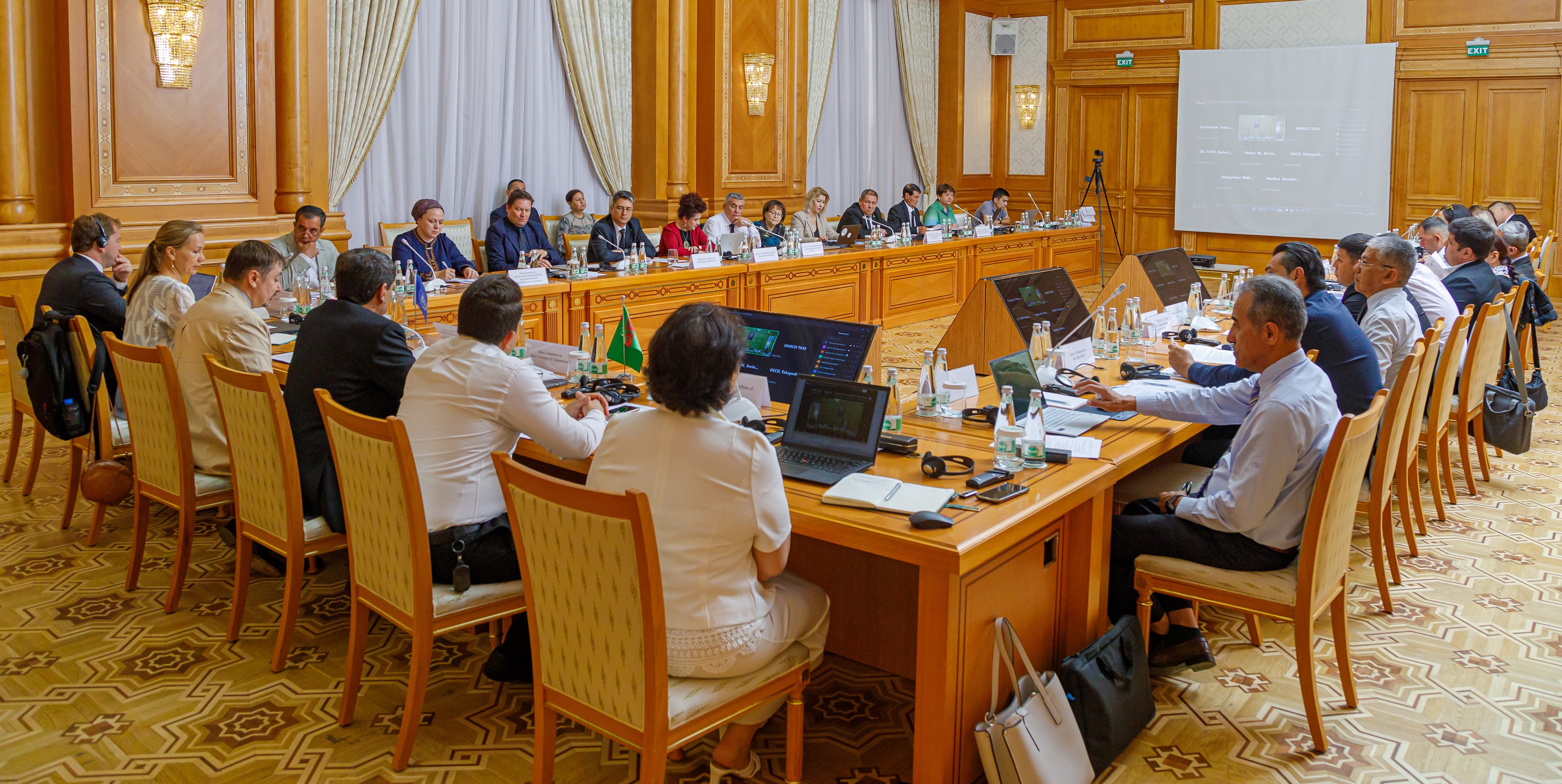 National Water Policy Dialogue in Turkmenistan. Photocredit to ogranizers of the event.
A dedicated thematic session showcased international and regional good practices in managing the water-energy-land nexus, digitalizing the water sector, improving governance systems, and introducing innovative decision-support tools. Participants also emphasized the importance of strengthening intersectoral cooperation as a key prerequisite for ensuring water security and the sustainable management of natural resources.
An important contribution to the event was made by the SIC ICSD through a presentation delivered by a representative of the ICSD Secretariat, who provided an overview of the implementation of the Regional Programme for Environmental Protection for Sustainable Development in Central Asia (REP4SD) and presented the results of the ongoing regional environmental assessment. The presentation highlighted the Programme's priority areas, regional cooperation mechanisms, and the role of environmental monitoring in supporting science-based decision-making at the regional level.
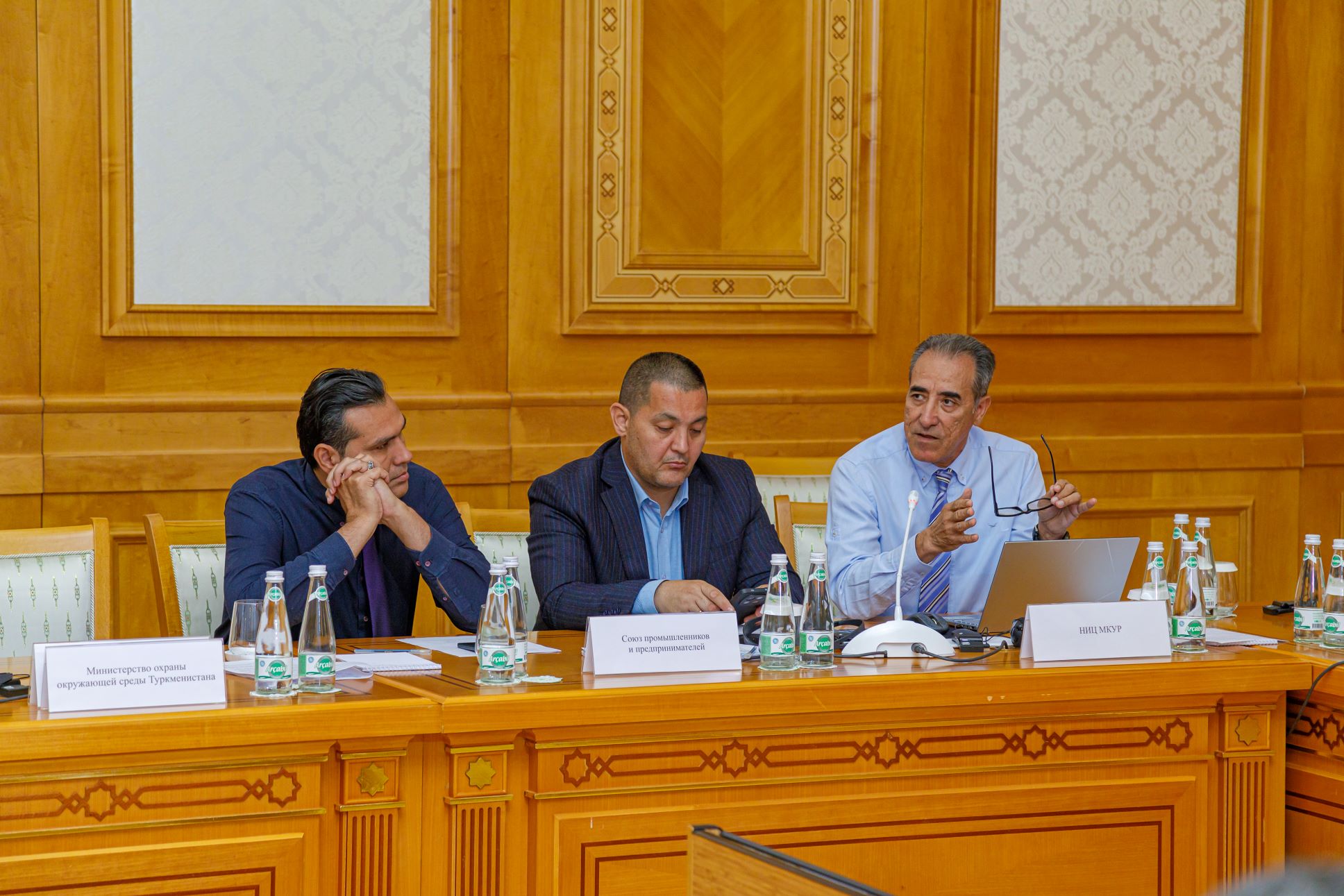 Presentation by the ICSD Secretariat. Photocredit to ogranizers of the event.
At the conclusion of the National Dialogue, participants reaffirmed the importance of further strengthening national water policy, enhancing inter-agency coordination, and expanding cooperation with regional and international organizations in support of sustainable development and greater climate resilience within the water sector.
Water resources management remains an important component of SIC ICSD's work under the implementation of the Regional Environmental Programme for Sustainable Development of Central Asia (REP4SD CA) for 2020-2030. In particular, Priority Area No. 2, dedicated to achieving Sustainable Development Goal 6 — "Ensure availability and sustainable management of water and sanitation for all", includes Activity 2.2, which focuses on improving the effectiveness of water quality monitoring in the Aral Sea Basin. Strengthening cooperation on transboundary water resources therefore remains one of the key pillars for enhancing regional cooperation, improving environmental security, and promoting sustainable development across Central Asia.
The event supports the achievement of:
| Priority Area No 2 dedicated to SDG 6 on "Ensure Availability and Sustainable Management of Water and Sanitation for All" |
| 2.2 Ensuring efficiency of water quality monitoring in the Aral Sea Basin. |
| Priority area No 6 of REP4SD dedicated to SDG 17: “Strengthen the means of implementation and revitalize the Global Partnership for Sustainable Development” |
| 6.1 Involvement of the region into implementation of global environmental conventions, programmes and initiatives. |
| 6.2 Strengthening of cooperation among international organizations and regional and national institutions for better access to new technologies, preparation of legal and regulatory frameworks, development and implementation of national and regional strategies and plans and development of sustainable financing opportunities. |