




Online, 17 March 2026 — Representatives of the Scientific-Information Centre of the Interstate Commission on Sustainable Development (SIC ICSD) participated in a webinar held within the “LDN – Virtual Capacity Development” series, focusing on the practical application of the updated guidance for monitoring land degradation and reporting on SDG Indicator 15.3.1 in the context of achieving Land Degradation Neutrality (LDN).
The webinar was organized by the Secretariat of the United Nations Convention to Combat Desertification (UNCCD), in collaboration with the Centre for Development and Environment (CDE) and the World Overview of Conservation Approaches and Technologies (WOCAT), following the release of the Good Practice Guidance Addendum for SDG Indicator 15.3.1 (SDG 15.3.1 GPG Addendum). During the session, co-authors of the document presented its key provisions and highlighted its practical relevance in supporting national monitoring, analysis and reporting processes.
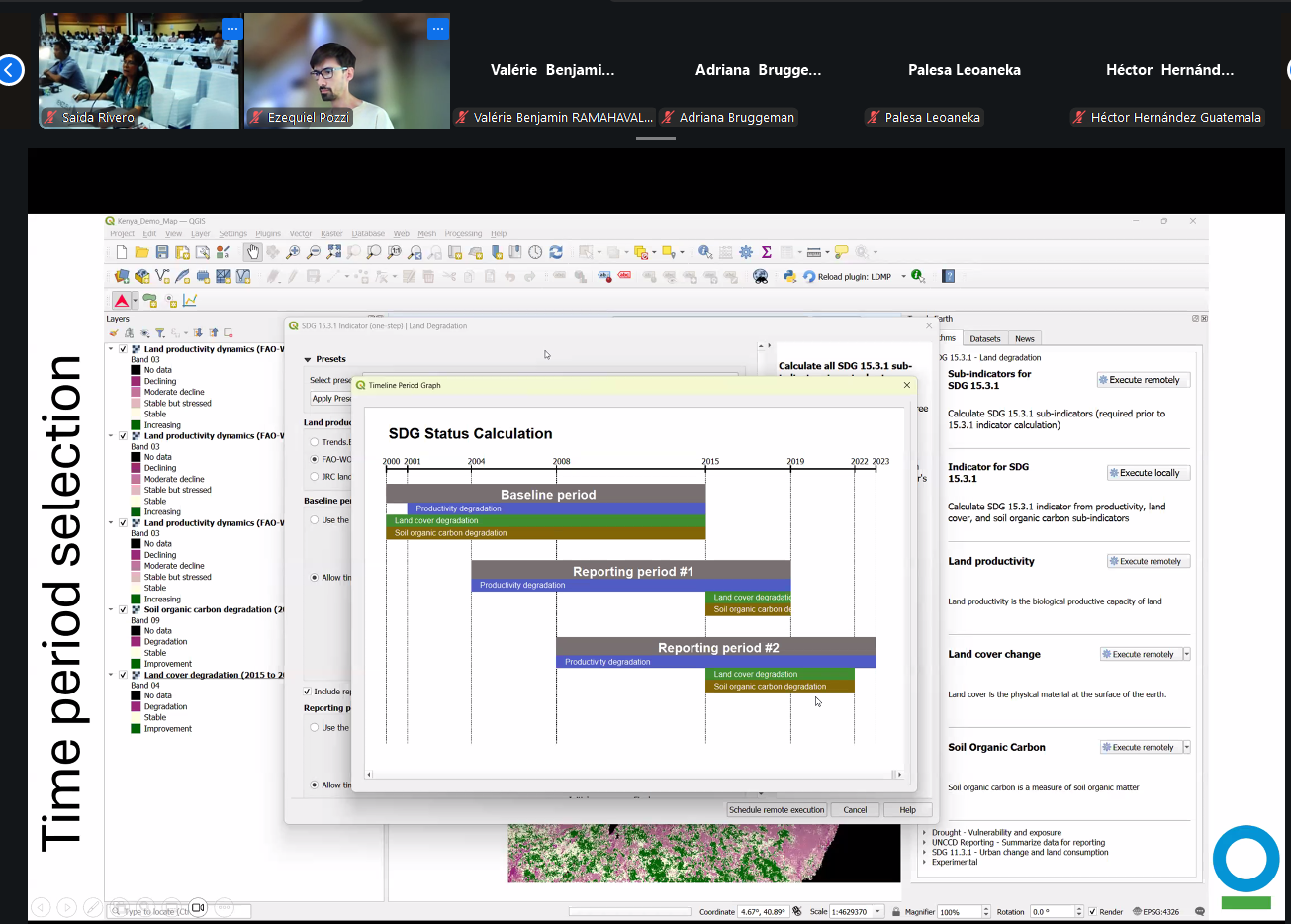 Selection of temporal framework of datasets. Photocredit to SIC ICSD.
Particular attention was given to refining the temporal framework of datasets used for land condition assessment, integrating current assessments with baseline data, and improving approaches to interpreting and visualizing changes over time. Participants were introduced to recommendations on incorporating the land improvement component and the neutrality mechanism into target setting, LDN intervention planning and investment prioritization.
Discussions also addressed the integration of new datasets, including land cover, land productivity and soil organic carbon indicators, as well as approaches for selecting and comparing datasets in accordance with national contexts. In this regard, the importance of enhancing temporal consistency and strengthening analytical approaches to assessing land condition dynamics was emphasized.
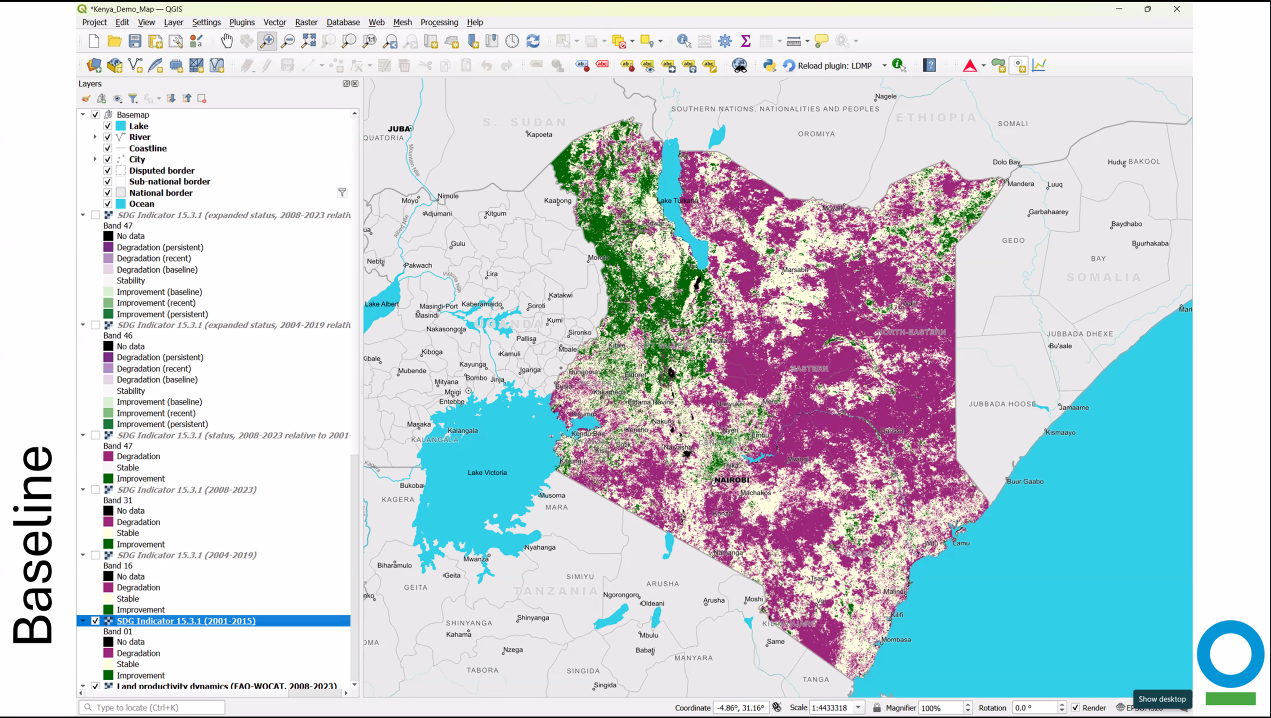 Application of LDN methodology. Photocredit to SIC ICSD.
The webinar further presented improved methodological approaches aimed at deepening the understanding of land degradation and restoration processes. In particular, an expanded status matrix was introduced to distinguish between recent and baseline changes, alongside detailed guidance on the application of the counterbalancing mechanism, ensuring no net loss of natural capital through balancing degradation and restoration within the same land type.
The importance of promoting country-driven approaches was underscored, including the use of nationally validated datasets and local expertise, thereby strengthening national ownership of monitoring and reporting processes. It was also noted that the methodologies are being integrated into open-access tools such as Trends.Earth, ensuring their practical applicability and accessibility. In addition, a publication showcasing country experiences in applying land condition assessment approaches, “The Land Story: Country Experiences with Reporting on Land Degradation and Drought” (2024), was presented.
Participation of SIC ICSD representatives in the webinar contributed to enhancing understanding of current international approaches to land degradation monitoring and the application of SDG Indicator 15.3.1. The event reaffirmed the importance of continued coordinated efforts at national and international levels to effectively implement Land Degradation Neutrality principles, including within the PRAIS 4 reporting framework, and to strengthen the scientific and methodological basis for informed decision-making in sustainable land management.
The event supports the achievement of:
| Priority Area No 5 of REP4SD dedicated to SDG 15: “Protect, restore and promote sustainable use of terrestrial ecosystems” |
| 5.1.7 use of modern monitoring methods to account for flora and fauna species, ecosystem conditions, land resources. |
| Priority area No 6 of REP4SD dedicated to SDG 17: “Strengthen the means of implementation and revitalize the Global Partnership for Sustainable Development” |
| 6.1 Involvement of the region into implementation of global environmental conventions, programmes and initiatives. |