



Dushanbe, Tajikistan, 29 May 2026 — Representatives of the Scientific-Information Center of the Interstate Commission on Sustainable Development of Central Asia (SIC ICSD) participated in the Regional Drought Dialogue, “Translating Drought Risk and Resilience Assessment Results into Regional Priorities and an Action Plan,” organized by the World Bank under the Central Asia Water and Energy Program (CAWEP) in cooperation with the International Water Management Institute (IWMI) and regional partners.
The event was held in a hybrid format in Dushanbe immediately following the International High-Level Conference on Glacier Preservation and brought together representatives of regional organizations in Central Asia, interstate and river basin institutions, research and analytical organizations, international development projects and programmes, as well as development partners working in the fields of climate change, water resources, agriculture, and risk management.
The Regional Dialogue marked the culmination of a series of national drought consultations conducted across Central Asian countries in spring 2026 under the Drought Risk and Resilience Assessment (DRRA) project. In Turkmenistan, the national dialogue was held on 2 March 2026 with the participation of relevant government agencies, scientific institutions, and international organizations, contributing to the identification of national priorities and the development of a coordinated regional vision for drought risk management.
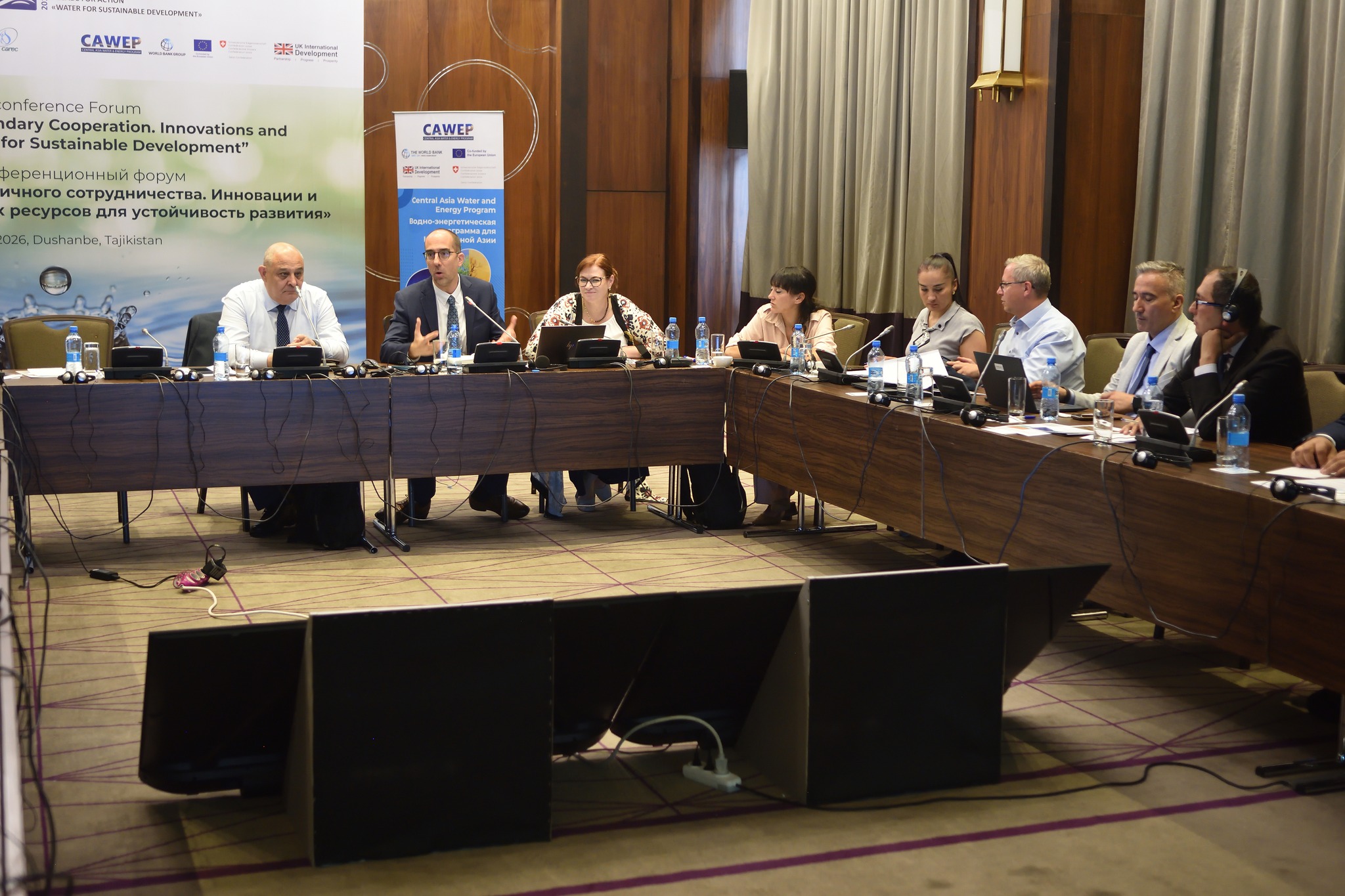 Presentations during the Regional Dialogue. Photocrdit to the website of the World Bank.
The primary objective of the meeting was to discuss the results of the regional drought risk and resilience assessment and to identify priority areas for cooperation among the countries of Central Asia. During the event, participants were presented with the regional drought profile, an analysis of key risk factors, the findings of a long-term assessment of the environmental impacts of drought, and proposals for strengthening mechanisms for regional cooperation.
Particular attention was devoted to issues related to data and knowledge sharing, the enhancement of early warning systems, improving the comparability of risk assessment approaches, and strengthening institutional cooperation among regional organizations and international initiatives. The practical component of the Dialogue was organized through thematic group discussions, during which representatives of regional institutions and international projects examined existing gaps in coordination, financing, information exchange, and the development of joint drought resilience measures.
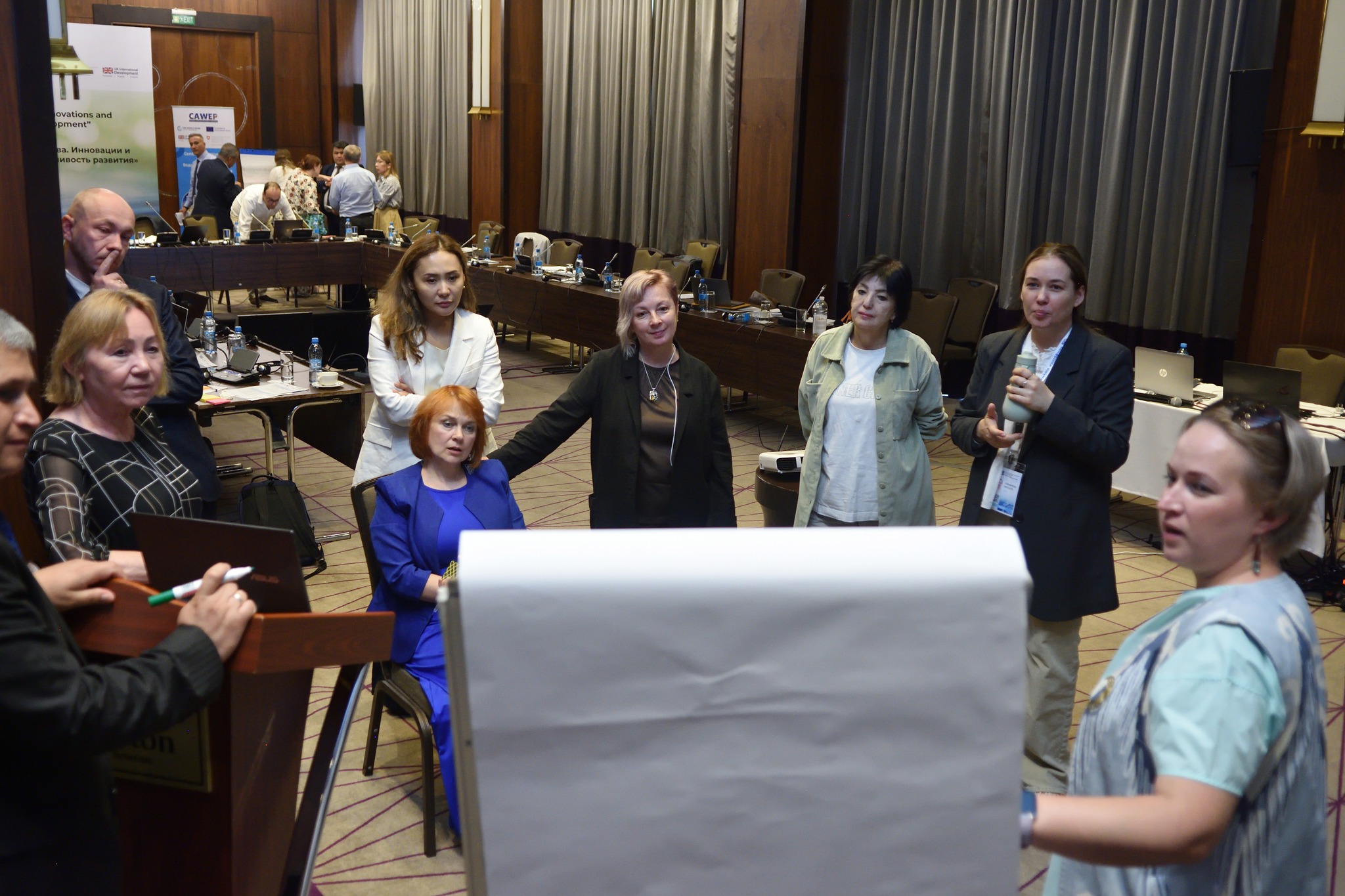 Group work during the Regional Dialogue. Photocrdit to the website of the World Bank.
Representatives of SIC ICSD actively contributed to expert discussions on regional cooperation, natural resource monitoring, and strengthening ecosystem resilience to climate-related impacts. Within the framework of the thematic working groups, participants explored opportunities for further development of transboundary data exchange mechanisms, improvement of land degradation risk assessment methodologies, and enhanced cooperation between national and regional institutions.
At the conclusion of the Dialogue, participants reaffirmed the importance of developing coordinated regional approaches to drought monitoring, strengthening early warning systems, and implementing joint measures aimed at increasing the resilience of the most vulnerable areas of Central Asia. The agreed recommendations are expected to support the further integration of regional drought assessment results into national and regional planning processes, while also enhancing coordination among stakeholders.
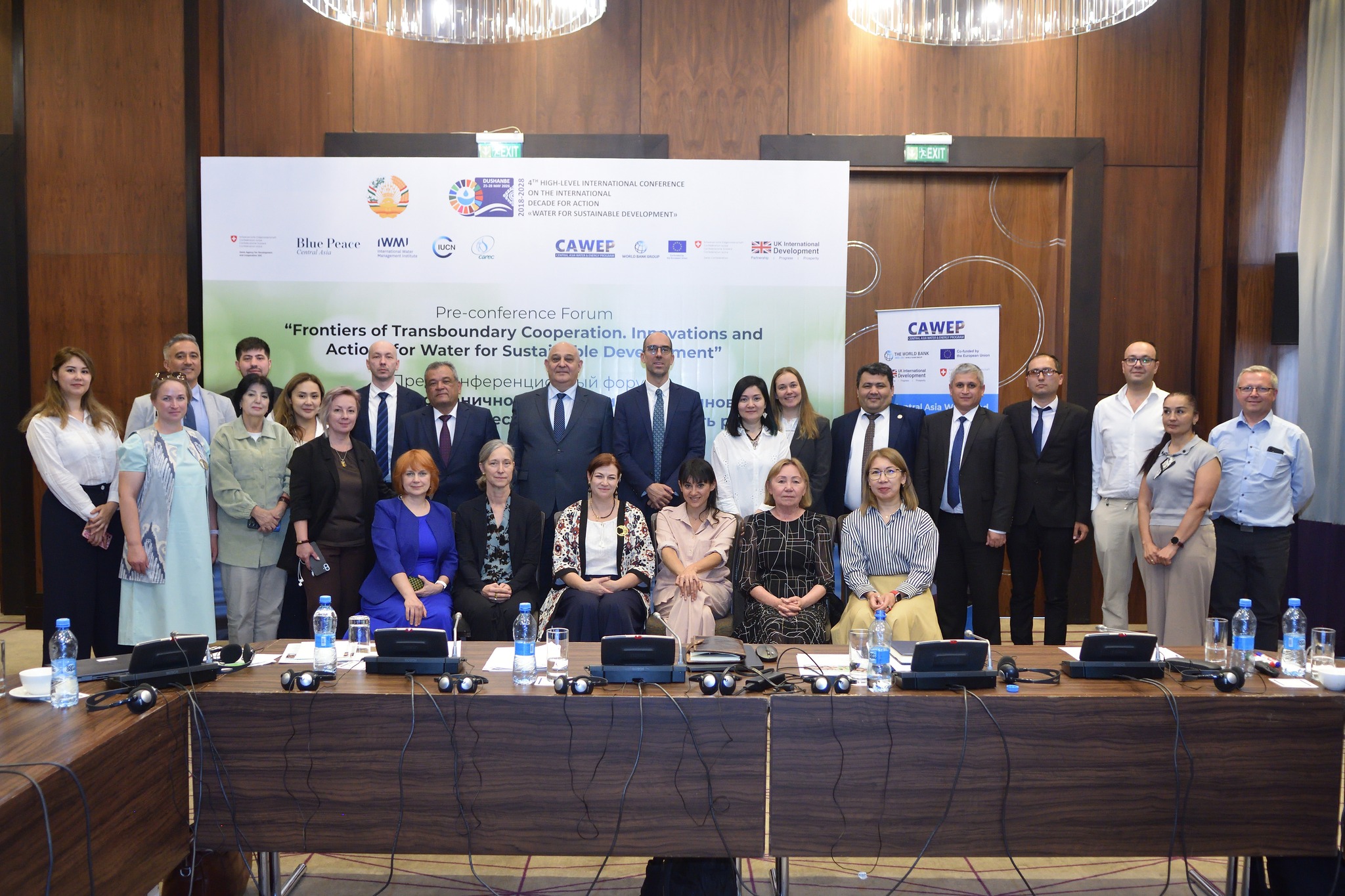 Participants of the Regional Dialogue. Photocrdit to the website of the World Bank.
Drought-related challenges are becoming increasingly significant for Central Asia in the context of climate change, growing pressure on water resources, and the intensification of land degradation and desertification processes. In this regard, SIC ICSD continues to actively promote science-based approaches to sustainable natural resource management, the implementation of Land Degradation Neutrality (LDN) principles, the strengthening of land degradation monitoring systems, and support for the implementation of regional commitments under the United Nations Convention to Combat Desertification (UNCCD). The Centre’s ongoing work contributes to strengthening regional cooperation and developing integrated solutions aimed at enhancing environmental resilience and supporting sustainable development across Central Asia.
The event supports the achievement of:
| Priority Area No 4 dedicated to SDG 13: “Take urgent action to combat climate change and its impacts” |
| 4.3 Assessment of climate risks and vulnerabilites through the application of corresponding models of a climate change impact on water resources, terrestrial ecosystems and natural disasters, tackling the development of state policies and strategies in this area. |
| Priority Area No 5 of REP4SD dedicated to SDG 15: “Protect, restore and promote sustainable use of terrestrial ecosystems” |
| 5.1.7 use of modern monitoring methods to account for flora and fauna species, ecosystem conditions, land resources. |