



Samarkand, Republic of Uzbekistan, 6 June 2026 — Representatives of the Uzbekistan office of the Scientific-Information Center of the Interstate Commission on Sustainable Development of the International Fund for Saving the Aral Sea (SIC ICSD IFAS) took part in the preparation and organization of the Eighth Assembly of the Global Environment Facility (GEF), held from 30 May to 6 June 2026 in Samarkand, Republic of Uzbekistan.
The Eighth GEF Assembly was held in Central Asia for the first time, bringing together representatives from 186 countries, international organizations, financial institutions, the scientific community, the private sector, civil society, youth and other stakeholders. The Assembly featured plenary sessions, meetings of the GEF Council, thematic events, roundtables and working meetings focused on accelerating global environmental action towards the achievement of international environmental goals by 2030.
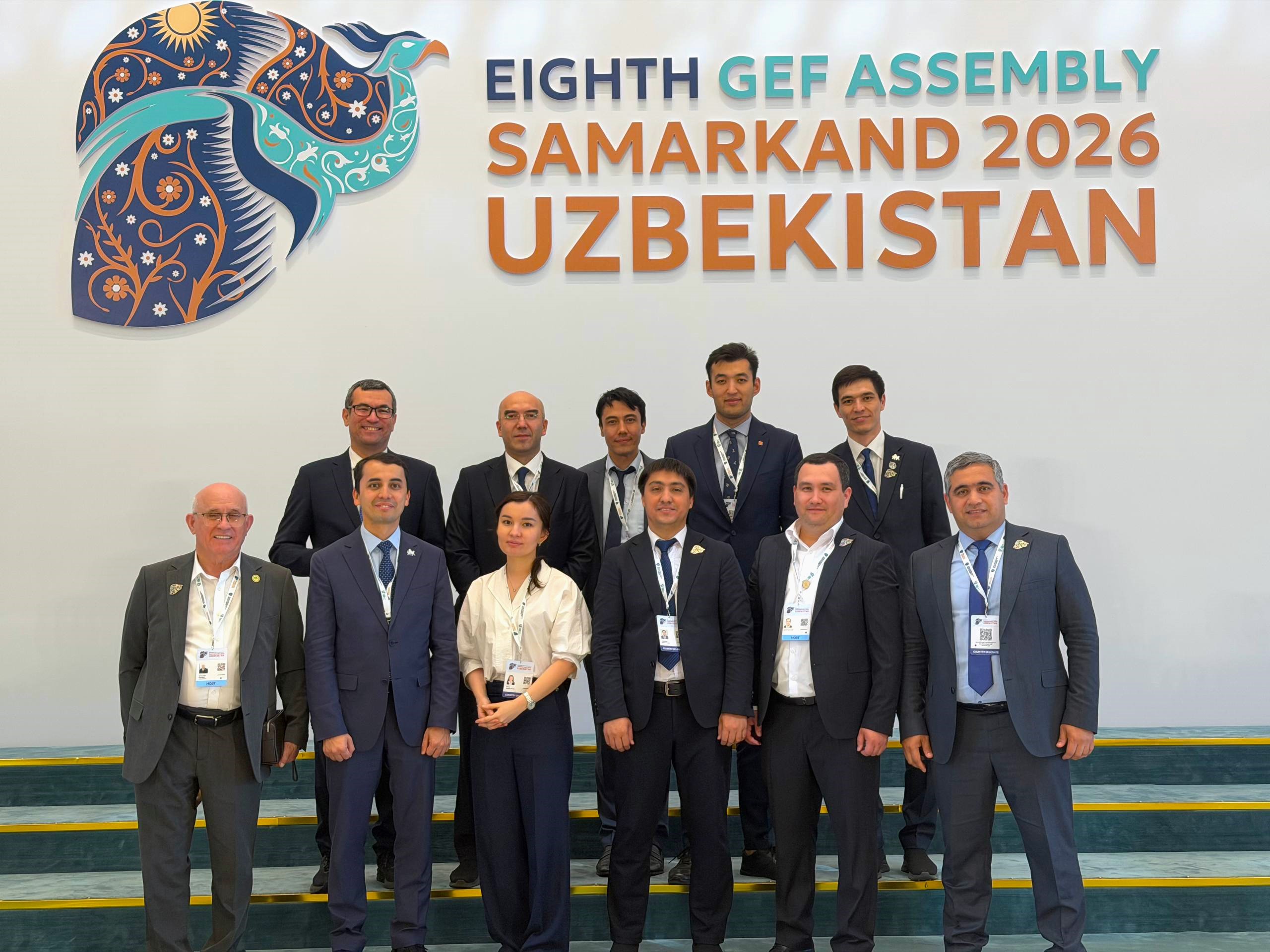 Representatives of SIC ICSD IFAS branch in Uzbekistan. Photocredit to SIC ICSD.
One of the key outcomes of the Eighth GEF Assembly was the adoption of decisions aimed at further strengthening international environmental finance and accelerating action towards the achievement of global environmental goals by 2030. As part of the GEF governing bodies’ meetings held in Samarkand ahead of and during the Assembly, US$232.5 million in new environmental financing was approved for 24 projects and programmes across 22 countries. In addition, representatives of 186 countries endorsed the programming directions and policy recommendations under the ninth replenishment of the GEF (GEF-9), amounting to US$3.9 billion for the period through 2030. The new financing framework places greater emphasis on such priority areas as biodiversity conservation, land degradation, international waters, climate change and the scaling up of blended finance mechanisms. Of particular importance is the GEF-9 focus on integrated approaches, regional cooperation, mobilization of additional financial resources, and enhanced engagement of governments, civil society, youth, women, Indigenous Peoples and local communities.
These decisions create additional opportunities for Central Asian countries to access international environmental financing and advance regional initiatives aimed at sustainable management of natural resources, transboundary water resources and land resources.
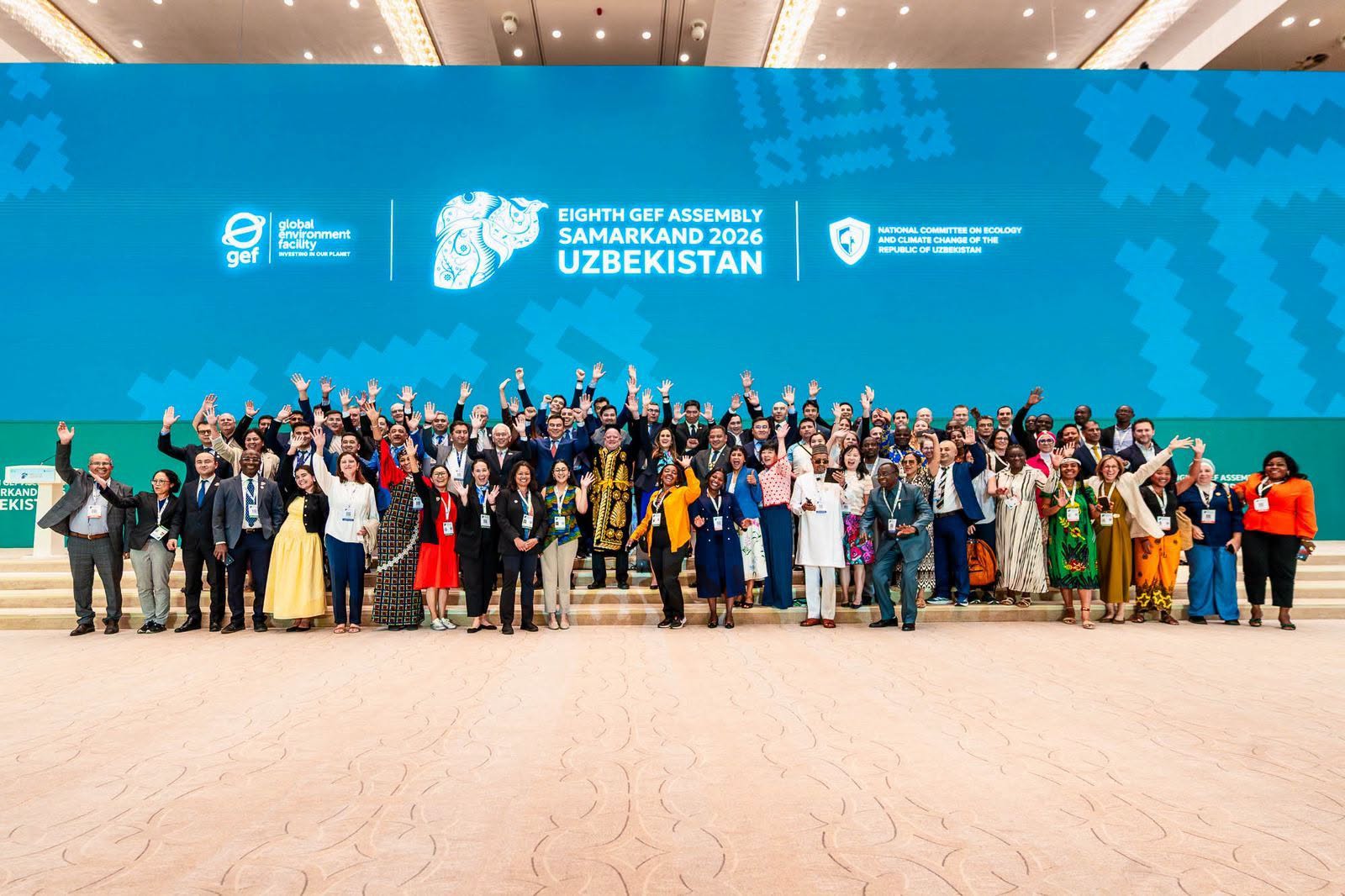
For the countries of Central Asia, discussions on the sustainable management of transboundary water and land resources, regional environmental cooperation, and the development of integrated approaches to addressing interconnected environmental challenges were of particular importance. The Assembly also featured the Central Asia Water and Land Nexus (CAWLN) initiative, aimed at strengthening regional cooperation on the sustainable management of water and land resources.
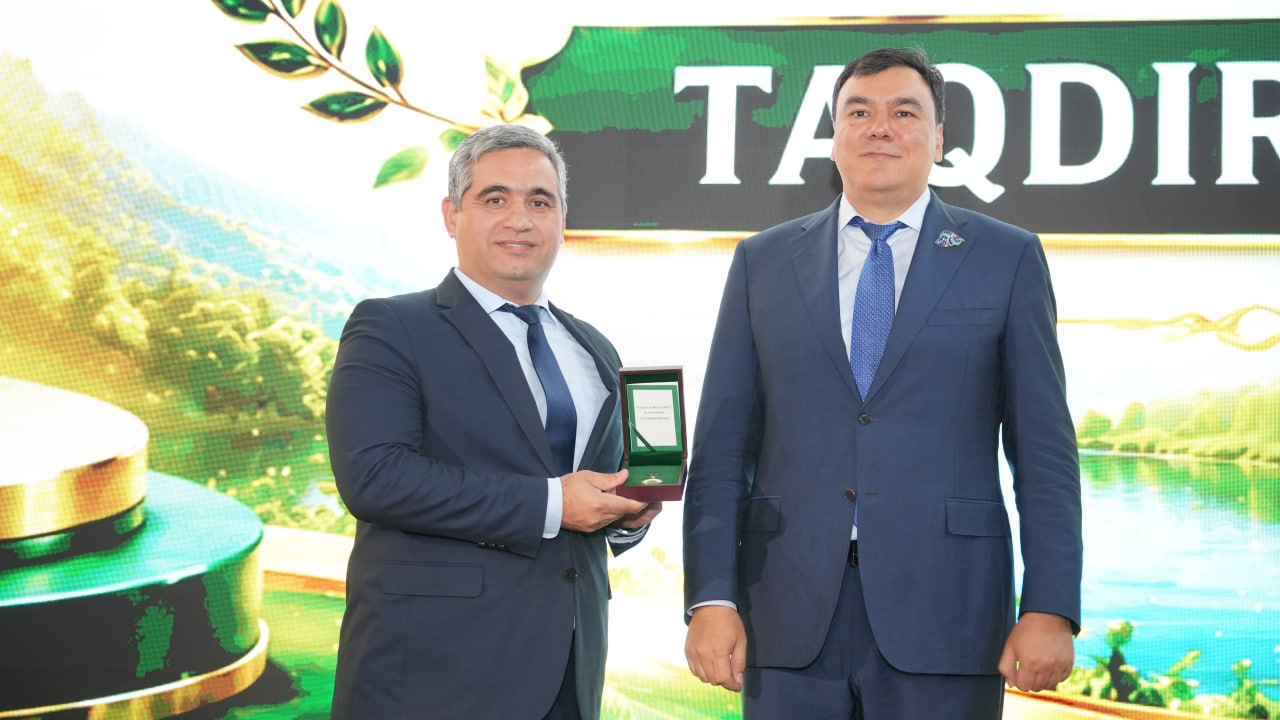 Presentation of the "Tabiat Khimoyachisi" ("Defender of Nature") badge to the Director of the SIC ICSD branch in Uzbekistan, dedicated to the World Environment Day.
The participation of SIC ICSD IFAS representatives in the preparation and organization of the Eighth GEF Assembly contributed to strengthening international and regional cooperation in the fields of environmental protection and sustainable natural resource management, while also helping to advance the environmental priorities of Central Asia on international platforms.
The hosting of the GEF Assembly in Samarkand also created additional opportunities for knowledge and experience sharing, establishing new professional networks, and further developing partnerships among government institutions, international organizations, research institutions and other stakeholders, with the aim of advancing sustainable development across the region.
The event contributes to the achievement of:
| Priority Area No 5 dedicated to SDG 15: “Protect, restore and promote sustainable use of terrestrial ecosystems” |
| 5.1.1 Integration of the ecosystem approach for climate change adaptation at the strategic, programmatic and project levels to improve cross-sectoral collaboration (and sectoral plans) and ecosystem protection, restoration and sustainable management. |
| 5.1.2 Capacity-building for sustainable management of forests, land, and pastures. |
| 5.1.7 use of modern monitoring methods to account for flora and fauna species, ecosystem conditions, land resources. |
| Priority area No 6 of REP4SD dedicated to SDG 17: “Strengthen the means of implementation and revitalize the Global Partnership for Sustainable Development” |
| 6.1 Involvement of the region into implementation of global environmental conventions, programmes and initiatives. |