



Antalya, Republic of Türkiye, 30 March – 2 April 2026 — Representatives of the Scientific-Information Center of the Interstate Commission on Sustainable Development (SIC ICSD) participated in a Regional Capacity-Building Workshop on the preparation of national reporting under the United Nations Convention to Combat Desertification (UNCCD) for the 2026 reporting cycle.
The workshop was organized by the UNCCD Secretariat with the support of the Food and Agriculture Organization of the United Nations (FAO), the Global Environment Facility (GEF), the United Nations Environment Programme (UNEP), and the Government of the Republic of Türkiye. The event marked the first in a series of seven regional workshops aimed at supporting countries in preparing for the upcoming reporting cycle and brought together representatives from 16 countries in person, along with a broader group of participants joining online.
.jpeg) Exchange of country experience in reporting during the Regional Capacity-Building Workshop. Photocredit to organizers of the event.
Exchange of country experience in reporting during the Regional Capacity-Building Workshop. Photocredit to organizers of the event.
Over the course of the four-day programme, participants were introduced in detail to the UNCCD reporting framework for 2026, including the methodology for calculating Sustainable Development Goal (SDG) indicator 15.3.1, which measures the proportion of degraded land. Particular emphasis was placed on the practical application of reporting tools, including the PRAIS 4 platform, as well as the use of open-source geospatial solutions such as Trends.Earth and tools developed by the European Commission’s Joint Research Centre (JRC) and the World Overview of Conservation Approaches and Technologies (WOCAT).
The training programme covered a wide range of topics, including land cover change monitoring, land productivity dynamics, assessment of soil organic carbon, integration of land degradation indicators, as well as drought-related issues and integrated land use planning. Participants also discussed approaches to setting national targets for achieving Land Degradation Neutrality (LDN) and explored mechanisms for aligning UNCCD reporting with other international processes, including the Rio Conventions.
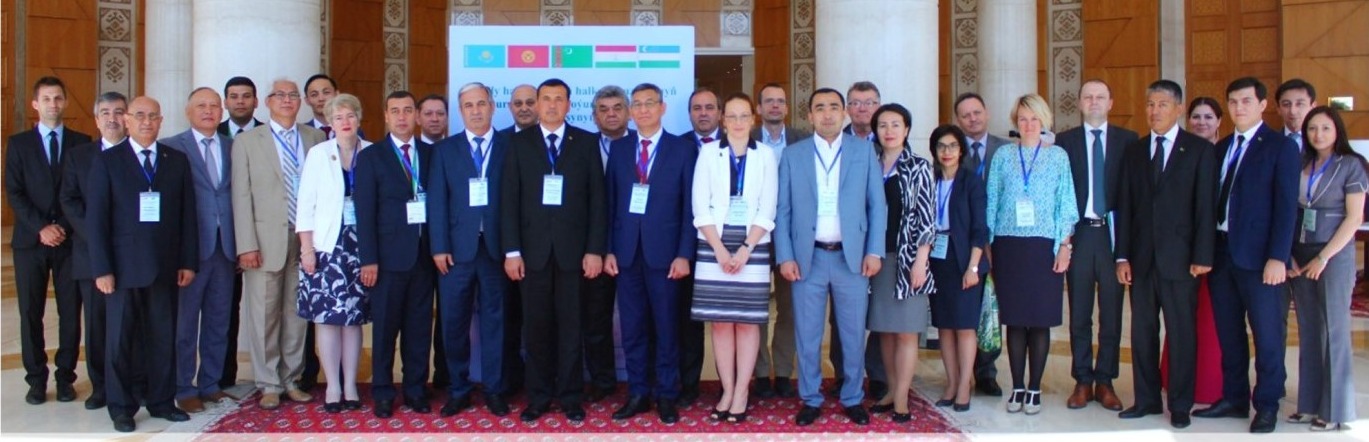 Participants of the Regional Capacity-Building Workshop. Photocredit to organizers of the event.
The practical component of the workshop included group exercises and the development of national reporting work plans, enabling participants to exchange experiences, identify common challenges, and define priority actions for further work.
This workshop represents an important step in strengthening the technical and institutional capacities of national focal points and experts responsible for UNCCD reporting. The knowledge and skills acquired will contribute to improving the quality of national reports and enhancing regional cooperation among Central Asian countries in the field of sustainable land management and in addressing land degradation, desertification and drought.
The event supports the achievement of:
| Priority area No 1 of REP4SD dedicated to SDG 4 on “Ensuring inclusive and equitable quality education and promoting lifelong learning op-opportunities for all” |
| 1.1 Capacity building of existing institutions including training, retraining and professional development of personnel in the field of environmental protection and sustainable development. |
| Priority Area No 5 of REP4SD dedicated to SDG 15: “Protect, restore and promote sustainable use of terrestrial ecosystems” |
| 5.1.7 use of modern monitoring methods to account for flora and fauna species, ecosystem conditions, land resources. |
| Priority area No 6 of REP4SD dedicated to SDG 17: “Strengthen the means of implementation and revitalize the Global Partnership for Sustainable Development” |
| 6.1 Involvement of the region into implementation of global environmental conventions, programmes and initiatives. |