




Dashoguz Velayat, Turkmenistan, 1-14 October 2025 — Specialists from the Ministry of Environmental Protection of Turkmenistan, together with experts from the Museum of Natural History in Berlin (Federal Republic of Germany) and the Zoological Institute of the Republic of Uzbekistan, carried out scientific research and monitoring aimed at studying species diversity, assessing population numbers, and identifying new bat species in the Gaplangyr State Nature Reserve and adjacent areas (the Gaplangyr, Tarymgaya, Botendag, and Nalach-Baba uplands; along the canal near the village of Baleyshim; Lake Uzynshor; Zengibaba (Gangagyr Upland); Sarygamysh (Mergenashan Canyon); Edikhovuz tract; along the Deryalyk drainage collector; and the architectural monument complex of Kunyaurgench, including the Diyarbakir fortress).
During the monitoring and research activities, valuable data were collected on the species composition, abundance, ecology, and biology of bats. Researchers also visited remarkable natural locations and conducted observations of other wildlife inhabiting the reserve. In total, eight bat species were recorded during the monitoring.
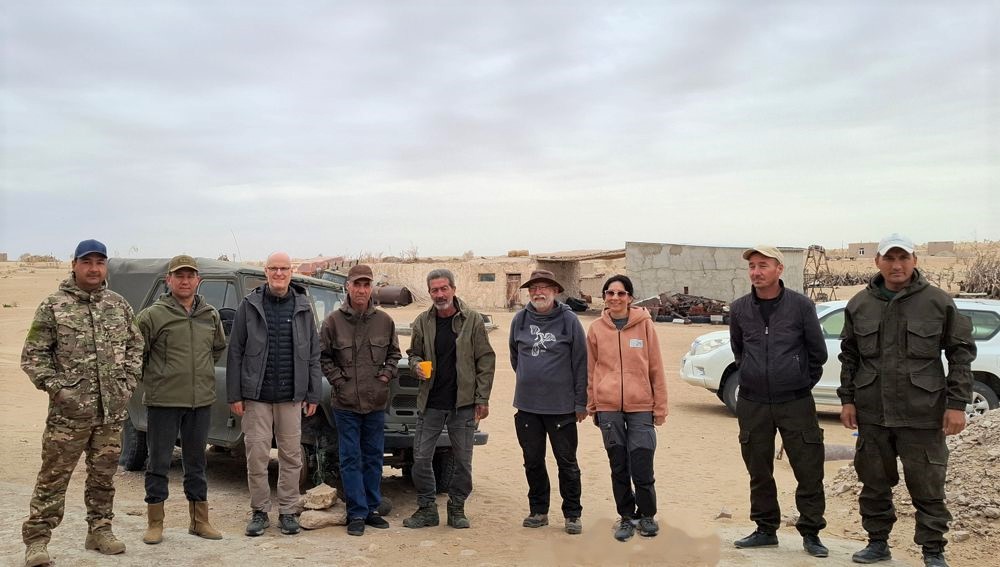
The research began on the Gaplangyr Upland. Bat studies were conducted both on the upland and along the canal near the village of Baleyshim. Here, one species was found — the Mediterranean pipistrelle (Pipistrellus kuhlii), which is a newly recorded species for the reserve.
In the area of Lake Uzynshor, four bat species were identified: the Bukhara horseshoe bat (Rhinolophus bocharicus), the common pipistrelle (Pipistrellus pipistrellus), the serotine bat (Eptesicus serotinus turcomanus), and Nathusius’ pipistrelle (Pipistrellus nathusii). Among these, the serotine bat is a new species for the reserve, while Nathusius’ pipistrelle is a new record for all of Central Asia, including Turkmenistan. This species was first noted in Turkmenistan in the vicinity of Lake Uzynshor within the Shasenem State Nature Sanctuary.
During the inspection of a sardoba in the Edikhovuz tract, one species — the common pipistrelle — was recorded. Later the same day, during the examination of a crevice on the Gangagyr Upland near Lake Zengibaba, two additional species were documented: the Bukhara horseshoe bat and the Turkmen long-eared bat (Plecotus turkmenicus).
The discovery of the Turkmen long-eared bat was one of the key objectives of the international expert team. According to available data, this species had last been observed 55 years ago, and no verified information on its continued existence in the wild had been available since then. After more than half a century, the Turkmen long-eared bat was rediscovered on the Gangagyr Upland, situated in the northwestern part of Lake Zengibaba. This finding once again highlights the significant conservation value of the Zengibaba State Nature Sanctuary, included in the National Forest Program of Turkmenistan for 2021-2025.
-C.DietzD85_1544_1.jpg)
Photographed alive for the first time: a Turkmen long-eared bat (Plecotus turkmenicus) that had been lost for decades, upon its rediscovery. Photo: Christian Dietz.
On the Tarymgaya Upland, one species — the Mediterranean pipistrelle — was recorded. In the Mergenashan Canyon on the eastern shore of Lake Sarygamysh, four species were documented: the Bukhara horseshoe bat, the common pipistrelle, the greater horseshoe bat (Rhinolophus ferrumequinum), and Ognev’s desert bat (Eptesicus ognevi (bottae)).
Monitoring continued in a cave located near the bank of the Deryalyk drainage collector, north of the Botendag Upland. This site, reached after an extended field route, proved particularly important, as it became the second recorded location of the Turkmen long-eared bat. The Bukhara horseshoe bat, the greater horseshoe bat, and the common pipistrelle were also noted here. On the western side of the Nalach-Baba Upland, the Bukhara horseshoe bat was recorded, while the common pipistrelle was found at the Akgala fortress within the Kunyaurgench monument complex.
As a result of scientific research conducted in the Gaplangyr State Nature Reserve and surrounding territories, eight bat species were recorded. Among them, Nathusius’ pipistrelle is a new species not only for Turkmenistan but for the entire Central Asian region; the Turkmen long-eared bat was found in Turkmenistan for the first time since the 1970s; and both the Mediterranean pipistrelle and the serotine bat are newly recorded species for the reserve.
According to international experts, Nathusius’ pipistrelle is expanding its range eastward. Furthermore, the rediscovery of the Turkmen long-eared bat in this region underscores the ecological importance of the reserve as a habitat, feeding area, and breeding ground for rare bat species and enhances the overall level of biodiversity conservation in the region.
Prepared by Arazmyrat Amanov, Head of the Scientific Department of the Gaplangyr State Nature Reserve
The event supports the achievement of:
| Priority Area of REP4SD No 5 dedicated to SDG 15: “Protect, restore and promote sustainable use of terrestrial ecosystems” |
| 5.2.2 strengthening scientific cooperation on restoration of rare and endangered plant and animal species, taking joint measures for their protection; |
| Priority area No 6 of REP4SD dedicated to SDG 17: “Strengthen the means of implementation and revitalize the Global Partnership for Sustainable Development” |
| 6.2 Strengthening of cooperation among international organizations and regional and national institutions for better access to new technologies. |