



Ashgabat, Turkmenistan, 30 September – 2 October 2026 – A three-day practical regional training entitled "Provision of Technical Support to Turkmenistan to Comply with the Enhanced Transparency Framework under the Paris Agreement: Strengthening Technical Capacity in GHG Calculation and Inventory Preparation for Selected Sectors" was held in Ashgabat. The event was jointly organized by the Scientific-Information Center of the Interstate Commission on Sustainable Development (SIC ICSD) and the Food and Agriculture Organization of the United Nations (FAO).
The specialized intensive training brought together around 20 key national experts and officials directly involved in the preparation of the national greenhouse gas (GHG) inventory and activity data processing to fulfill Turkmenistan’s commitments under the Paris Agreement. The in-person format and limited group size enabled personalized technical guidance and hands-on calculation practice using specialized software and working templates of the Intergovernmental Panel on Climate Change (IPCC).
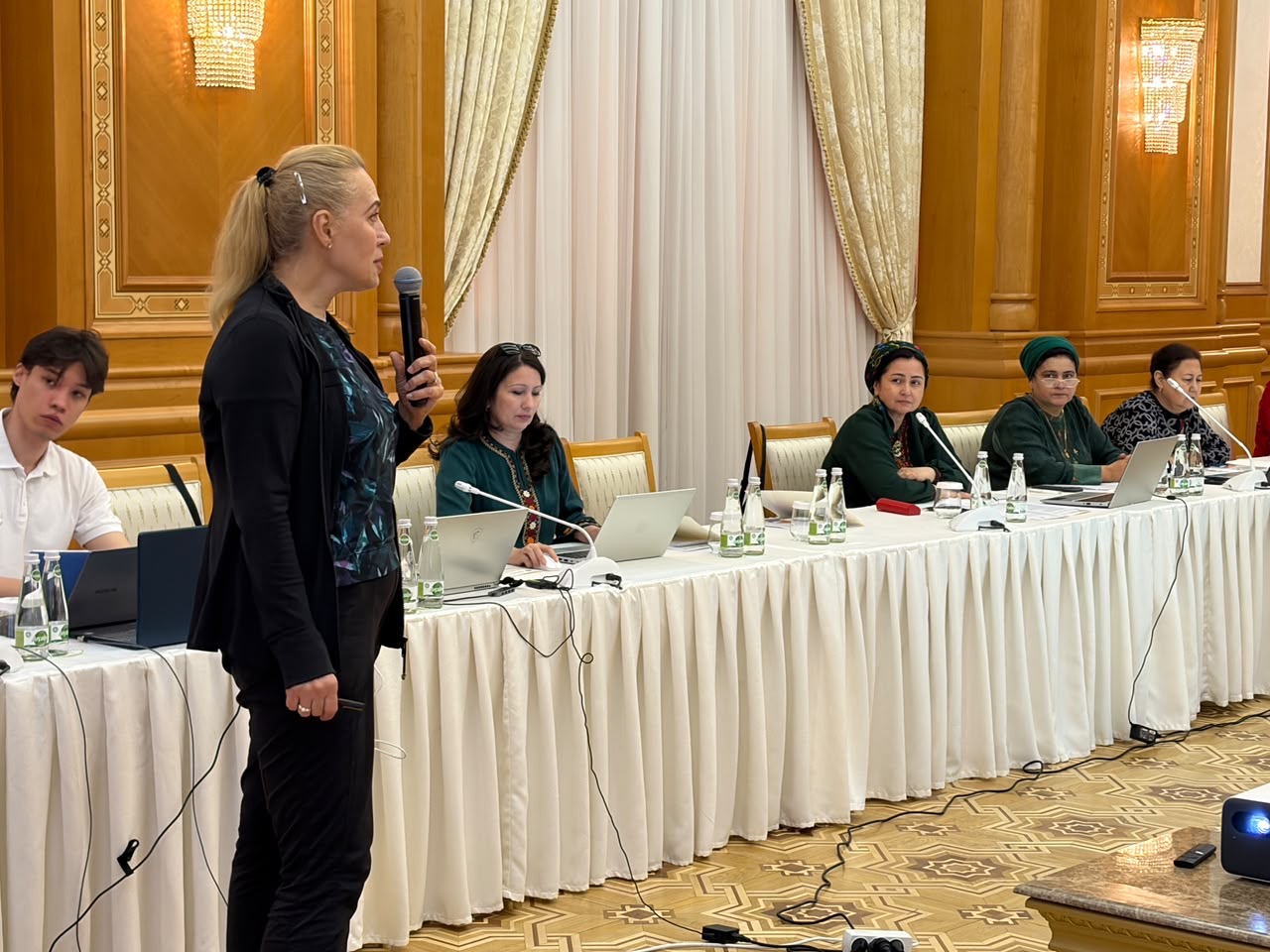 Interactive session on climate reporting and inventory of GHG emissions. Photocredit to SIC ICSD.
On the first day, 30 September, following welcoming remarks from the organizers, experts reviewed the current status of GHG inventory reporting in Turkmenistan and key gaps in the Industrial Processes and Product Use (IPPU) and Waste sectors. Under the guidance of international trainer Olga Glade and national expert Leyla Hadjimyradova, participants undertook practical calculations of emissions from the mineral industry (cement production) following the 2006 IPCC Guidelines and examined accounting methods for hydrofluorocarbons (HFCs) from refrigeration and air conditioning (Category 2.F.1).
The second day, 1 October, was dedicated entirely to detailed practical exercise on calculations in the chemical industry. Using concrete examples, participants practiced algorithms for estimating GHG emissions from ammonia and nitric acid production utilizing specialized IPCC Tier 1 templates, and discussed approaches to address uncertainties in input data.
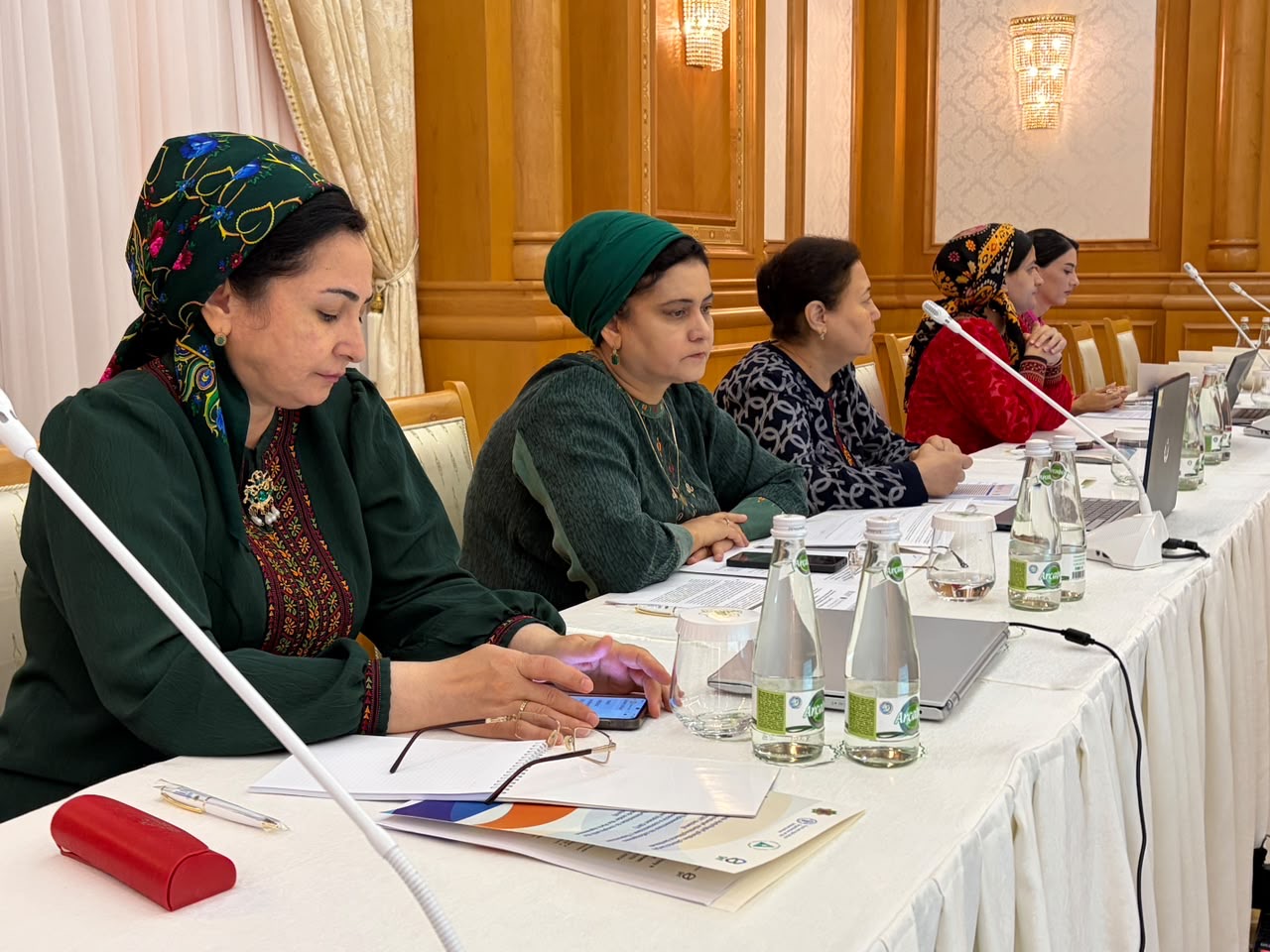 Seminar participants. Photocredit to SIC ICSD.
The final day, 2 October, focused on the Waste sector. Specialists mastered the practical application of the First Order Decay (FOD) model to estimate methane emissions from solid waste disposal sites (Category 5.A.1) and the methodology for calculating emissions from wastewater treatment.
The successful delivery of the training enabled national experts to enhance their data collection and processing skills and master practical IPCC tools required for regular GHG inventory preparation. The outcomes will serve as a practical contribution by SIC ICSD and FAO toward strengthening the Enhanced Transparency Framework (ETF) and improving the quality of Turkmenistan’s national climate reporting.
The event supports the achievement of:
| Priority Area of REP4SD No 4 dedicated to SDG 13: “Take urgent action to combat climate change and its impacts” |
| 4.3 Assessment of climate risks and vulnerabilites through the application of corresponding models of a climate change impact on water resources, terrestrial ecosystems and natural disasters, tackling the development of state policies and strategies in this area. |