



Tashkent, Republic of Uzbekistan, 25 July 2024 – Representatives of the Scientific-Information Center of the Interstate Commission on Sustainable Development (SIC ICSD) and the Secretariat of the Interstate Commission on Sustainable Development (ICSD) participated in the Second Meeting of the Regional Working Group (RWG) on the Implementation of the Regional Strategy on Climate Change Adaptation in Central Asia (RSCCA), organized under the Green Central Asia initiative with the support of the Deutsche Gesellschaft für Internationale Zusammenarbeit (GIZ). Held in a hybrid format in Tashkent, the meeting brought together representatives of government agencies from all five Central Asian countries, international organizations, development finance institutions, and regional organizations, including the International Fund for Saving the Aral Sea (IFAS) and the ICSD.
The primary objective of the meeting was to discuss practical steps for implementing the Regional Strategy on Climate Change Adaptation in Central Asia, which was endorsed by all five Central Asian countries and presented to the international community during the 28th Conference of the Parties (COP28) to the United Nations Framework Convention on Climate Change (UNFCCC). Discussions focused on the establishment and hosting arrangements of the RSCCA Secretariat, the development of a roadmap for implementing the Strategy, and strengthening regional coordination on climate change adaptation.
During the first session, representatives of Kazakhstan, the Kyrgyz Republic, Tajikistan, Turkmenistan, and Uzbekistan presented their national perspectives on the institutional model for the future RSCCA Secretariat, discussed possible operational modalities, and considered options for hosting the Secretariat in one of the countries of the region. Participants emphasized that establishing a permanent regional coordination mechanism would constitute an important milestone in ensuring the effective implementation of the Strategy and fostering long-term regional cooperation on climate change adaptation.
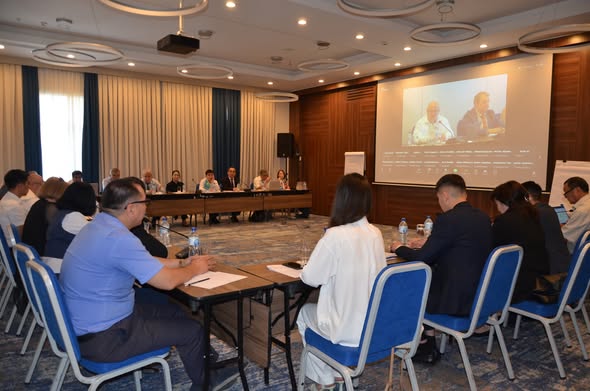 Second Meeting of the Regional Working Group (RWG) on the Implementation of the Regional Strategy on Climate Change Adaptation in Central Asia (RSCCA). Photocredit to organizers of the event.
Particular attention was devoted to the development of a regional implementation roadmap for the RSCCA and to establishing mechanisms for preparing joint adaptation projects and programmes, mobilizing international climate finance, and strengthening cooperation among relevant national institutions. During the discussions, countries exchanged proposals on priority actions, monitoring mechanisms for tracking the implementation of the Strategy, and potential sources of technical and financial support.
A dedicated thematic session focused on strengthening regional climate monitoring systems, data sharing, and climate forecasting. Experts presented advanced approaches to the development of regional climate models based on CMIP6 scenarios, enabling more accurate assessments of climate risks and improved projections of future climate trends across Central Asia. Representatives of UNESCO also presented ongoing initiatives to enhance regional glaciological monitoring, highlighting the importance of coordinated glacier observation as a critical component of safeguarding the region's water resources.
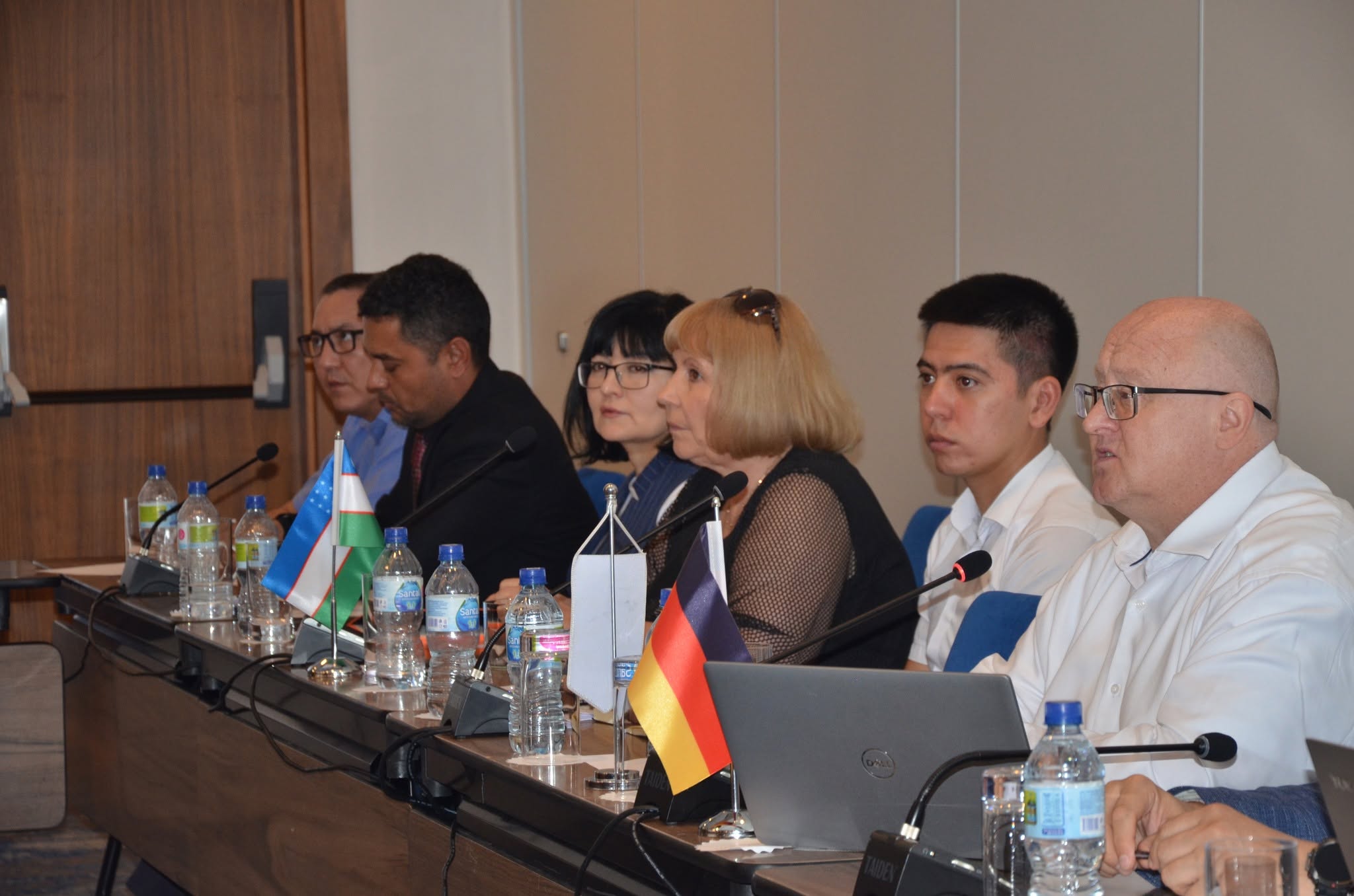 Second Meeting of the Regional Working Group (RWG) on the Implementation of the Regional Strategy on Climate Change Adaptation in Central Asia (RSCCA). Photocredit to organizers of the event.
A significant portion of the meeting was dedicated to preparing Central Asian countries for the 29th Conference of the Parties to the UNFCCC (COP-29). Participants discussed the preparation of updated Nationally Determined Contributions (NDCs), exchanged experiences in integrating adaptation priorities into national climate policies, and explored opportunities for developing coordinated regional approaches to representing the interests of Central Asia in the global climate negotiation process.
Representatives of the SIC ICSD and the ICSD Secretariat actively contributed to the expert discussions, emphasizing the importance of existing regional cooperation mechanisms for coordinating climate policy, facilitating scientific information exchange, and promoting joint adaptation initiatives. Participants also highlighted the important role of the ICSD as an intergovernmental platform that supports the integration of environmental and climate priorities into sustainable development processes while strengthening dialogue and cooperation among the countries of Central Asia.
At the conclusion of the meeting, participants reaffirmed the need to further strengthen the institutional framework for implementing the Regional Strategy on Climate Change Adaptation in Central Asia, agreed on the next steps for developing its implementation roadmap, and expressed their commitment to continuing joint efforts to enhance regional cooperation on climate adaptation, improve climate monitoring systems, and increase the resilience of Central Asian countries to the impacts of climate change.
The participation of the SIC ICSD and the ICSD Secretariat in the Second Meeting of the Regional Working Group contributes to the implementation of the climate-related priorities of the Regional Environmental Programme for Sustainable Development of Central Asia (REP4SD) 2020-2030, particularly those aimed at strengthening regional cooperation on climate change, enhancing climate monitoring and data-sharing systems, advancing climate change adaptation mechanisms, mobilizing climate finance, and reinforcing the institutional capacities of Central Asian countries to achieve the Sustainable Development Goals (SDGs) and fulfil their commitments under the Paris Agreement.
The event supports the achievement of:
| Priority Area of REP4SD No 4 dedicated to SDG 13: “Take urgent action to combat climate change and its impacts” |
| 4.1 Development of a Regional Strategy for Climate Change Adaptation taking into account the context of Central Asian ecosystems and climate risk reduction, development of a unified regional vision, information exchange between national focal points of the UN Framework Convention on Climate Change (UNFCCC) and other stakeholders. |
| 4.3 Assessment of climate risks and vulnerabilites through the application of corresponding models of a climate change impact on water resources, terrestrial ecosystems and natural disasters, tackling the development of state policies and strategies in this area. |
| 4.4 Monitoring of the glaciers’ condition in Central Asia. Development of a Regional Atlas of Hazardous Transboundary Exogenous Geodynamic Processes, including data on potential threat of glacial lake outburst floods, mudflows, landslides, avalanches, dust storms and droughts using GIS technologies. |