



Ashgabat, Turkmenistan / Online, 10-11 June 2026 — Experts from the Scientific-Information Center of the Interstate Commission on Sustainable Development of Central Asia (SIC ICSD) participated in a two-day Regional online workshop dedicated to the preparation of national reporting under the United Nations Convention to Combat Desertification (UNCCD) on SO1: Trends.Earth, alternative data and PRAIS 4. The workshop was organized with the support of the Global Environment Facility (GEF), the United Nations Convention to Combat Desertification (UNCCD), and the United Nations Environment Programme (UNEP), bringing together approximately 15 specialists from national institutions responsible for preparing official reports under the Convention.
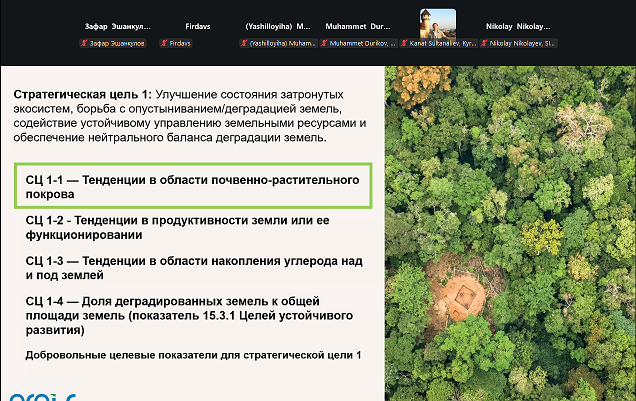 Strategic Objectives of UNCCD. Photocredit to SIC ICSD.
The primary objective of the workshop was to strengthen the technical capacities of national experts in preparing the 2026 reporting under Strategic Objective 1 (SO1) of the UNCCD, which focuses on land condition monitoring and the achievement of Land Degradation Neutrality (LDN). The workshop followed a highly practical format, providing participants with step-by-step guidance on the use of modern geospatial data processing tools, the application of alternative global datasets, the Trends.Earth platform, and the preparation of outputs for subsequent submission through the PRAIS 4 reporting system.
During the first day, participants examined in detail the structure of the SO1 indicators, including the assessment of changes in land cover, land productivity, soil organic carbon stocks, and the integrated Sustainable Development Goal (SDG) indicator 15.3.1. Particular attention was devoted to the application of alternative spatial datasets, including the global GLAD GLC and CBAS GLC-FCS30D products, which can improve the quality of national land degradation assessments while enhancing the comparability of reporting results across countries.
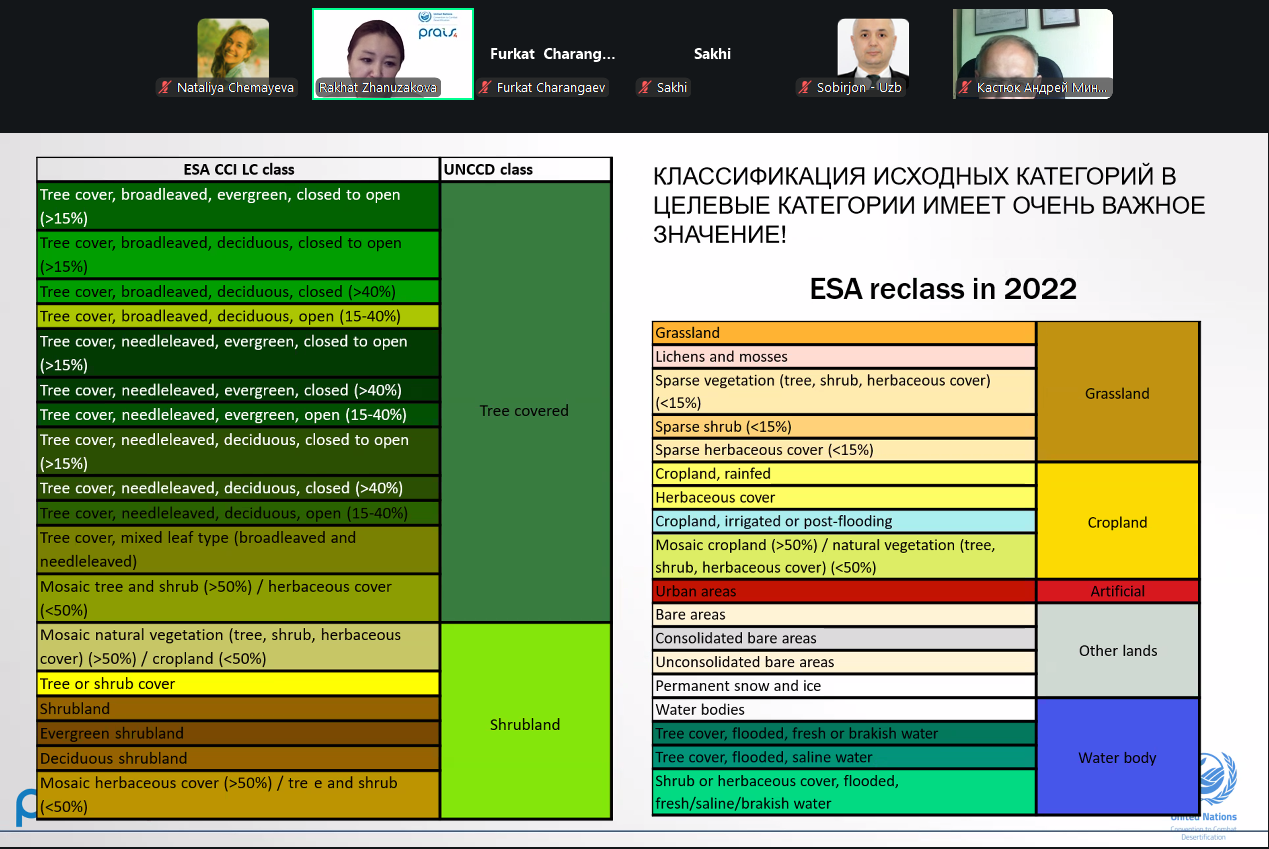 Land cover classification across different systems. Photocredit to SIC ICSD.
The practical sessions on the second day focused on methodologies for assessing land productivity using different analytical approaches, applying the tools available through the Trends.Earth platform, preparing reporting outputs, and integrating results into the PRAIS 4 system, which serves as the official online reporting platform for Parties to the UNCCD.
SIC ICSD experts actively contributed to discussions on the technical aspects of national reporting, exchanged experience in the application of geographic information systems (GIS) and advanced land degradation monitoring methodologies, and explored practical approaches for improving the quality and consistency of national assessments. The knowledge and skills acquired during the workshop will support the completion of national reporting through the UNCCD PRAIS 4 online platform and contribute more broadly to strengthening national systems for monitoring land degradation and preparing evidence-based reports.
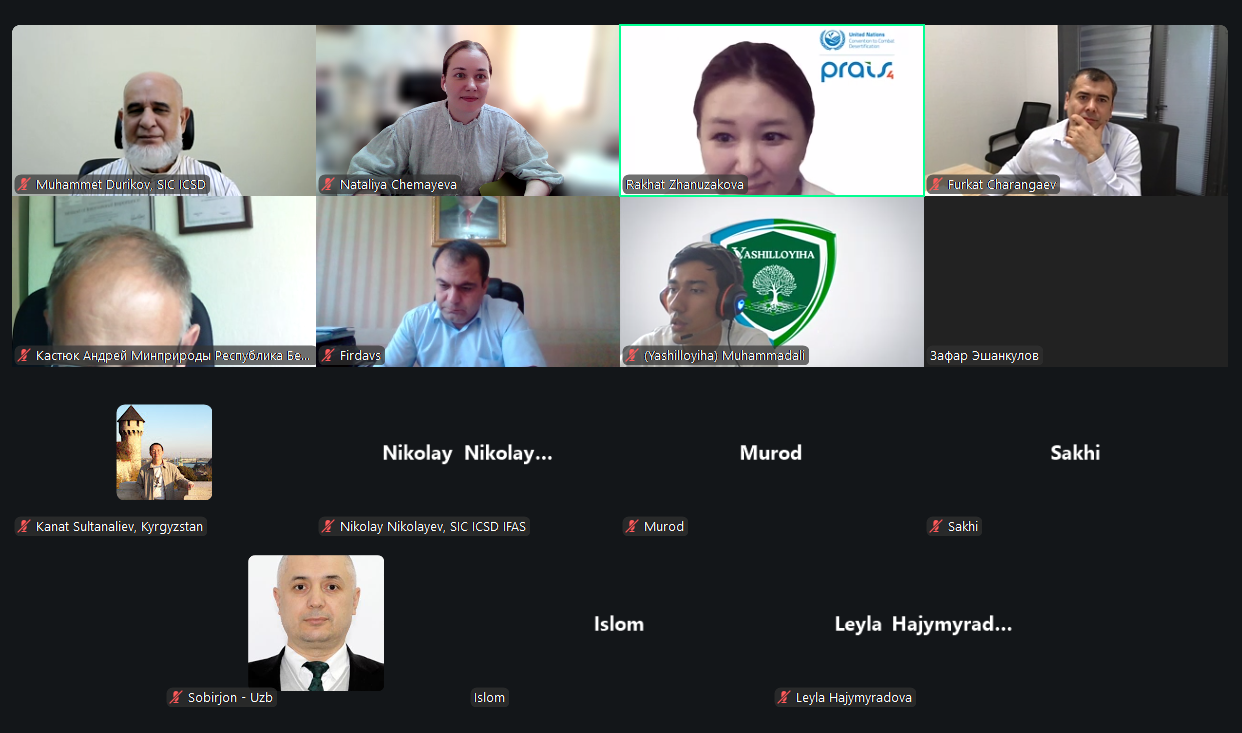 Participants of the Regional UNCCD Workshop. Photocredit to SIC ICSD.
Promoting the principles of LDN remains one of the core priorities of SIC ICSD within the implementation of the Regional Environmental Programme for Sustainable Development in Central Asia (REP4SD). Strengthening national reporting under the UNCCD constitutes an important element of fulfilling the international environmental commitments of the countries of Central Asia while further enhancing regional cooperation in sustainable natural resource management and environmental governance.
The event supports the achievement of:
| Priority Area No 5 of REP4SD dedicated to SDG 15: “Protect, restore and promote sustainable use of terrestrial ecosystems” |
| 5.1.7 use of modern monitoring methods to account for flora and fauna species, ecosystem conditions, land resources. |
| Priority area No 6 of REP4SD dedicated to SDG 17: “Strengthen the means of implementation and revitalize the Global Partnership for Sustainable Development” |
| 6.1 Involvement of the region into implementation of global environmental conventions, programmes and initiatives. |