



Ashgabat, Turkmenistan, 9 April 2024 — An inception seminar was held at the National Institute of Deserts, Flora and Fauna within the framework of a joint initiative between the Scientific-Information Center of the Interstate Commission on Sustainable Development of the International Fund for Saving the Aral Sea (SIC ICSD IFAS) and the Food and Agriculture Organization of the United Nations (FAO). The event was organized in support of the FAO-GEF project “Integrated Natural Resources Management in Drought-Prone and Saline Agricultural Production Landscapes in Central Asia and Turkey (CACILM-2)” (GCP/SEC/293/GFF).
The objective of the seminar was to familiarize stakeholders with the goals and expected outcomes of the project aimed at developing a Comprehensive Plan for the Restoration of Degraded Desert Pastures in the Central Karakum and their sustainable management under conditions of increasing drought. The initiative seeks to support local communities operating in the challenging desert environment through the introduction of science-based approaches to improving pasture productivity and reducing land degradation.
The seminar brought together 25 representatives of relevant ministries and government agencies of Turkmenistan, research institutions, higher education establishments, public sector entities, experts of the CACILM-2 project, and specialists from SIC ICSD. The broad participation of stakeholders underscored the cross-sectoral nature of sustainable pasture management.
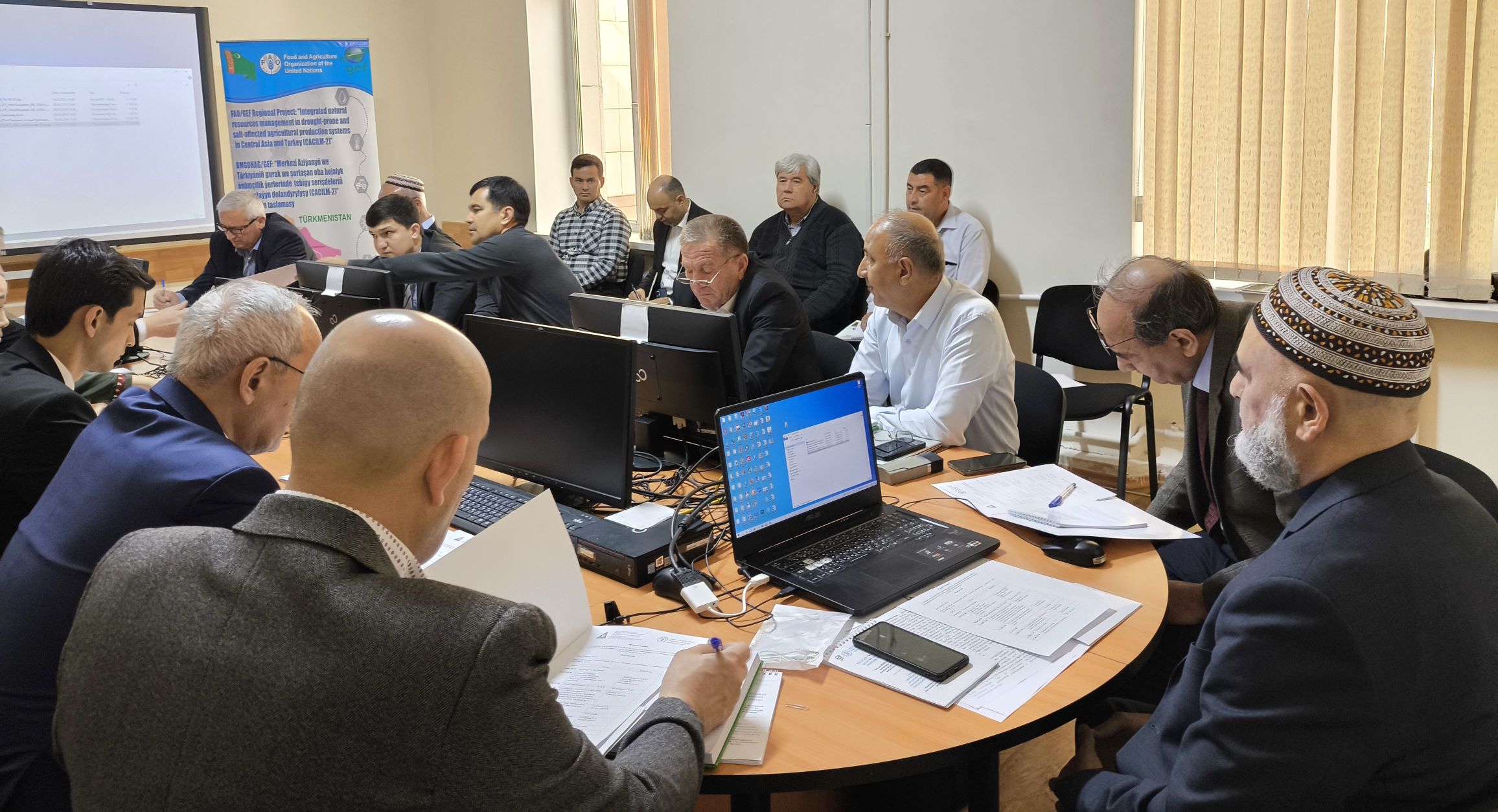 Discussions during the Inception Seminar. Photocredit to SIC ICSD.
Participants were briefed on the implementation of the CACILM-2 project in Turkmenistan, which covers mountain, desert and irrigated agro-ecological zones. Particular emphasis was placed on integrating sustainability principles into natural resource management, strengthening the capacities of public and private sector actors, and promoting climate-smart agricultural practices.
A dedicated session focused on the new joint project of SIC ICSD and FAO concerning the development of the pasture restoration plan. It was noted that pasturelands occupy a significant share of Turkmenistan’s territory and play a critical role in ensuring food security and the sustainable development of rural areas. At the same time, accelerating land degradation - driven by overgrazing, removal of woody vegetation, uneven water supply, recurrent droughts, and the increasing spread of salt and dust aerosols from the dried Aral Sea seabed - necessitates systemic and institutionally anchored responses.
Presentations also reviewed the existing legal and institutional frameworks governing pasture management, including the provisions of the Law of Turkmenistan “On Pastures,” and outlined recommendations for their further enhancement. The importance of establishing an effective national-level institutional structure for pasture management, introducing a unified system for accounting and monitoring pasture resources, and strengthening inter-agency coordination was emphasized.
During the discussion, participants exchanged views on key challenges in the pasture sector, including rational land use, water supply for grazing areas, raising awareness among farmers and livestock breeders, and the introduction of modern management practices. It was highlighted that strengthening information and outreach activities and enhancing the capacity of pasture users are essential prerequisites for the sustainable development of the sector.
The seminar marked an important milestone in the implementation of the joint SIC ICSD-FAO initiative and laid the foundation for the further development of a comprehensive and scientifically grounded Plan for the Restoration of Degraded Pastures in the Central Karakum. The implementation of the project is expected to contribute to strengthening ecosystem resilience, improving pasture productivity, and enhancing adaptation to increasing climate risks in the region.
The event supports the achievement of:
| Priority Area of REP4SD No 5 dedicated to SDG 15: “Protect, restore and promote sustainable use of terrestrial ecosystems” |
| 5.1.2 capacity-building for sustainable management of forests, land, and pastures. |