

Ashgabat, Turkmenistan, 2-3 September 2026 — a national seminar was held at the Archabil Hotel Conference Hall in Ashgabat, organized by the United Nations Development Programme (UNDP), in cooperation with the Ministry of Environmental Protection of Turkmenistan, within the framework of the Global Environment Facility (GEF) and UNDP project on updating the National Biodiversity Strategy and Action Plan (NBSAP) and preparing Turkmenistan’s Seventh National Report to the Convention on Biological Diversity (CBD). The seminar brought together representatives of government authorities, scientific and educational institutions, international and regional environmental organizations, and civil society.
The two-day seminar focused on discussing the draft National Biodiversity Strategy and Action Plan for 2026-2035 and the draft Seventh National Report to the CBD. Participants also discussed preparations for the Fifth National Report on the Cartagena Protocol on Biosafety and the First National Report on the implementation of the Nagoya Protocol on Access to Genetic Resources and the Fair and Equitable Sharing of Benefits Arising from their Utilization.
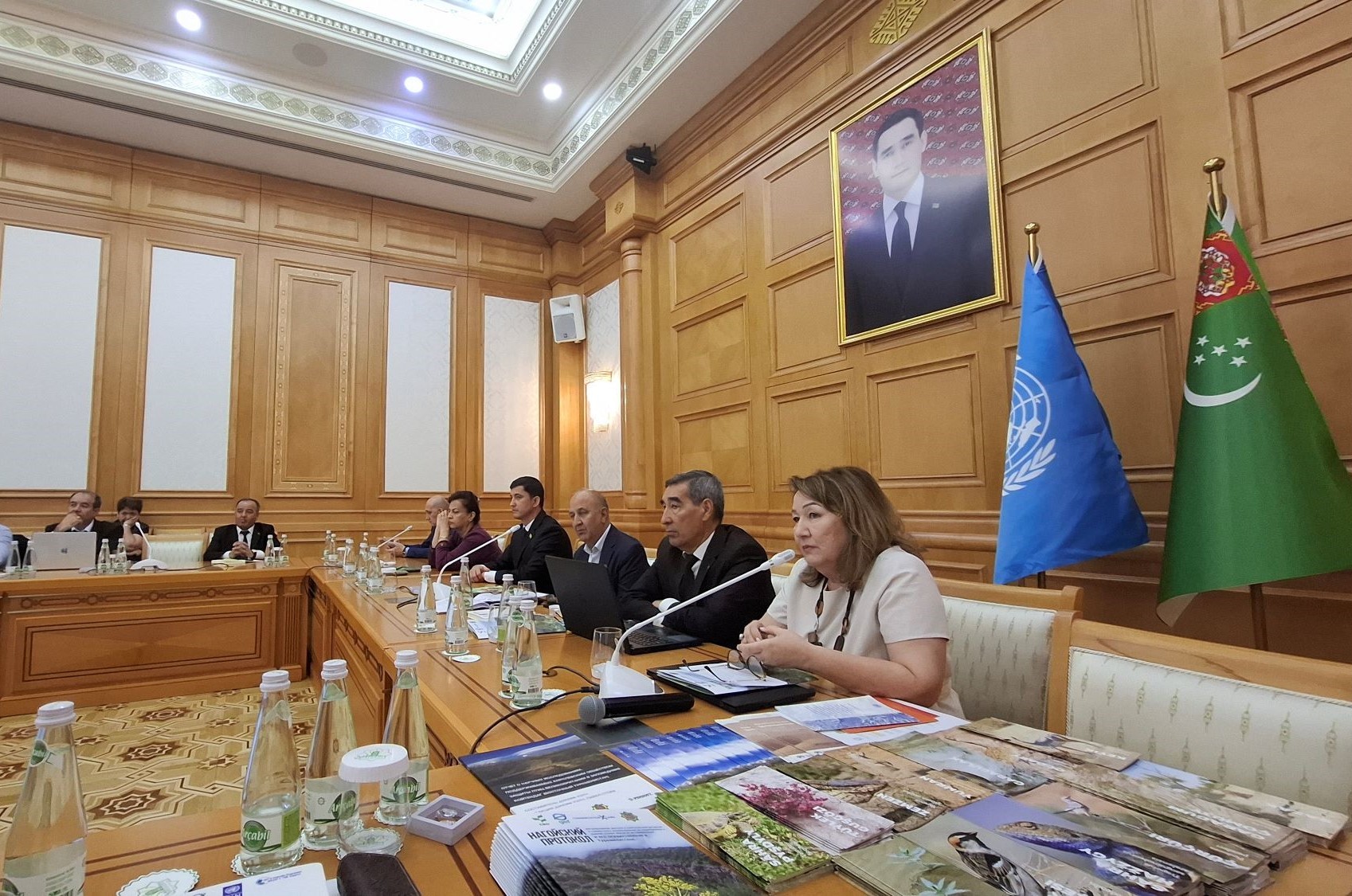 Openinig of the National Seminar. Photocredit to organizers.
Background Information
The Convention on Biological Diversity (CBD) was opened for signature in 1992. Turkmenistan ratified the Convention on 18 June 1996. Subsequently, in support of the third objective of the CBD, the Nagoya Protocol on Access to Genetic Resources and the Fair and Equitable Sharing of Benefits Arising from their Utilization was adopted on 29 October 2010 in Nagoya, Japan, at the tenth meeting of the Conference of the Parties to the CBD. The Protocol entered into force on 12 October 2014 and currently has 143 Parties. Turkmenistan acceded to the Nagoya Protocol on 4 November 2020 and became a Party on 2 February 2021.
Contribution of Conservation X Labs Consultants to the Preparation of the National Report
On 3 September, the second day of the seminar, particular attention was given to the implementation of the Cartagena Protocol on Biosafety and the Nagoya Protocol on Access to Genetic Resources and the Fair and Equitable Sharing of Benefits Arising from their Utilization. The full official name of the Cartagena Protocol is the Cartagena Protocol on Biosafety to the Convention on Biological Diversity.
With the support of Conservation X Labs (CXL), an international organization that has been carrying out conservation work in Turkmenistan for more than five years, the First National Report on the implementation of the Nagoya Protocol was prepared.
During the development of the NBSAP, CXL experts proposed measures aimed at the conservation and sustainable use of biodiversity. Particular attention was given to the development of Target 13: “Adoption of legal, policy and administrative measures to build capacity to facilitate appropriate access to genetic resources and ensure the fair and equitable sharing of benefits arising from their utilization.”
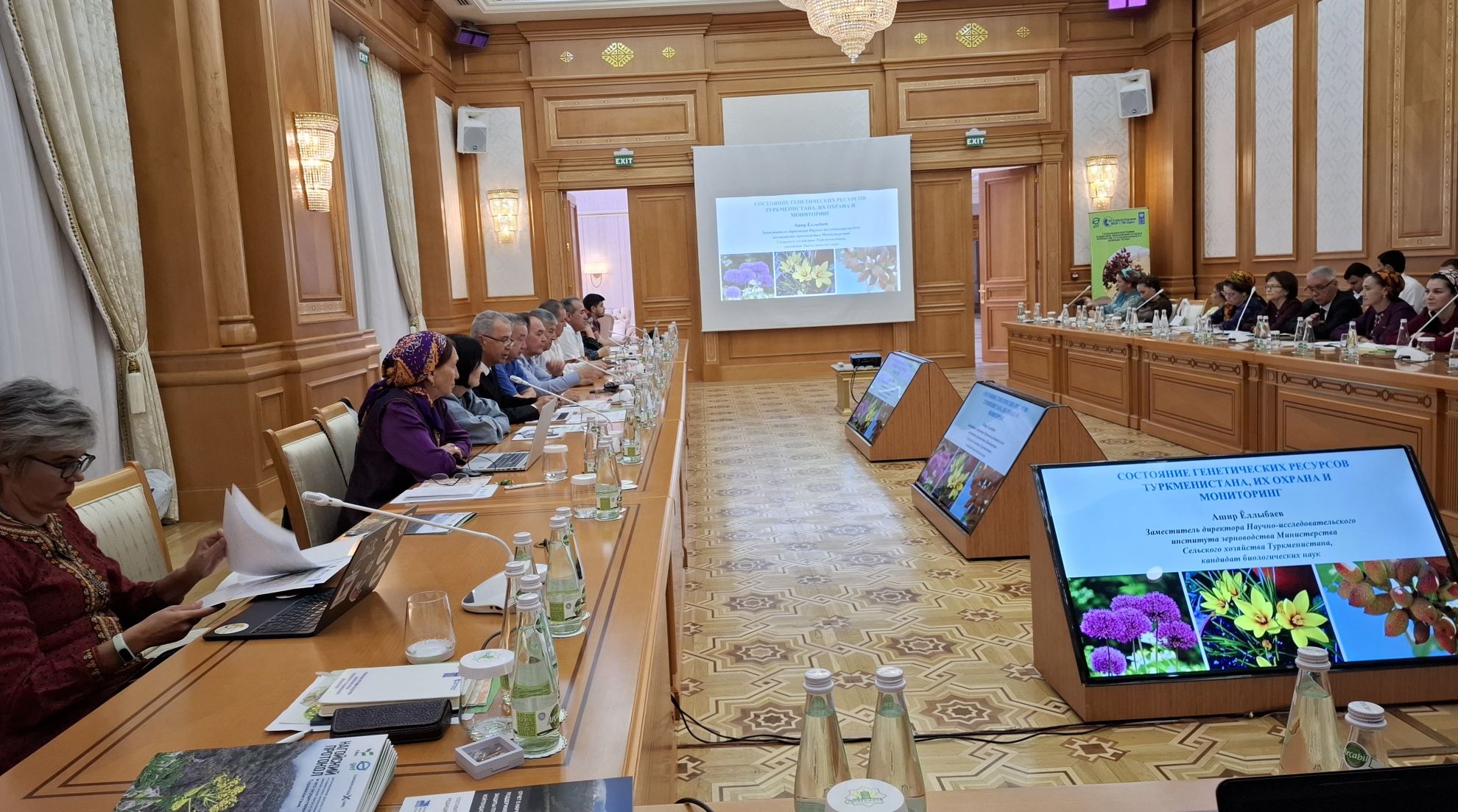 Presentation of the report on the situation with genetic resources of Turkmenistan. Photocredit to organizers.
Why is the Nagoya Protocol Important?
The Nagoya Protocol supports the implementation of the third objective of the CBD, including Article 15 on Access to Genetic Resources and Article 8(j) on Traditional Knowledge. It establishes mechanisms through which Parties can ensure the fair and equitable sharing of benefits arising from the utilization of genetic resources.
In this regard, the Nagoya Protocol is an international agreement within the global biodiversity governance framework and is particularly relevant to sectors that use genetic resources.
The Protocol provides greater legal certainty and transparency for both providers and users of genetic resources. One of its key innovations is the establishment of specific obligations to support compliance with the domestic legislation or regulatory requirements of the Party providing genetic resources, as well as with contractual obligations established through mutually agreed terms.
What Are the Key Elements of the Nagoya Protocol?
The Nagoya Protocol establishes core obligations for Parties to take measures concerning access to genetic resources and the fair and equitable sharing of benefits arising from their utilization. Access and Benefit-sharing (ABS) refers to the framework governing how access to genetic resources is obtained and how the benefits arising from their utilization are shared between provider and user countries. Benefits may be monetary—for example, through payments associated with the development of a commercial product—or non-monetary, such as the development of research capacities and knowledge.
Principles Governing the Nagoya Protocol
Access to genetic resources and benefit-sharing are based on Prior Informed Consent (PIC) obtained by the user from the provider, as well as agreements between the parties establishing Mutually Agreed Terms (MAT) to ensure the fair and equitable sharing of benefits.
Prior Informed Consent (PIC) is authorization granted in advance by the competent national authority of the provider country in accordance with national legislation.
Mutually Agreed Terms (MAT) constitute an agreement reached between the provider of genetic resources and the user concerning the conditions governing access to and utilization of the resources and the sharing of benefits arising from their utilization. The Nagoya Protocol establishes requirements for MAT in connection with access and benefit-sharing, building on the relevant provisions of Article 15 of the CBD.
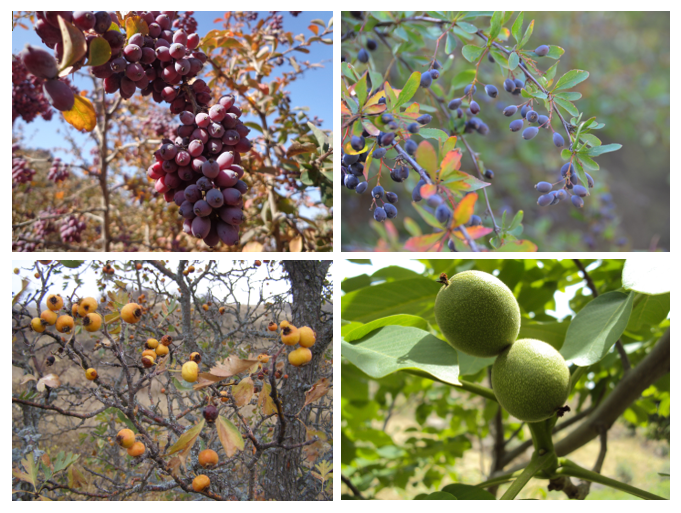
On the photo (from top left to the right): Berberis densiflora Boiss. et Buhse, Berberis turcomanica Kar., Crataegus pontica C. Koch, Juglans regia L.
Background Information on Turkmenistan’s Genetic Resources
The gene pool of wild relatives of cultivated plants represents an important source of genetic material for the development of new crop varieties. Turkmenistan’s flora comprises more than 3,000 species of higher plants, and according to expert estimates, includes 271 species of wild relatives of cultivated plants. Around 40 fruit crop species, together with groups of grain, legume and vegetable crops, form an important basis of modern agriculture. The country has a high level of species and genetic diversity and is located within one of the eight global centres of diversity of fruit crops, with wild relatives of a range of field, vegetable, fruit, melon and other crops occurring in the country. The diversity of cereal crops is also significant, particularly species of Aegilops, barley, oats and rye, as well as numerous species of onions. The group of wild tree and shrub relatives includes walnut, pistachio, almond, pomegranate, mulberry, fig, wild grapevine, apple, blackberry, barberry and rose, among other species. These genetic resources are widely used in crop production and horticulture.
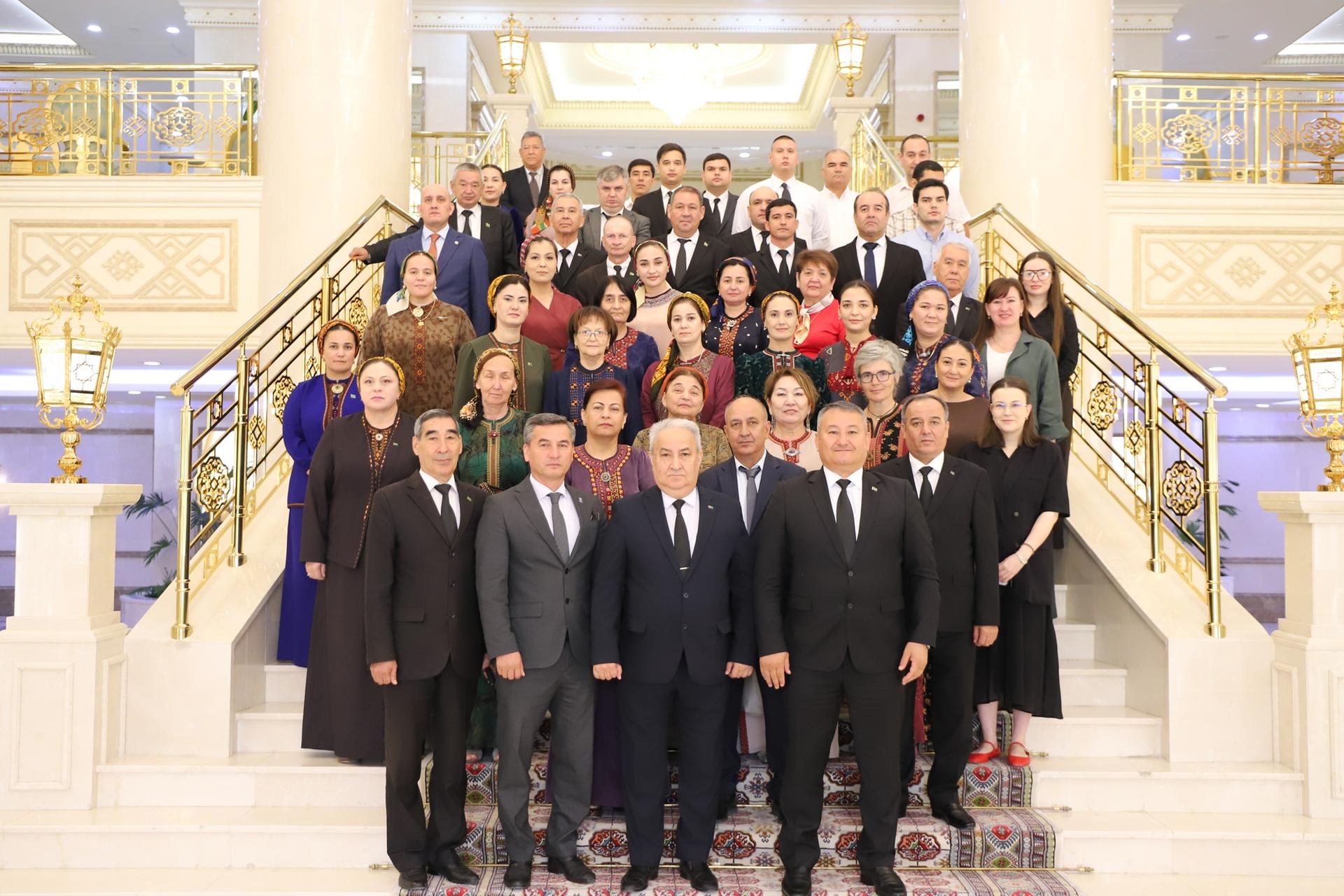 Group photo of participants of the National Seminar. Photocredit to UNDP Turkmenistan.
Benefits Arising from the Utilization of Genetic Resources
Genetic resources are used to generate new scientific knowledge, support innovation, and develop products, pharmaceuticals and cosmetics that can contribute to human well-being and health, strengthen food security and support sustainable economic growth. The Nagoya Protocol provides Parties with a framework for facilitating access to financial resources, advanced technologies, innovation and scientific and technological knowledge to support measures for the conservation and sustainable use of genetic resources.
The seminar also addressed legal gaps related to the implementation of both Protocols to the CBD. Recommendations were put forward to improve the national legislative framework in this area, strengthen national capacities and further enhance inter-agency cooperation. In accordance with the requirements of the Nagoya Protocol, Turkmenistan will need to undertake relevant legal reforms involving all stakeholders, alongside organizational, administrative and policy measures to support effective implementation.
To promote awareness of the Nagoya Protocol, an information brochure on the Nagoya Protocol was prepared, providing information on the objectives and key provisions of the Protocol, the concept of genetic resources, and the importance of their conservation and sustainable use in Turkmenistan.
Prepared by: Sh.B. Karryyeva, National Technical Adviser, CXL Project
The event supports the achievement of:
| Priority Area No 5 of REP4SD dedicated to SDG 15: “Protect, restore and promote sustainable use of terrestrial ecosystems” |
| 5.1.3 development of a unified methodology for ecosystem assessment, inventory and mapping for Central Asian countries; |
| 5.1.7 use of modern monitoring methods to account for flora and fauna species, ecosystem conditions, land resources; |
| 5.2.4 organization of joint activities on conservation and sustainable use of genetic resources, as well as research to prevent invasion of alien species into the territory of Central Asia; |
| Priority area No 6 of REP4SD dedicated to SDG 17: “Strengthen the means of implementation and revitalize the Global Partnership for Sustainable Development” |
| 6.1 Involvement of the region into implementation of global environmental conventions, programmes and initiatives. |