



Bishkek, Kyrgyz Republic, 23 June 2026 — Representatives of the Scientific-Information Center of the Interstate Commission on Sustainable Development of Central Asia (SIC ICSD) participated in the final regional conference, "Strengthening Climate Transparency and NDC Implementation in Central Asia: Results of ReCATH Phase II and Perspectives for Phase III," dedicated to reviewing the achievements of the second phase of the Regional Climate Action Transparency Hub (ReCATH) project and discussing future directions for regional cooperation on climate policy.
The conference brought together representatives of government institutions from the Central Asian countries, national climate coordinators and experts, as well as representatives of international organizations and development partners, including the Food and Agriculture Organization of the United Nations (FAO), the Initiative for Climate Action Transparency (ICAT), the Greenhouse Gas Management Institute (GHGMI), the German Agency for International Cooperation (GIZ), the United Nations Development Programme (UNDP), the United Nations Environment Programme (UNEP), the UNEP Copenhagen Climate Centre (UNEP-CCC), and multilateral development banks.
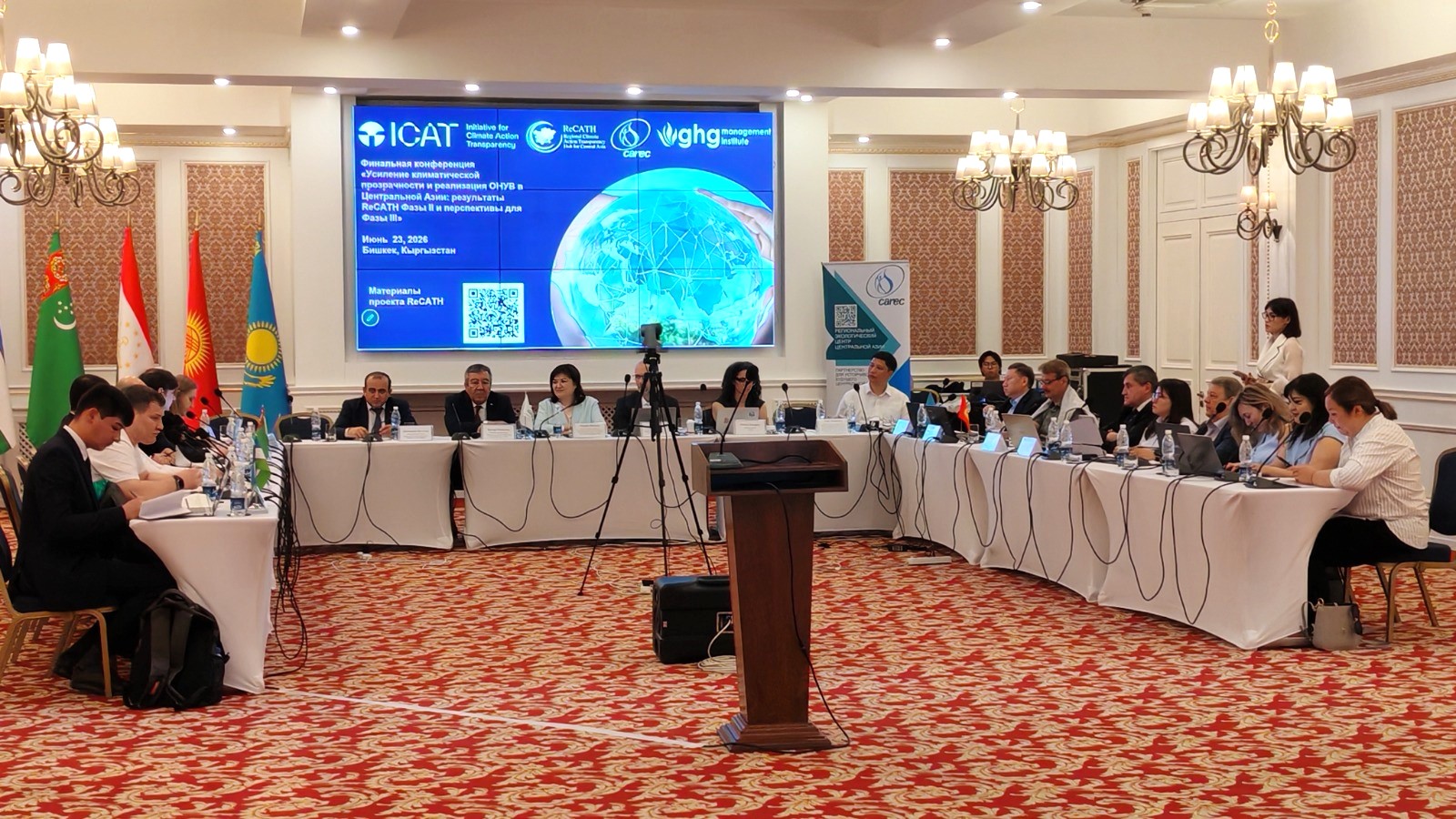 Regional Conference on the achievements of ReCATH Phase II. Photocredit to CAREC.
The primary objective of the conference was to present the achievements of ReCATH Phase II, which has focused on strengthening national and regional capacities in Central Asia to enhance climate transparency and support the implementation of commitments under the Paris Agreement. Participants also discussed the practical application of the tools and methodologies developed under the project and identified priority areas for the potential third phase of the initiative.
During the plenary and thematic sessions, participants reviewed progress in implementing Nationally Determined Contributions (NDCs), preparing the next generation of NDCs (NDC 3.0), strengthening national monitoring and reporting systems, advancing climate finance mechanisms, improving adaptation monitoring and evaluation, and reinforcing institutional capacities under the Enhanced Transparency Framework (ETF).
Particular emphasis was placed on the further institutionalization of regional cooperation. Representatives of the Central Asian countries discussed opportunities for developing harmonized approaches to adaptation monitoring and evaluation, strengthening mechanisms for tracking progress in NDC implementation, advancing climate finance instruments, and expanding the exchange of knowledge and experience across the region.
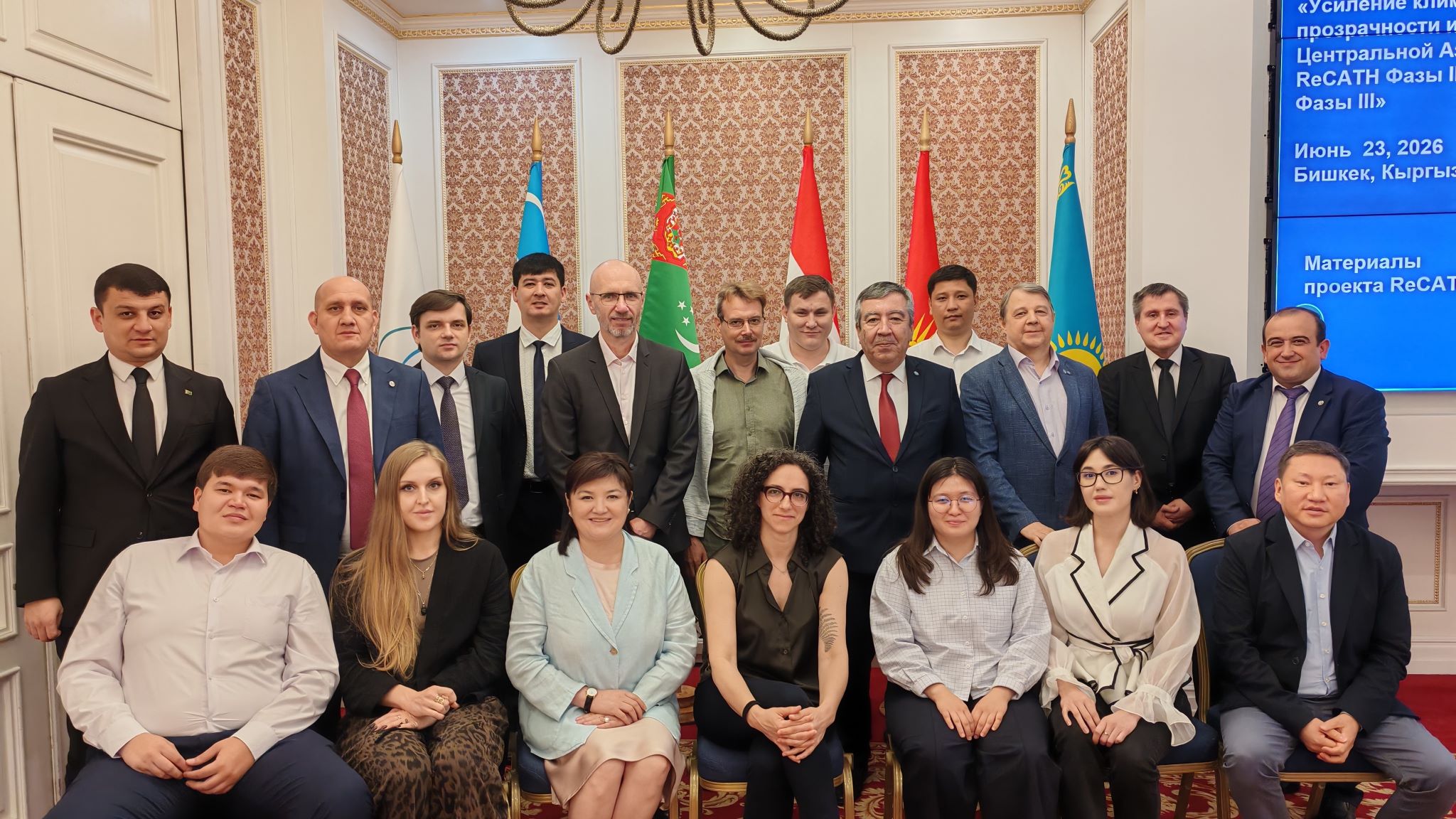 Participants of the Regional Conference on the achievements of ReCATH Phase II. Photocredit to CAREC.
Representatives of SIC ICSD actively participated in expert discussions focusing on regional coordination, the development of scientific and analytical cooperation, and the strengthening of institutional mechanisms supporting the implementation of the international climate agenda. The Center's participation contributed to the exchange of experience on integrating climate considerations into sustainable natural resources management and further strengthening cooperation between national and regional institutions across Central Asia.
For SIC ICSD, climate transparency, sustainable natural resource management, and the promotion of regional cooperation constitute important components of the implementation of the Regional Programme for Environmental Protection for Sustainable Development in Central Asia (REP4SD) 2020-2030. Participation in regional events of this nature contributes to strengthening scientific and technical cooperation among the countries of Central Asia, promoting coordinated approaches to implementing international climate commitments, and advancing integrated solutions that support environmental sustainability and sustainable development throughout the region.
The event supports the achievement of:
| Priority Area of REP4SD No 4 dedicated to SDG 13: “Take urgent action to combat climate change and its impacts” |
| 4.3 Assessment of climate risks and vulnerabilites through the application of corresponding models of a climate change impact on water resources, terrestrial ecosystems and natural disasters, tackling the development of state policies and strategies in this area. |