



Ulaanbaatar, Mongolia, 18 August 2026 — Representatives of the Scientific-Information Center of the Interstate Commission on Sustainable Development of the International Fund for Saving the Aral Sea (SIC ICSD IFAS) participated in a number of thematic events held on the second day on the margins of the seventeenth session of the Conference of the Parties to the United Nations Convention to Combat Desertification (UNCCD COP17).
During the morning session “Meteorology, Hydrology and Environmental Monitoring (NAMEM) – National rangeland monitoring network, including soil degradation and recovery trend”, findings were presented on the impacts of climate change and grazing on forage quality and soil fertility in the steppe areas of Central Mongolia, based on Sentinel-2 imagery. The discussion focused in particular on improving the assessment of forage quantity and nutritional quality. It was noted that forage quantity is assessed, inter alia, using indicators such as Aboveground Dry Biomass (AGB) and Vegetation Cover (VC); however, these indicators do not fully capture rangeland productivity. Assessment of forage nutritional quality, in turn, provides information on forage composition and quality, which directly influence the condition and productivity of grazing livestock. Key monitoring indicators highlighted during the session included total biomass, species richness, plant functional groups and vegetation cover.
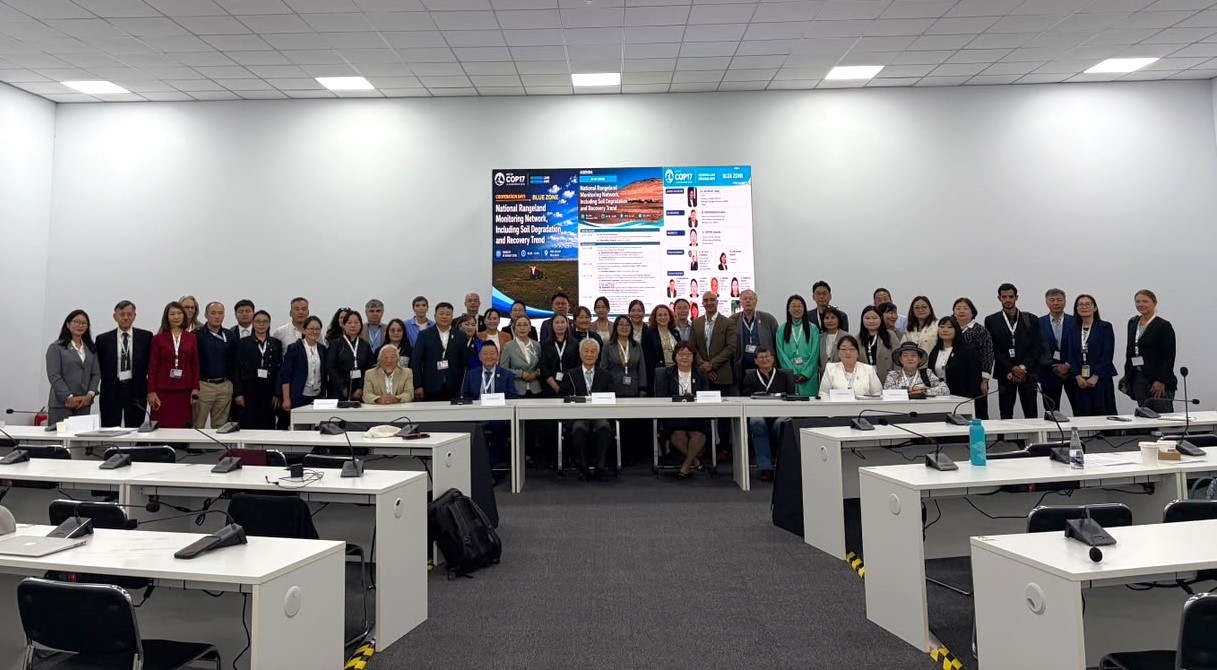 Participants of the Session on Pasture Management. Photocredit to organizers of the event.
A separate part of the discussion focused on the role of wetlands in integrated land and water resource management. Their importance for reducing greenhouse gas emissions, sustaining water resources and conserving biodiversity, including habitats for migratory species, was emphasized. An important aspect of the discussion was that the status of wetlands is reflected in reporting under a range of international environmental mechanisms and conventions. In particular, issues related to land degradation and the achievement of Land Degradation Neutrality (LDN) are addressed under the UNCCD; climate change adaptation and mitigation are addressed in the context of Nationally Determined Contributions (NDCs) under the UNFCCC; the status of wetlands is addressed under the Ramsar Convention; habitat and biodiversity conservation under the Convention on Biological Diversity (CBD); and migratory species under the Convention on the Conservation of Migratory Species of Wild Animals (CMS).
During the session “Launching the Drought Action Catalyst Strategy: Catalytic Assistance for Integrated Drought Resilience, Finance and Mitigation”, held at the International Union for Conservation of Nature (IUCN) Pavilion, Mr. Mukhammet Durikov, Director of SIC ICSD IFAS and UNCCD National Focal Point for Turkmenistan, delivered a presentation on the significance of Turkmenistan’s initiative to establish a Regional Center for Combating Desertification for the Countries of Central Asia.
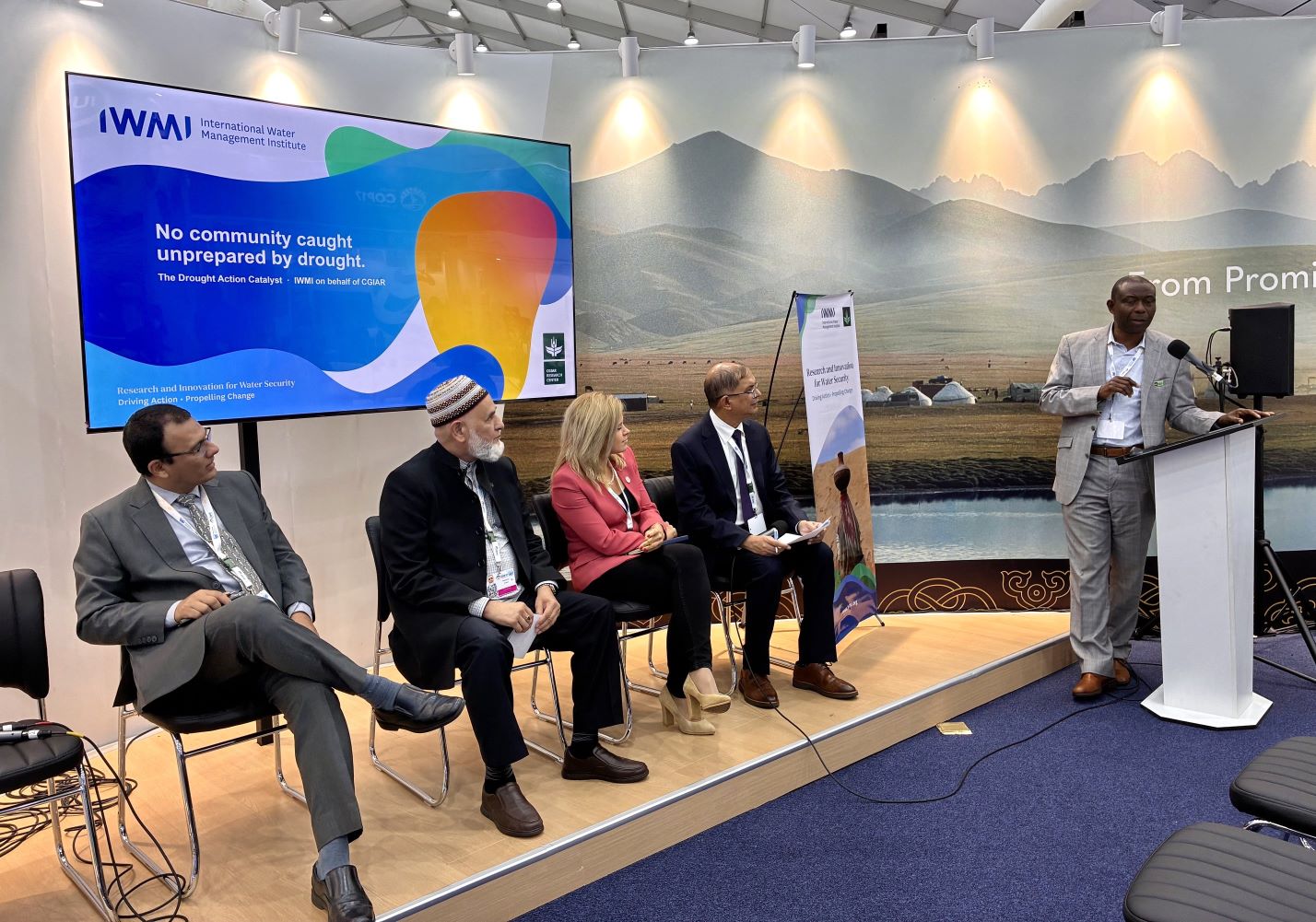 Participation of Dr.Durikov at the pannel discussion of IWMI. Photocredit to SIC ICSD.
During the session, the International Water Management Institute (IWMI) also presented the Strategic Framework for the Drought Action Catalyst, providing a strategic basis for implementation of the Drought Action Catalyst initiative. The mechanism presented aims to support governments and investors in addressing one of the persistent gaps in climate finance — insufficient investment in preventive action before drought impacts escalate, resulting in crop losses, damage to assets and disruption of livelihoods.
The Drought Action Catalyst promotes the strengthening of national drought action plans through inclusive and participatory approaches involving local communities and experts. A key element of the initiative is the translation of national drought plans into investment-ready project pipelines that can be supported by international financial institutions and development banks.
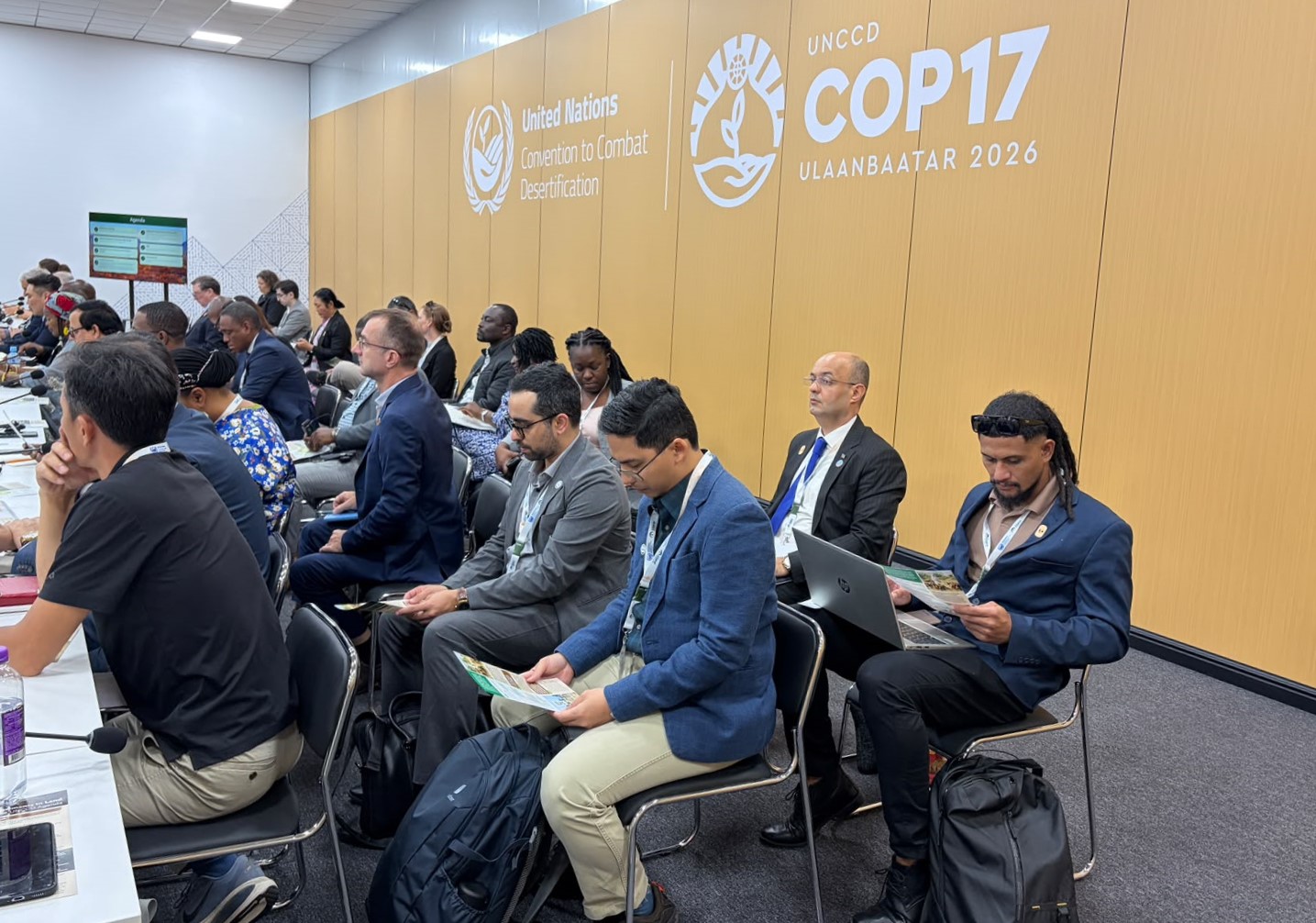 Participants of the Session dedicated to transition of GEF-8 to GEF-9. Photocredit to SIC ICSD.
At the session “Present and Future of GEF Support to UNCCD: From GEF-8 to GEF-9”, organized by the Global Environment Facility (GEF), information was presented on the development of a new Integrated Program on Drylands and Drought Management, aimed at supporting countries in proactively managing drought risks, strengthening the resilience of dryland areas, and addressing growing risks to ecosystems, food security, water resources, livelihoods and human health. The programme is expected to be implemented under the new GEF-9 investment cycle (2026-2030) in response to requests from Parties to the UNCCD to give greater priority to drought resilience in GEF programming.
For Central Asia, these developments provide additional opportunities to advance regional initiatives and mobilize international financing in such areas as preventing land degradation, strengthening drought resilience, restoring ecosystems and promoting sustainable natural resource management.
The participation of SIC ICSD IFAS experts in the thematic events of UNCCD COP17 contributes to enhanced access to contemporary international tools and approaches for land and rangeland monitoring, drought risk management, climate finance, and the restoration of degraded ecosystems.
The event contributes to the achievement of:
| Priority Area No 5 dedicated to SDG 15: “Protect, restore and promote sustainable use of terrestrial ecosystems” |
| 5.1.2 Capacity-building for sustainable management of forests, land, and pastures. |
| Priority area No 6 of REP4SD dedicated to SDG 17: “Strengthen the means of implementation and revitalize the Global Partnership for Sustainable Development” |
| 6.1 Involvement of the region into implementation of global environmental conventions, programmes and initiatives. |