



Ulaanbaatar, Mongolia, 19 August 2026 — Representatives of the Scientific-Information Centre of the Interstate Commission for Sustainable Development of the International Fund for Saving the Aral Sea (SIC ICSD IFAS) participated in a number of thematic events held on the margins of the seventeenth session of the Conference of the Parties to the United Nations Convention to Combat Desertification (UNCCD COP17). The discussions focused on sustainable rangeland and land management, drought and land degradation monitoring, the application of digital and innovative technologies, and strengthening linkages between science, policy and practice.
At the event “Global Partnership on Invasive Plant Species Management”, held at the International Union for Conservation of Nature (IUCN) Pavilion, participants discussed the spread of invasive plant species as a major driver of rangeland degradation and a growing threat to sustainable pastoralism. Practical examples from African countries were presented, together with approaches to the early detection and monitoring of invasive species using accessible tools. Particular attention was given to the development of the IUCN Invasive Alien Species Strategy, which aims to support efforts to prevent the introduction and spread of invasive species and reduce their impacts on ecosystems and livelihoods.
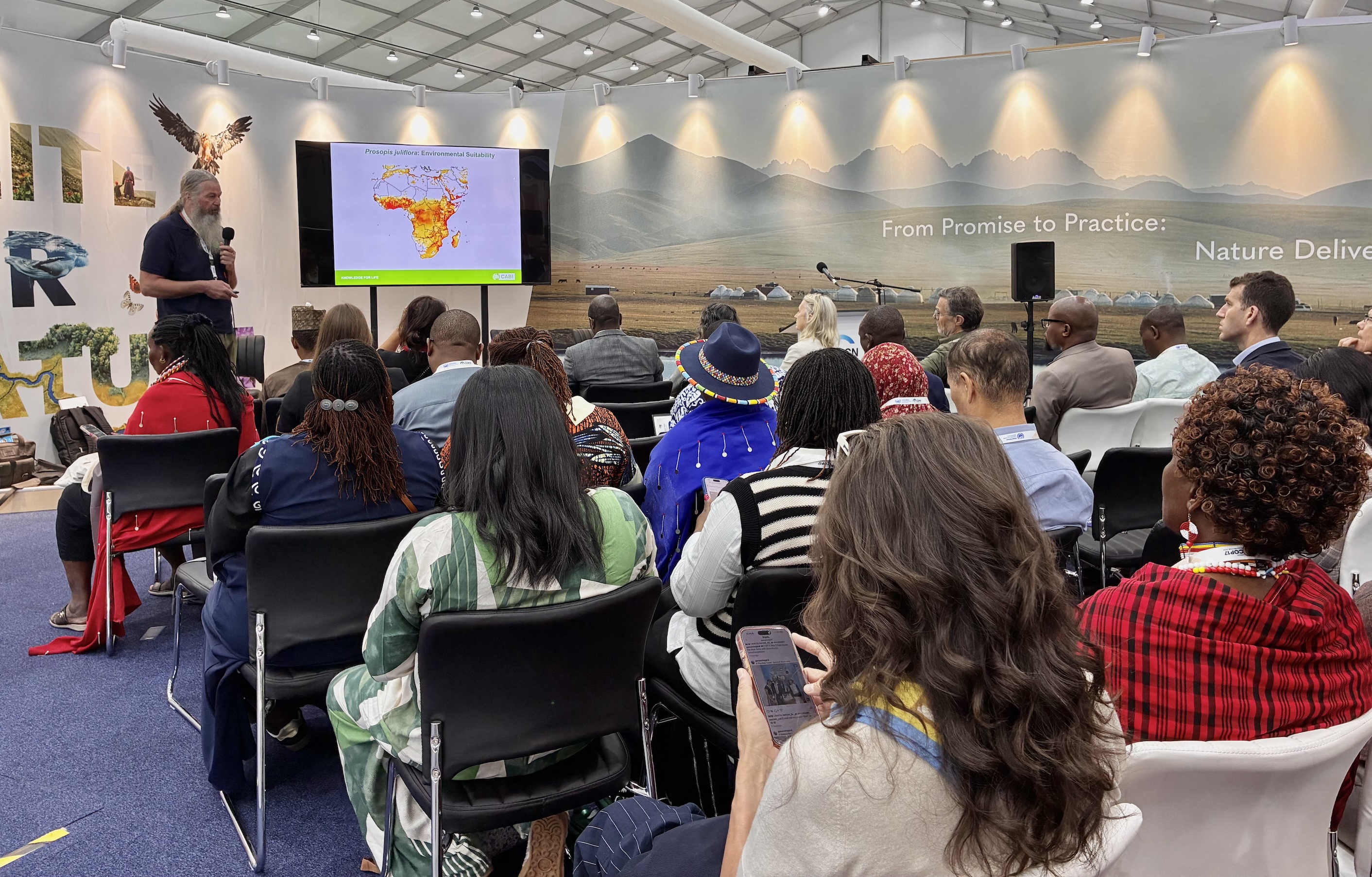 IUCN Pavillion side event of invasive plant species. Photocredit SIC ICSD.
At the session “Advances in Drought, Aridity and Impact Monitoring for Drought Resilience”, organized by the Integrated Drought Management Programme (IDMP) in cooperation with the European Commission’s Joint Research Centre (JRC), participants discussed modern approaches to monitoring drought, aridity and their impacts. The importance of timely access to reliable data and harmonized approaches to data interpretation was emphasized as essential for early warning, preparedness and informed decision-making.
Rangeland issues featured prominently at the event “From Community Rangelands to Climate Action: Pastoralism Priorities for Rangeland Restoration in South and Central Asia”, organized by the Maldhari Rural Action Group (MARAG, India) in cooperation with the South Asia Pastoral Alliance (SAPA). Discussions focused on rangeland restoration, the rights and interests of pastoral communities, and the need for greater engagement of local communities, women and youth in the development and implementation of land restoration policies. Particular attention was given to opportunities arising from the International Year of Rangelands and Pastoralists 2026 (IYRP 2026).
At the session “Harnessing AI to Advance Policy Coherence between the Rio Conventions and National Development Planning”, the UNDP AI Sprint Initiative was presented as a digital tool for analysing national policies and plans, including national adaptation plans, sectoral measures and their linkages with Land Degradation Neutrality (LDN), Nationally Determined Contributions (NDCs) and National Biodiversity Strategies and Action Plans (NBSAPs). The approach enables large volumes of information to be systematically analysed and results to be visualized for government authorities and other stakeholders.
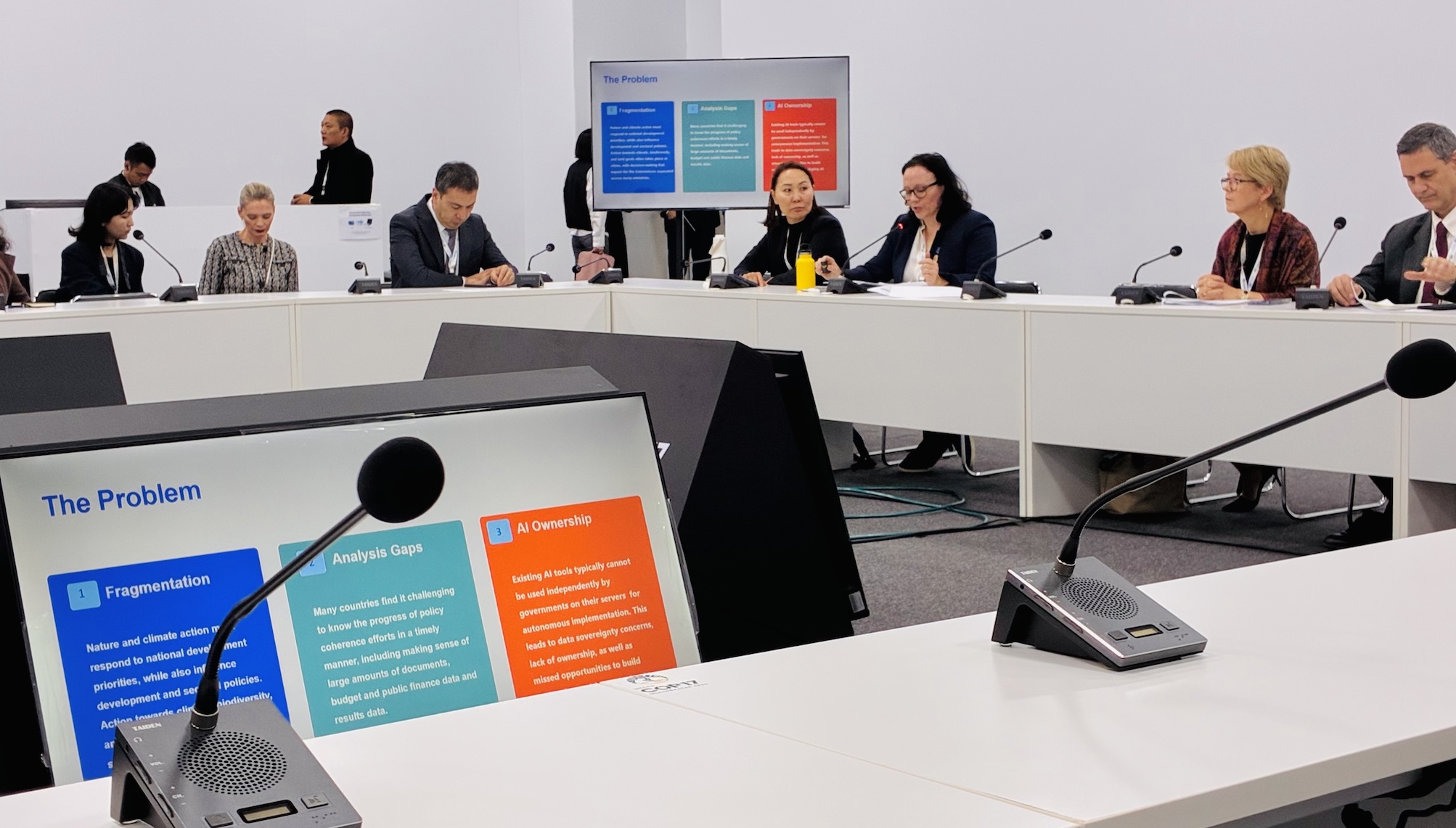
Side-event of UNDP on the introduction of AI tool for policy analysis. Photocredit to SIC ICSD.
During an event organized by the Apacheta Foundation it was discussed the CSIDS SoilCare Initiative, supported by PISLM, the Global Environment Facility (GEF) and the Food and Agriculture Organization of the United Nations (FAO), which aims to create enabling conditions for the implementation of LDN principles, including through the enhancement of ecosystem services and food security. This initiative was supported by a model for using 30-metre time-series datasets to develop and adapt land degradation monitoring models and algorithms, together with tools for visualizing the results, was presented.
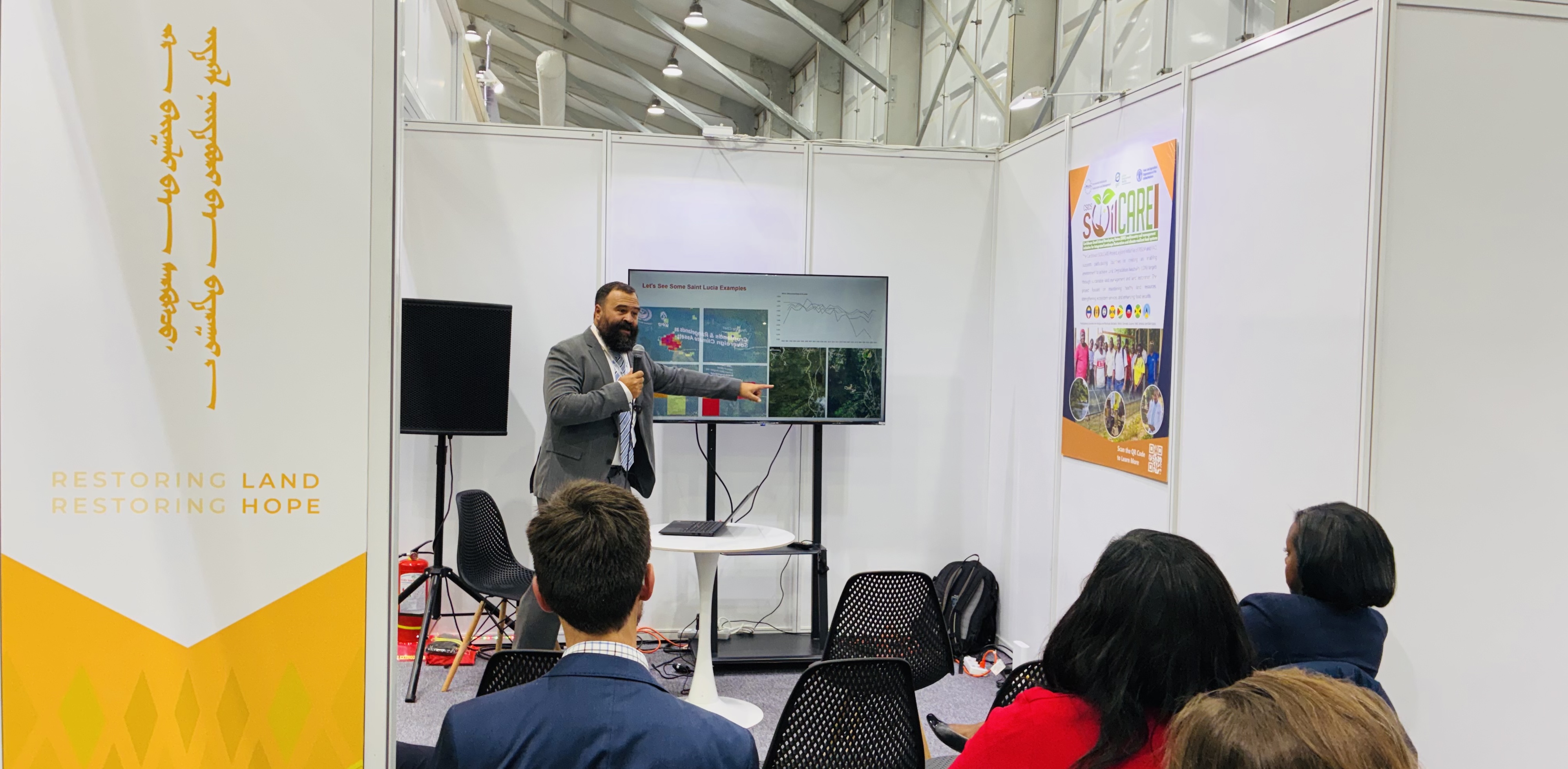 SIDS Pavillion side-event of Apacheta Foundation. Photocredit to SIC ICSD.
At the WMO event “Advances in Drought, Aridity and Impact Monitoring for Drought Resilience”, participants reviewed modern systems for monitoring drought risks and impacts, including the European Drought Impact Database (EDID-EMM) and various automated solutions for use at national, sectoral and local levels. Countries shared experience in applying drought indicators, including SPI, SPEI, PDSI, soil moisture indicators and satellite-based vegetation health indices, as well as the potential application of artificial intelligence and machine learning to analyse and model drought impacts.
Of particular interest was the Drought Impact Tracker, a mobile tool based on ESRI technologies that enables the collection of information on drought impacts directly from the field. The tool is currently being piloted in Africa with the support of the UNCCD and the Sahara and Sahel Observatory. The Global Drought Mosaic was also presented as a tool for harmonized visualization of national and regional drought data across four standardized categories: no drought, moderate, severe and extreme drought.
The final event of the day was the Technical Workshop on the Global Implementation Initiative on Sand and Dust Storms (GI-SDS), which focused on the practical implementation of the Global Initiative on Sand and Dust Storms. Participants discussed priority actions, partnerships and investment needs for the Initiative’s first implementation phase, covering 2026-2030. Among the practical solutions presented was LandPKS, a mobile application for assessing and monitoring land conditions, designed to support informed decision-making and the adoption of more sustainable land management practices.
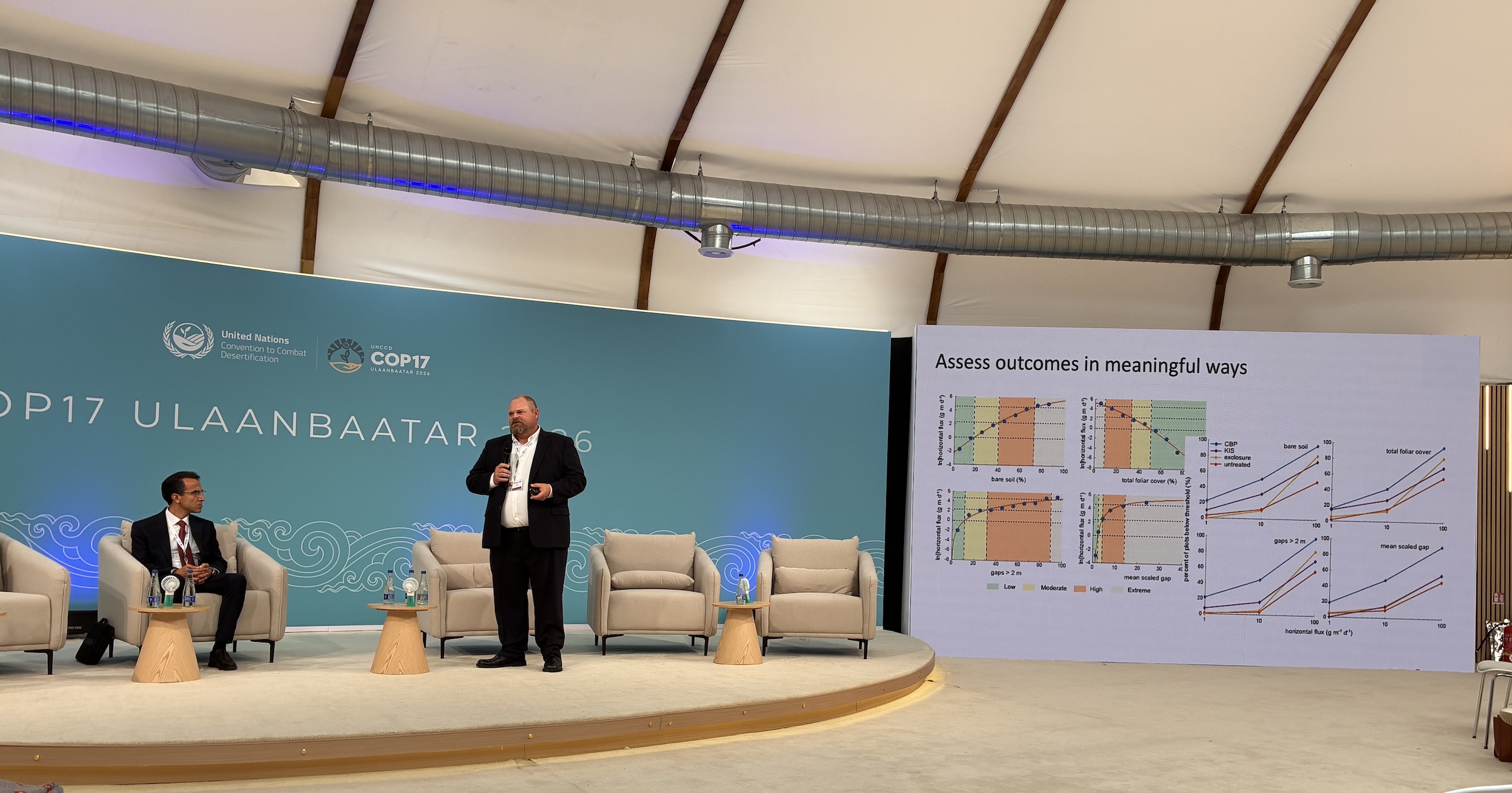 Workshop in the Action Dome on discussing the Global Initiative on Sand and Dust Storms. Photocredit to SIC ICSD.
Participation of SIC ICSD IFAS in the thematic events of COP17 provided an opportunity to gain insights into the latest international approaches, tools and technologies for monitoring land, drought and rangeland ecosystems, while further strengthening opportunities for scientific and technical knowledge exchange and international and regional cooperation in Central Asia.
The event contributes to the achievement of:
| Priority Area No 5 dedicated to SDG 15: “Protect, restore and promote sustainable use of terrestrial ecosystems” |
| 5.1.1 Integration of the ecosystem approach for climate change adaptation at the strategic, programmatic and project levels to improve cross-sectoral collaboration (and sectoral plans) and ecosystem protection, restoration and sustainable management. |
| 5.1.2 Capacity-building for sustainable management of forests, land, and pastures. |
| 5.1.7 use of modern monitoring methods to account for flora and fauna species, ecosystem conditions, land resources. |
| Priority area No 6 of REP4SD dedicated to SDG 17: “Strengthen the means of implementation and revitalize the Global Partnership for Sustainable Development” |
| 6.1 Involvement of the region into implementation of global environmental conventions, programmes and initiatives. |