



Ashgabat, Turkmenistan, 9 February 2026 – A roundtable entitled “Scaling Up Climate-Resilient Practices through Digitalization of Land and Water Monitoring” was held in a hybrid format at the United Nations building in Ashgabat. The event was organized within the framework of cooperation between the UNDP project “Conservation and Sustainable Management of Land Resources and High Nature Value Ecosystems in the Aral Sea Basin” and the Scientific-Information Center of the Interstate Commission on Sustainable Development (SIC ICSD). The roundtable was dedicated to the World Wetlands Day, observed on 2 February, and aimed at ensuring the ecological integrity of wetlands and achieving land degradation neutrality in the Amudarya River basin in Turkmenistan.
In the current context, where the country’s wetlands are recognized as critically important ecosystems, the establishment of a reliable and integrated land and water monitoring system is of particular relevance. A comprehensive approach to natural resource management is directly linked to Turkmenistan’s implementation of its international commitments under the United Nations Convention to Combat Desertification (UNCCD) and the Ramsar Convention on Wetlands. The combined application of these instruments enables the development of a science-based strategy to conserve biodiversity, maintain water balance, and restore degraded lands.
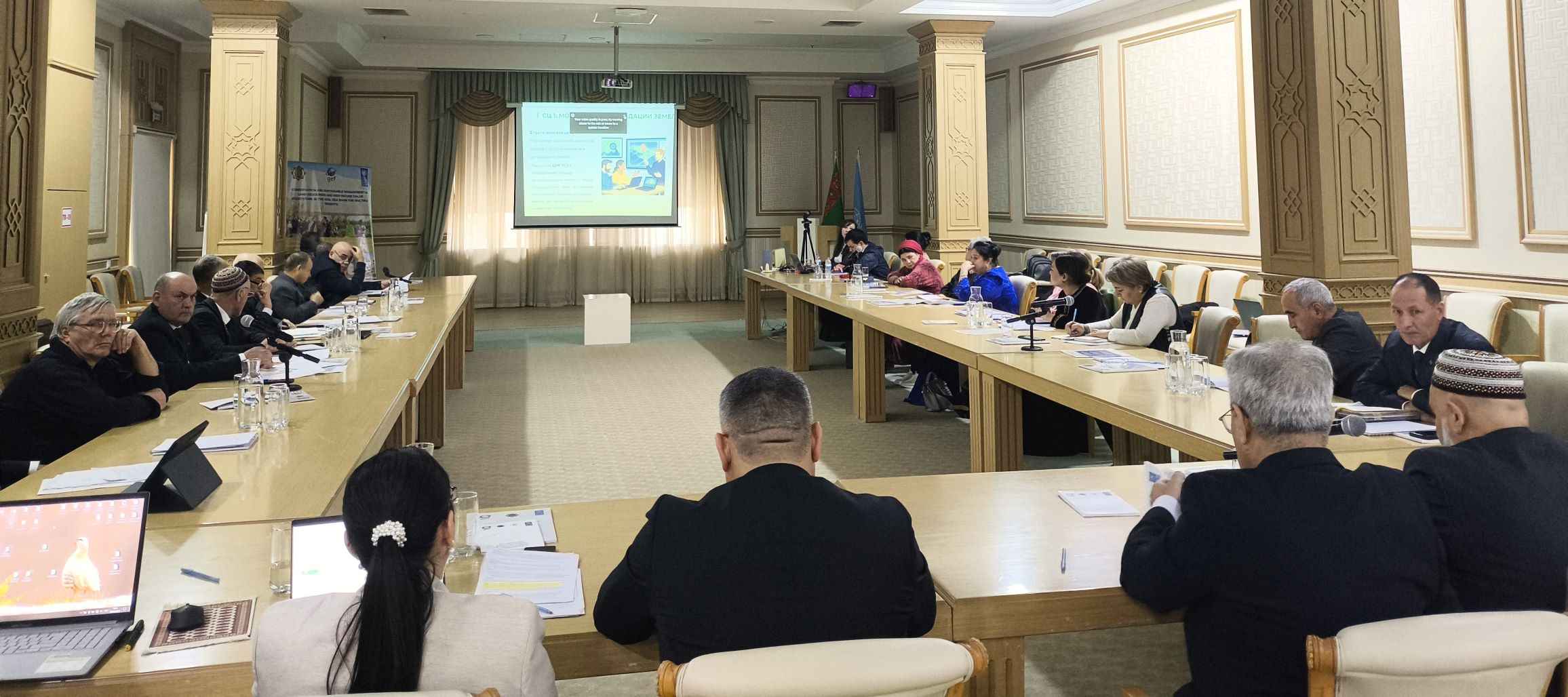 Discussion during the Round table. Ptohocredit to UNDP Project.
The primary objective of the roundtable was to establish a sustainable cross-sectoral platform to integrate the efforts of government institutions, the scientific community, digital technology experts, and international organizations in introducing modern tools for monitoring and resource management. Particular emphasis was placed on the digital transformation of observation systems through the application of GIS technologies and remote sensing.
SIC ICSD played a key role in organizing and shaping the substantive agenda of the event, serving as a central scientific and analytical platform for advancing discussions on land degradation neutrality and strengthening international reporting mechanisms. Mr. Muhammet Durikov, Director of SIC ICSD and National Coordinator of the UNCCD in Turkmenistan, delivered a presentation on the application of the UNCCD reporting system through the PRAIS 4 platform as a tool for monitoring land degradation, including wetlands. In his remarks, he underscored the importance of institutionalizing digital approaches to data collection and analysis, noting that the establishment of a unified information database constitutes the foundation for informed strategic decision-making and for enhancing the effectiveness of the country’s implementation of its international obligations.
A practical example of innovative digital solutions was presented by Mr. Nikolay Nikolayev, representative of SIC ICSD, who introduced an online tool designed to assess the level and surface area of water bodies using the Keleyf Lakes complex as a case study. The tool, previously tested for monitoring the dynamics of the Caspian Sea, has been adapted to the conditions of the Amudarya basin and demonstrated strong potential for integration into the national water resource monitoring system. The presentation generated considerable interest among participants as an effective and transparent decision-support mechanism.
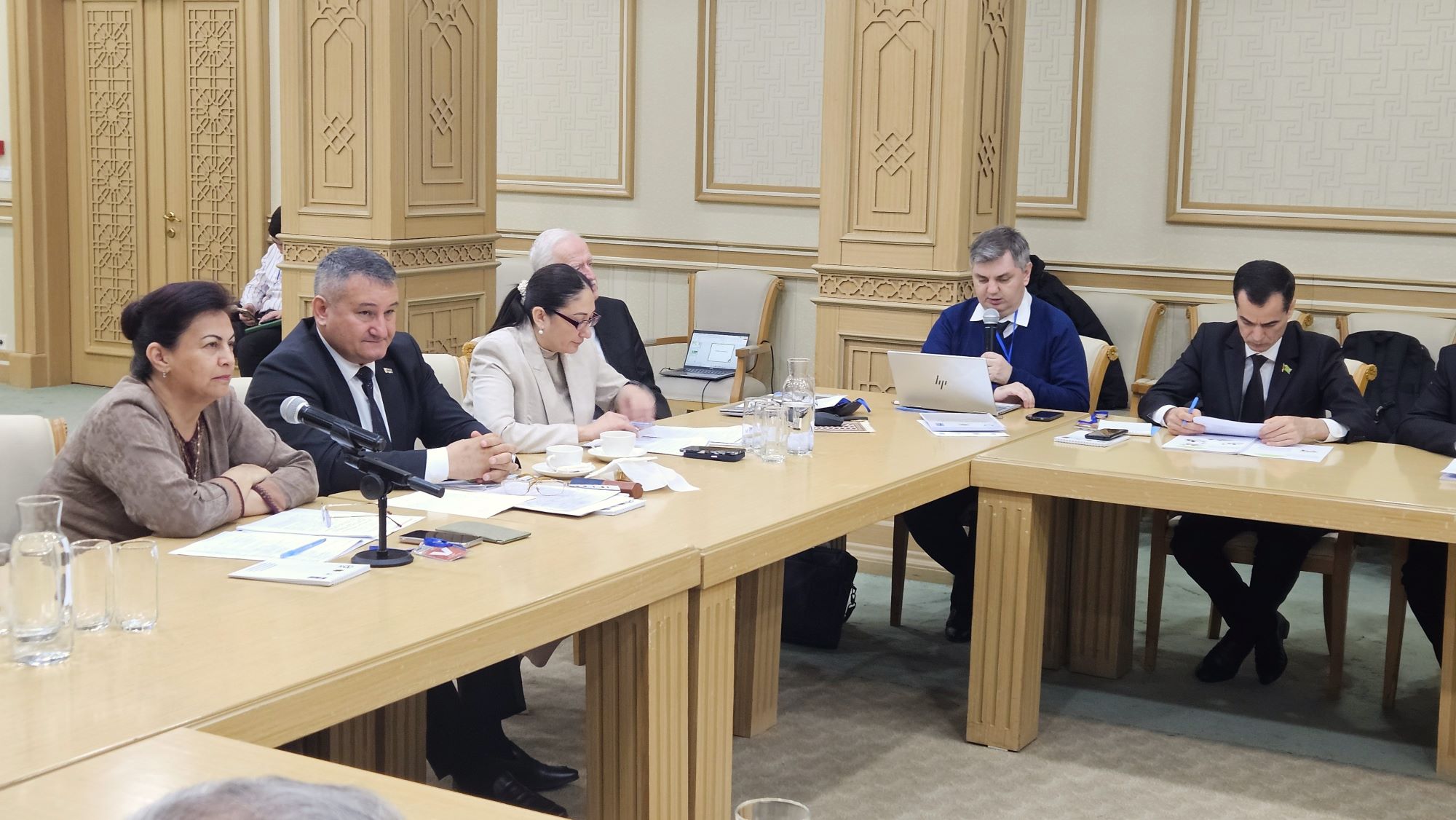 Discussion during the Round table. Ptohocredit to UNDP Project.
The roundtable also featured presentations on the results of winter monitoring of waterbird populations, discussions on strengthening biodiversity protection legislation, the development of specially protected natural areas, and the establishment of statistical databases for environmental activities. Particular attention was given to enhancing inter-agency coordination to harmonize national regulatory frameworks with international environmental standards.
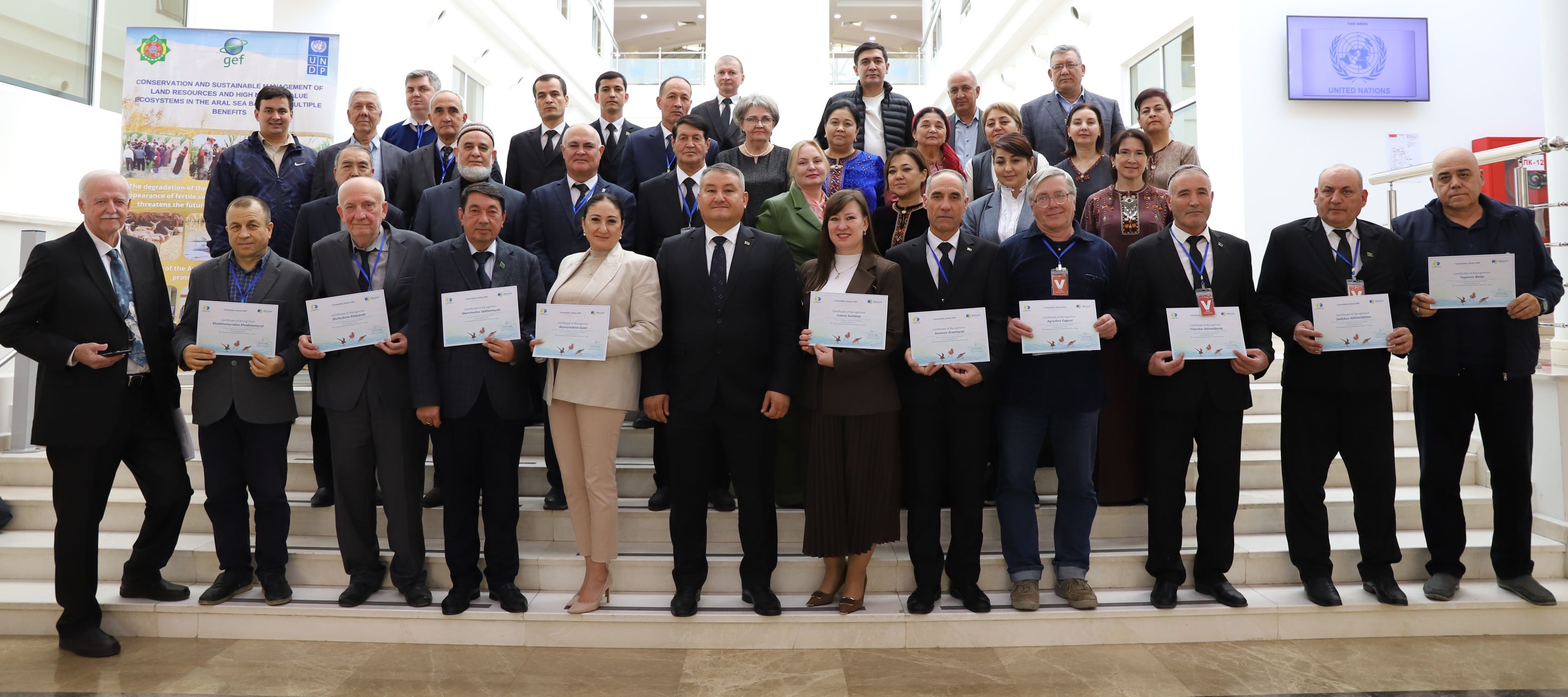 Group photo of the Round table participants. Ptohocredit to UNDP Project.
In concluding the event, participants emphasized the importance of further advancing digital solutions for ecosystem monitoring in line with the UNCCD reporting methodology, expanding science-based approaches to land degradation assessment, and strengthening inter-institutional cooperation. The roundtable marked another important step in building the capacity of national partners and reaffirmed the active role of SIC ICSD in promoting an integrated approach to sustainable natural resource management in the region.
The event supports the achievement of:
| Priority Area No 5 of REP4SD dedicated to SDG 15: “Protect, restore and promote sustainable use of terrestrial ecosystems” |
| 5.1.7 use of modern monitoring methods to account for flora and fauna species, ecosystem conditions, land resources. |
| Priority area No 6 of REP4SD dedicated to SDG 17: “Strengthen the means of implementation and revitalize the Global Partnership for Sustainable Development” |
| 6.1 Involvement of the region into implementation of global environmental conventions, programmes and initiatives. |