



Astana, Republic of Kazakhstan, 22-24 April 2026 — Representatives of the Interstate Commission on Sustainable Development of Central Asia (ICSD) from Kazakhstan, Kyrgyzstan, Tajikistan, Turkmenistan and Uzbekistan participated in the Regional Environmental Summit 2026 (RES 2026), convened at the initiative of the President of the Republic of Kazakhstan, Kassym-Jomart Tokayev. The Summit brought together more than 20,000 participants, including official delegations from 15 countries, representatives of international organizations and the United Nations system, as well as members of the expert and civil society communities.
The participation of ICSD and its Scientific-Information Centre provided an opportunity to engage with key regional and global trends in environmental protection and sustainable development, and to explore prospects for further cooperation in the implementation of the Regional Environmental Programme for Sustainable Development of Central Asia (REP4SD CA) and related initiatives.
 ICSD Representatives participating at the Regional Environmental Summit 2026. Photocredit to SIC ICSD.
A thematic session was held on integrated measures to address climate change, land restoration and biodiversity conservation for ensuring food security and resilience, with a focus on strengthening synergies among the Rio Conventions. Discussions underscored the need for integrated approaches linking climate policy, sustainable land management and biodiversity conservation. Particular emphasis was placed on the interlinkages between ecosystem health and food security, as well as on the importance of coordinated efforts within international processes, including forthcoming Conferences of the Parties. The session also highlighted the importance of enhanced cross-sectoral cooperation and the development of coordinated regional approaches to strengthen resilience to climate and environmental challenges in Central Asia. In addition, approaches to advancing the circular economy aimed at improving resource efficiency and reducing waste were considered.
On the second day, discussions focused on accelerating green and low-carbon industrialization, addressing health issues in the context of environmental challenges, and exploring the future of global climate cooperation. Dedicated sessions also addressed the “Harmony with Nature” initiative and opportunities for scaling up financing for environmental action in the region.
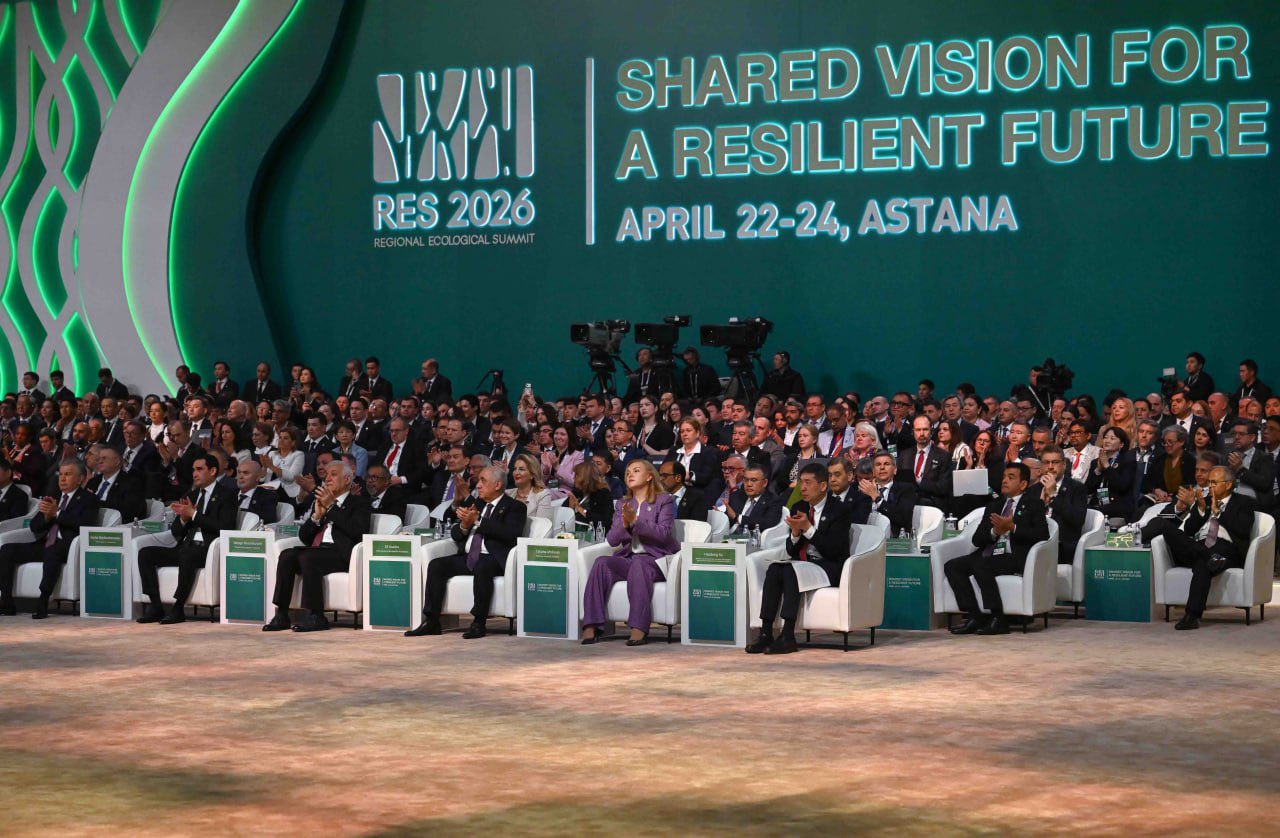 Regional Environmental Summit 2026. Photocredit to organizers of the event.
High-level dialogues addressed cooperation among Caspian states under the Tehran Convention, including the implementation of the Caspian Sea Level Fluctuation Action Plan for 2026–2036. A Joint Subregional Programme of Action on the cryosphere in Central Asia was also presented, aimed at strengthening glacier monitoring and advancing climate adaptation measures.
On the third day, attention was given to early warning systems and disaster risk reduction, including the exchange of experience in preventing risks associated with glacial lake outburst floods, as well as strengthening the institutional sustainability of relevant systems.
The Summit concluded with the adoption of the Joint Declaration “Environmental Solidarity of Central Asia” and the endorsement of a Regional Action Programme with UN agencies through 2030. In total, more than 50 documents were signed, including memoranda, joint statements and investment projects, reflecting the strong political commitment of the countries of the region to enhancing environmental cooperation and advancing sustainable development.
The event supports the achievement of:
| Priority area No 6 of REP4SD dedicated to SDG 17: “Strengthen the means of implementation and revitalize the Global Partnership for Sustainable Development” |
| 6.1 Involvement of the region into implementation of global environmental conventions, programmes and initiatives. |