



Tashkent, Republic of Uzbekistan, 3-6 February 2026 – A subregional capacity-building workshop on the implementation of Target 3 of the Kunming–Montreal Global Biodiversity Framework (GBF) was held at the Central Asian University for Environmental and Climate Change Studies (Green University). The workshop was organized by the Secretariat of the Convention on Biological Diversity (CBD) in cooperation with the International Union for Conservation of Nature (IUCN), with the support of the National Committee of the Republic of Uzbekistan on Ecology and Climate Change.
Target 3 of the GBF calls for the conservation of at least 30 per cent of terrestrial, inland water, marine and coastal areas by 2030 through the expansion and effective management of protected areas, the recognition of other effective area-based conservation measures (OECMs), and the acknowledgement of the territories of Indigenous Peoples and local communities.
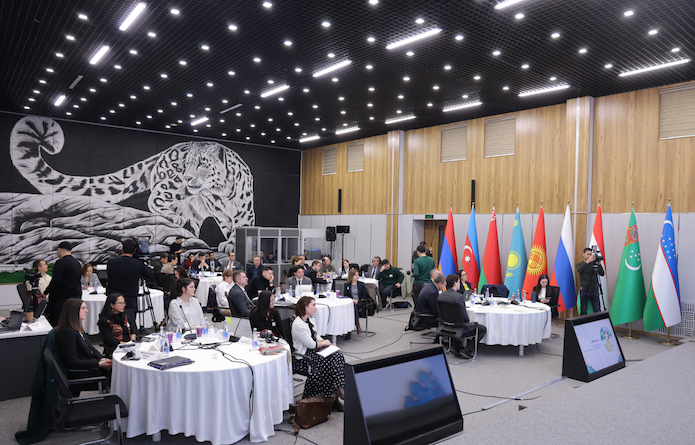 Session of the subregional capacity-building Workshop. Photocredit to the National Committee on Ecology and Climate Change of the Republic of Uzbekistan
The workshop aimed to support five Central Asian countries, as well as Armenia, Azerbaijan, Belarus and the Russian Federation, in strengthening national action for biodiversity conservation. Participating countries identified national priority measures, assessed existing gaps and opportunities, and outlined steps to enhance regional cooperation in order to accelerate progress towards biodiversity conservation through effectively managed protected areas. The event promoted peer learning, exchange of experience, transboundary cooperation, strengthened regional coherence and coordination, and the more effective use of available tools for the implementation of Target 3.
-Picsart-AiImageEnhancer.jpg)
Delegation of Turkmenistan at the Subregional Workshop. Photocredit to the author of the article.
Protected areas play a critical role not only in safeguarding wildlife and ecosystems, but also in supporting human well-being. Healthy ecosystems ensure access to clean water, sustain food systems, reduce disaster risks such as floods and landslides, contribute to climate regulation, and provide livelihoods for millions of people. By maintaining ecosystem integrity and reducing pressures on wildlife and habitats, they also advance the One Health approach by lowering risks associated with biodiversity loss, including the emergence and spread of zoonotic diseases.
Strengthening protected area systems is therefore essential for both biodiversity conservation and sustainable development. Target 3 of the Global Biodiversity Framework is of particular importance to Turkmenistan. While protected areas currently cover 4.38 per cent of the country’s territory, Turkmenistan intends to further increase this figure by expanding the protected area network, improving ecological connectivity and management effectiveness, and pursuing UNESCO World Heritage status for sites that meet the relevant criteria. Plans include the establishment of a new Balkan cluster of protected areas covering approximately 4,500 km² (0.92 per cent of the national territory), including buffer zones critical for ecological connectivity in the north-western part of the country.
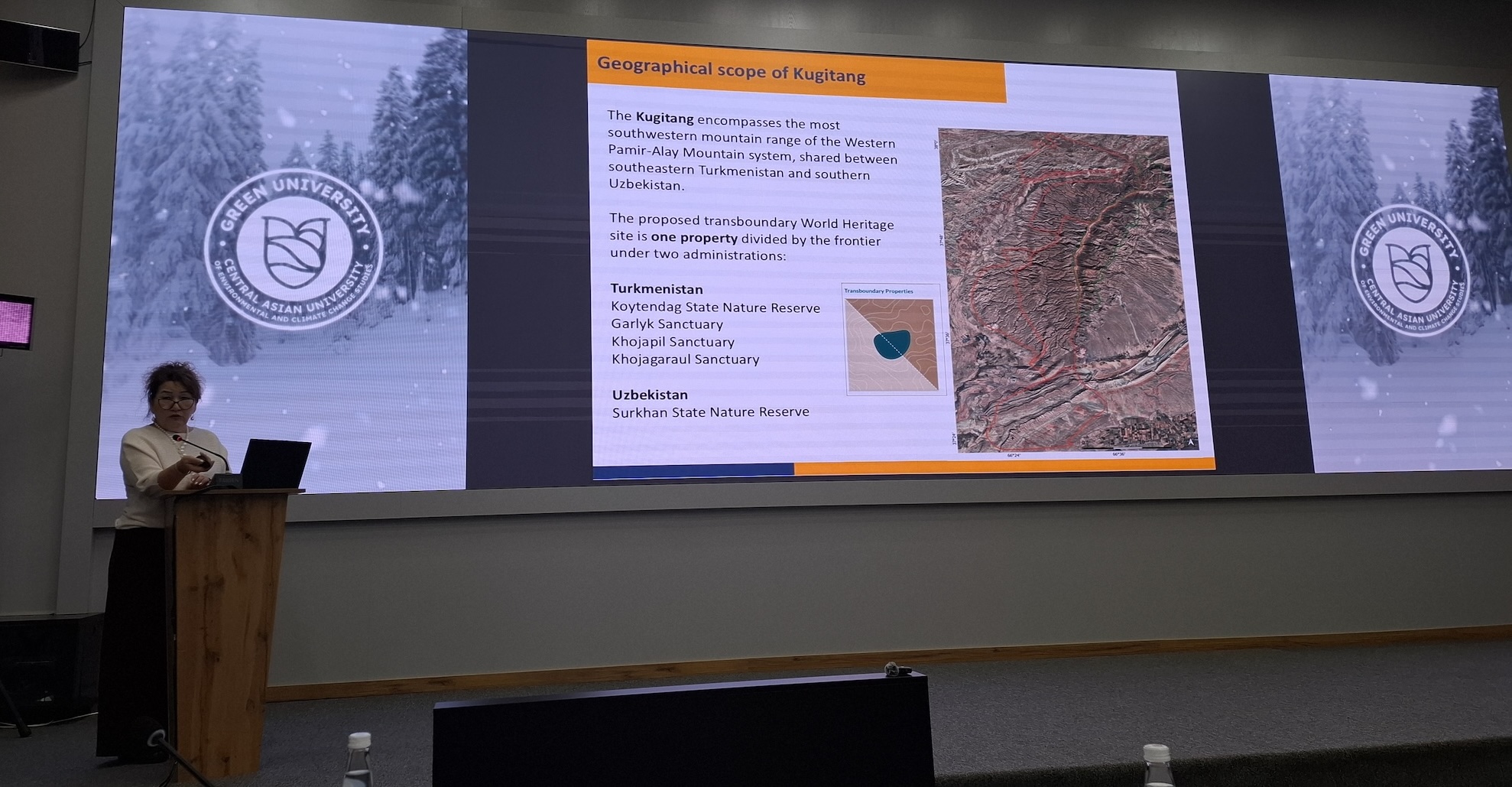 Presentation by Karryyeva Sh. at the Workshop. Photocredit to the author of the article.
In September 2023, the transnational serial property “Cold Winter Deserts of Turan” (Kazakhstan, Turkmenistan and Uzbekistan) was inscribed on the UNESCO World Heritage List. This marked the first natural World Heritage nomination for Turkmenistan, with three desert reserves including Gaplangyr, Repetek and Bereketli Garagum, receiving international recognition. Work is also ongoing to nominate the Koytendag State Nature Reserve as a transboundary World Heritage site in cooperation with Uzbekistan. In addition, three new wildlife sanctuaries - Tallymerjen, Zengibaba and Pitnyak - are planned in Lebap velayat, with a total area exceeding 99,000 hectares.
Through its expert commissions, including the World Commission on Protected Areas (WCPA), IUCN stands ready to support countries in strengthening conservation systems by sharing global expertise, applying science-based standards and best practices, and promoting tools such as the IUCN Green List. Effectively and equitably managed protected areas are essential not only for biodiversity conservation but also for sustaining livelihoods, enhancing human well-being and building resilience to global challenges.
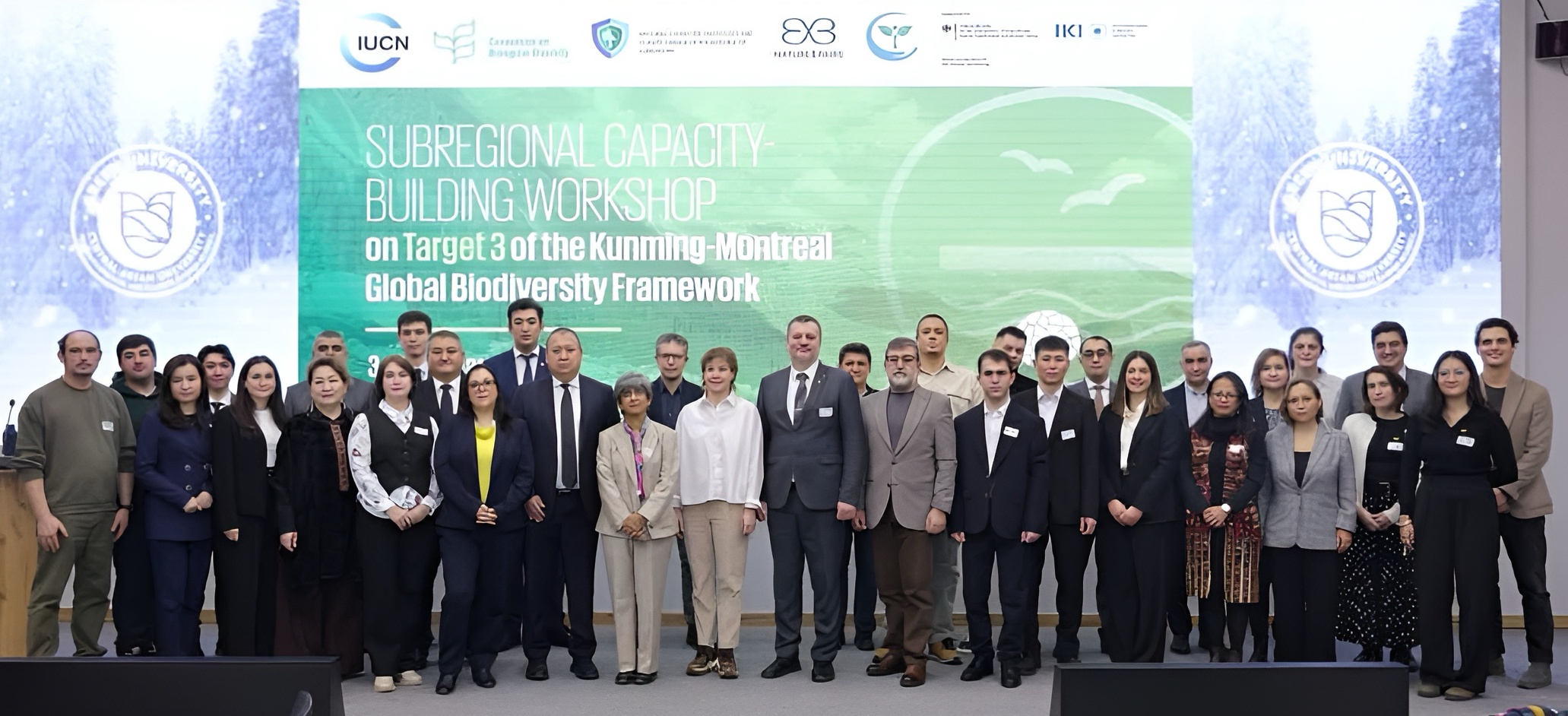 Group photo of Workshop participants. Photocredit to the National Committee on Ecology and Climate Change of the Republic of Uzbekistan
The workshop was also supported by IUCN in its role as the official Subregional Technical and Scientific Cooperation (TSC) Centre of the CBD for Central Asia. TSC centres are designed to accelerate implementation of the Kunming–Montreal Global Biodiversity Framework by providing countries with tailored scientific knowledge, tools, expert support and capacity-building opportunities. By strengthening regional and national capacities, promoting innovation and technology transfer, and mobilizing technical and financial resources, these centres facilitate demand-driven cooperation aligned with national and regional priorities to achieve tangible biodiversity outcomes.
The workshop was financed by the Federal Ministry for the Environment, Nature Conservation, Nuclear Safety and Consumer Protection of Germany through the International Climate Initiative (IKI) and the One Health project “Strengthening landscape resilience to zoonotic disease emergence by enhancing conservation systems in Central Asia”, as well as with the support of the Republic of Korea through the Peace and Biodiversity Dialogue Initiative (PBDI), the French Biodiversity Agency (Office Français de la Biodiversité) and the High Ambition Coalition for Nature and People (HAC).
Prepared by: Sh. Karryeva, Technical Adviser, CXLs Project
The event supports the achievement of:
| Priority Area of REP4SD No 5 dedicated to SDG 15: “Protect, restore and promote sustainable use of terrestrial ecosystems” |
| 5.2.5 organization of joint activities to control pests and diseases of agricultural plants and forest plantations in the border areas of the Central Asian countries; |
| Priority area No 6 of REP4SD dedicated to SDG 17: “Strengthen the means of implementation and revitalize the Global Partnership for Sustainable Development” |
| 6.1 Involvement of the region into implementation of global environmental conventions, programmes and initiatives. |