



Samarkand, Republic of Uzbekistan, 24 November – 5 December 2025 – Representatives of Uzbekistan Branch of the Scientific-Information Centre of the Interstate Commission on Sustainable Development (SIC ICSD) took part in the organization and proceedings of the 20th meeting of the Conference of the Parties to the Convention on International Trade in Endangered Species of Wild Fauna and Flora (CITES CoP20), held at the Expo Centre of the Silk Road Samarkand tourist complex.
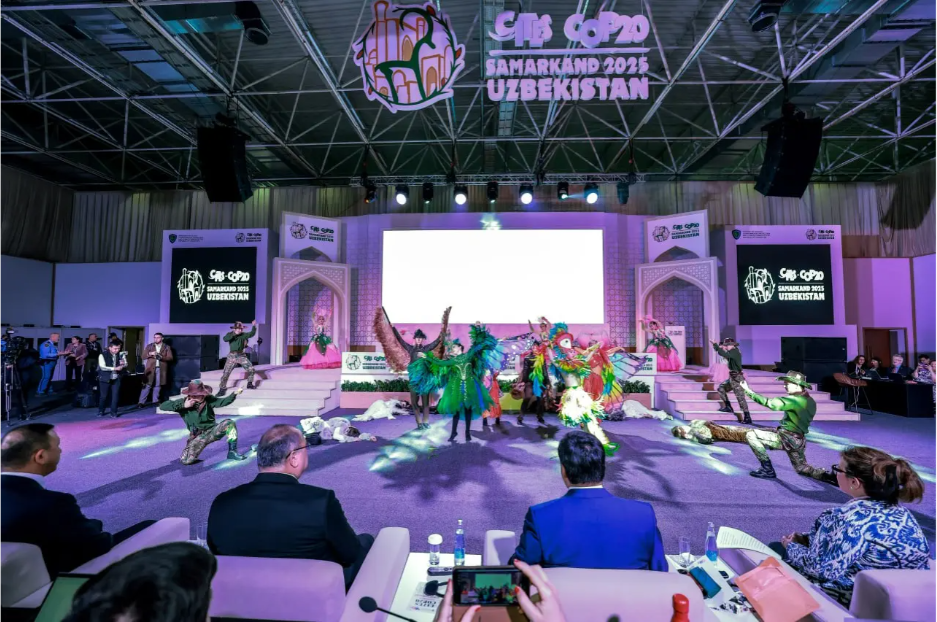 Official opening ceremony of the CITIES CoP20. Photo credit to National Committee on Ecology & Climate Change of RU
CITES CoP20 marked the first large-scale meeting of the Convention ever held in Central Asia, underscoring the growing role of the region in the global biodiversity conservation agenda. The Conference brought together approximately 3,400 participants, including nearly 1,000 government representatives from 163 Parties to the Convention, more than 200 observer organizations, over 100 representatives of international and national media, as well as numerous local participants. A total of 105 agenda items were considered, with consensus reached on the majority of issues and 29 decisions adopted through voting. More than 50 side events complemented the negotiations, including the launch of new CITES e-learning courses on the InforMEA platform, guidance on trade sustainability assessments, and updates from the International Consortium on Combating Wildlife Crime (ICCWC).
The Conference focused on strengthening global measures for biodiversity conservation, improving mechanisms regulating international trade in rare and endangered species, and enhancing international and regional cooperation.
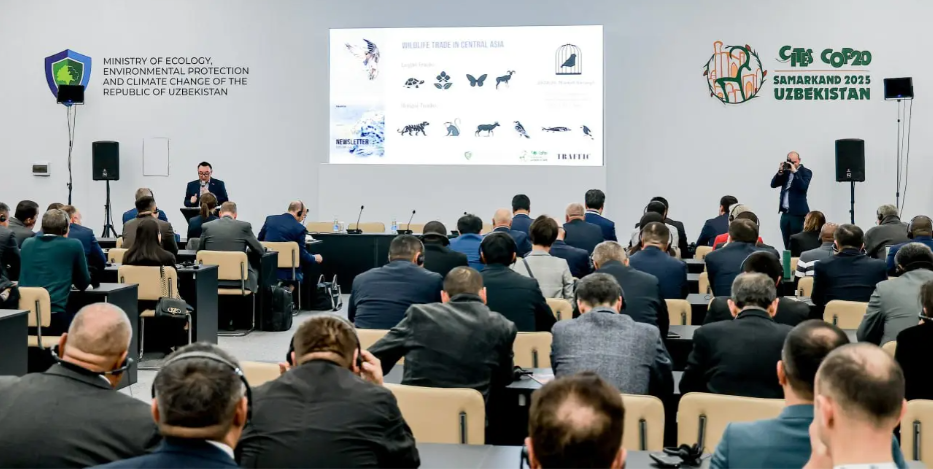
Parallel sessions of the CITIES CoP20. Photo credit to National Committee on Ecology & Climate Change of RU
During the High-Level Dialogue, a signing ceremony was held for the Samarkand Declaration and the Action Plan for 2026-2032 on combating illegal wildlife trade, concluded between the Republic of Uzbekistan, the Republic of Kazakhstan, the Kyrgyz Republic and the Republic of Tajikistan. The Parties agreed to strengthen regional cooperation through regular exchange of operational information, development of joint control mechanisms, establishment of a regional network to counter illegal trade, and coordinated actions in border areas. The Action Plan also envisages the development of a unified strategic framework covering measures to combat illegal wildlife trade, restore ecosystems, protect rare species, enhance professional capacities, and support sustainable economic solutions, including the development of ecotourism and engagement of local communities.
On the margins of CITES CoP20, a presentation of the Atlas of Environmental Changes of the Republic of Uzbekistan was held with the participation of representatives of government institutions, international organizations, research institutes and the expert community. The Atlas attracted significant interest as a tool for comprehensive analysis of environmental processes and for planning conservation measures.
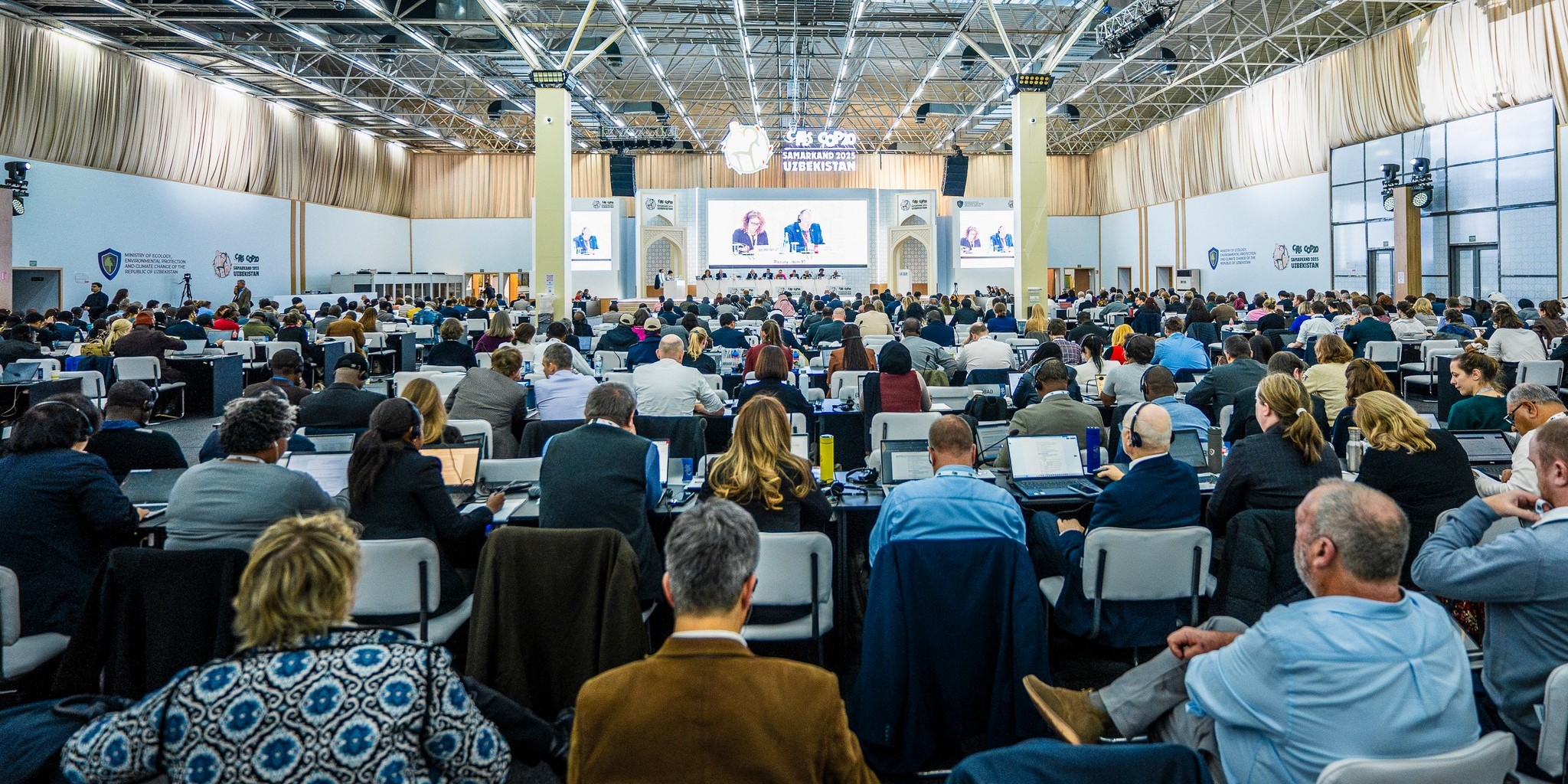 Parallel sessions of the CITIES CoP20. Photo credit to official Facebook page of CITIES
Among the key documents adopted at CITES CoP20, particular importance is attached to those addressing the role of CITES in the implementation of the Kunming-Montreal Global Biodiversity Framework, National Ivory Action Plans, and proposals to include vulnerable species such as giant guitarfish and wedgefish in the Appendices of the Convention (documents from the Conference could be downloaded here). These decisions strengthen the linkages between biodiversity conservation measures, scientific approaches and enforcement mechanisms, thereby contributing to more effective species protection and sustainable management of natural resources.
Central Asia, which hosts unique biodiversity and iconic species such as the saiga antelope and the snow leopard, faces significant challenges, including habitat loss, climate change and illegal wildlife trade. The Samarkand Declaration and the Action Plan reflect the shared commitment of countries of the region, including Turkmenistan, to consolidate efforts in nature conservation, harmonize policies and align environmental measures with socio-economic development, thereby laying a solid foundation for regional cooperation and a sustainable future.
The event supports the achievement of:
| Priority Area of REP4SD No 5 dedicated to SDG 15: “Protect, restore and promote sustainable use of terrestrial ecosystems” |
| 5.1.7 use of modern monitoring methods to account for flora and fauna species, ecosystem conditions, land resources. |
| Priority area No 6 of REP4SD dedicated to SDG 17: “Strengthen the means of implementation and revitalize the Global Partnership for Sustainable Development” |
| 6.1 Involvement of the region into implementation of global environmental conventions, programmes and initiatives. |