



Almaty, Republic of Kazakhstan, 10-11 December 2018 — The first meeting of the Working Group on the development of the Regional Environmental Programme for Sustainable Development in Central Asia (REP4SD CA) was convened in Almaty. The meeting was organized with the active support of the Deutsche Gesellschaft für Internationale Zusammenarbeit (GIZ) and brought together representatives of the International Fund for Saving the Aral Sea (IFAS), the Interstate Commission on Sustainable Development (ICSD), the United Nations Environment Programme (UNEP), as well as national partners and international organizations.
The meeting marked an important milestone in shaping the strategic vision and institutional architecture of REP4SD CA as a key regional instrument for environmental cooperation among the countries of Central Asia. The preparatory and organizational support provided by GIZ and UNEP facilitated constructive dialogue among all participants.
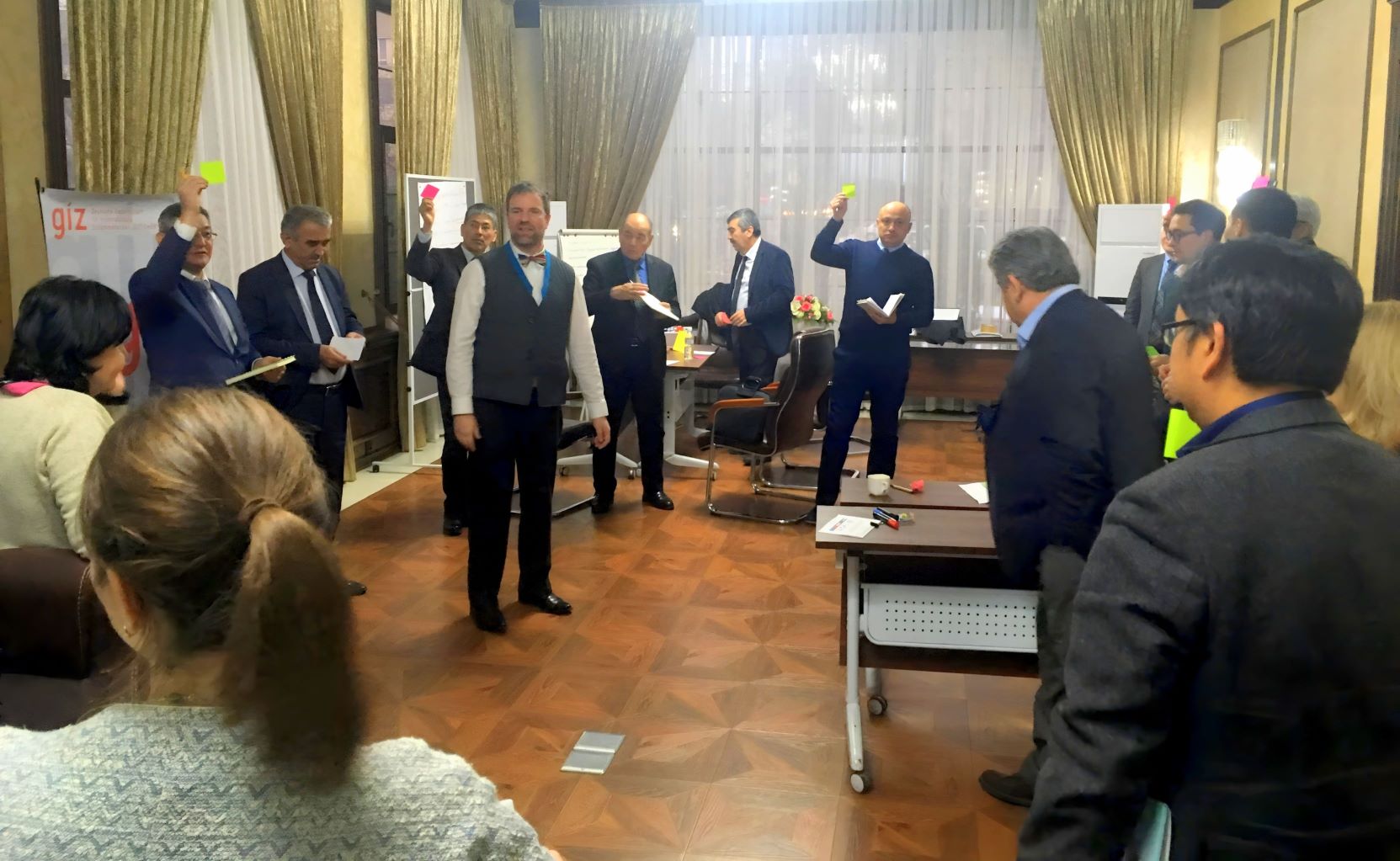 Joint work of participants of the First Regional Meeting of the Working Group. Photocredit to GIZ.
During the first day, participants discussed the conceptual framework of the Programme, its strategic objectives, and governance approaches. National proposals submitted by the countries of the region were presented and consolidated, reflecting priority areas, potential synergies, and differences in national approaches. Particular attention was devoted to climate change and adaptation issues, including the presentation of UNEP’s regional strategic guidance for mountainous areas of Central Asia.
The discussions continued in thematic working groups focusing on climate change and land management, water resources, energy, and the sustainable use of natural resources. This format enabled comprehensive deliberations and contributed to the development of proposals regarding the structure and content of REP4SD CA, taking into account the cross-sectoral nature of environmental challenges in the region.
On the second day, emphasis was placed on institutional aspects of Programme implementation, mechanisms for its adoption and management, and the strengthening of partnerships. Participants considered institutional arrangements for the implementation of REP4SD CA, enhanced engagement with donors, and the involvement of various stakeholders, including non-governmental organizations. A dedicated session addressed donor coordination and agreement on further steps to advance the Programme.
As a result of the meeting, key elements of the vision, mission, and thematic areas of REP4SD CA were agreed upon, and a roadmap for its further adoption and implementation was outlined. Overall, the meeting represented a significant contribution to strengthening regional environmental cooperation and advancing a coordinated platform for sustainable development in Central Asia.