



Ashgabat, Turkmenistan, 26-28 August 2026 — A practical training on “Applying the GACMO Methodology for Greenhouse Gas Emissions Projections in Turkmenistan” was held at the Archabil Hotel in Ashgabat, jointly organized by the Scientific-Information Centre of the Interstate Commission on Sustainable Development (SIC ICSD) and the Food and Agriculture Organization of the United Nations (FAO). The event brought together around 20 experts and representatives from various ministries and government agencies of Turkmenistan involved in climate reporting, national climate policy development, provision of data for greenhouse gas inventories, and the development of emission reduction measures, and was conducted by an international expert Ms. Aiymgul Kerimray.
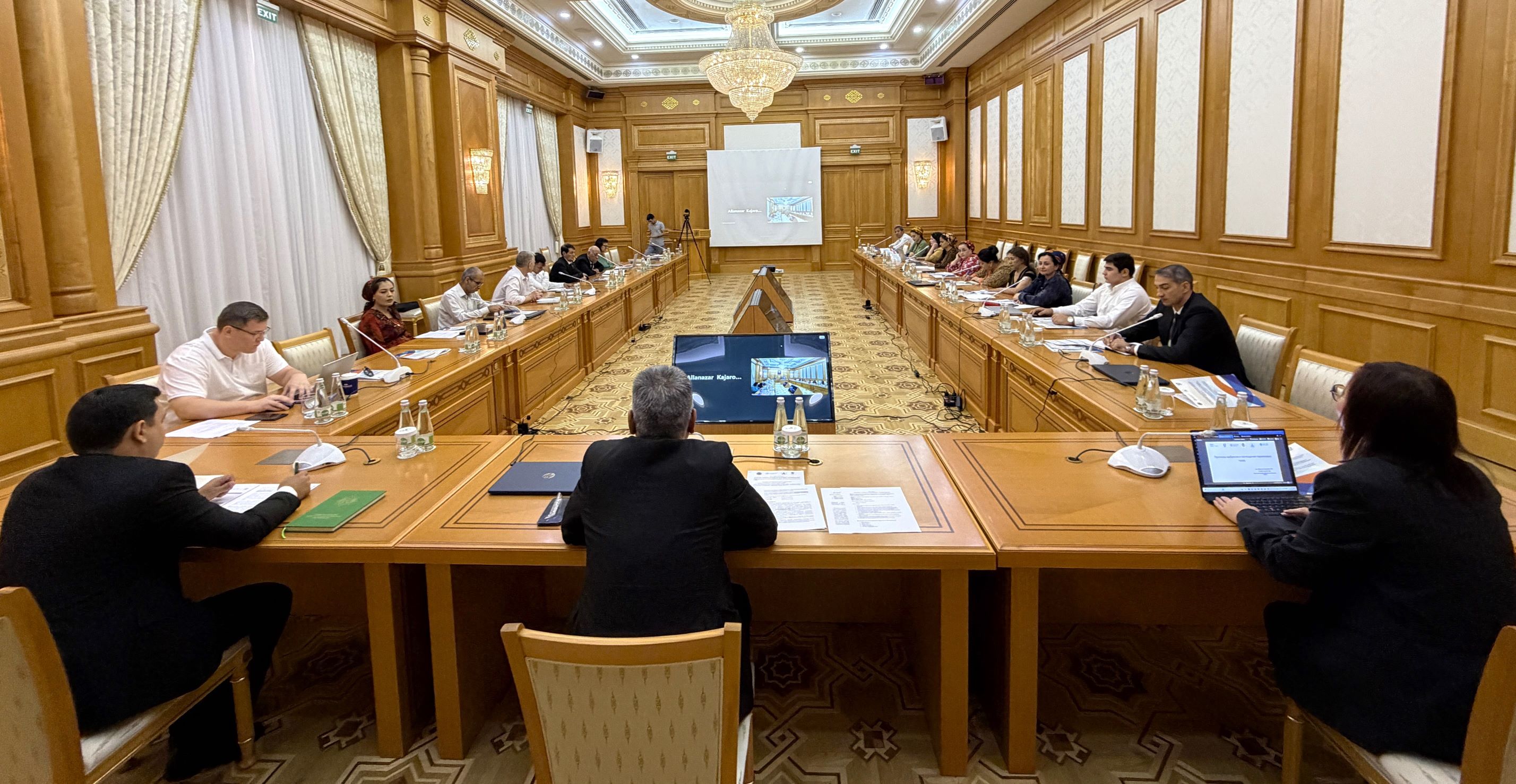 Practical Training for applying the GACMO model. Photocredit to SIC ICSD.
The training was organized in support of gender-responsive climate reporting and the further development of Turkmenistan’s Nationally Determined Contributions (NDCs). Participants gained practical knowledge in applying GACMO (Greenhouse Gas Abatement Cost Model), a methodology that enables the modelling of future greenhouse gas emission trajectories, analysis of different climate policy scenarios, and assessment of the costs of potential emission reduction measures. Particular attention was given to developing a business-as-usual (BAU) baseline scenario, designing emission reduction scenarios, working with energy balances and inventory data, and applying the tool to assess measures across the energy, transport, household, services and agriculture sectors.
The practical component of the training enabled participants to work directly with the GACMO methodology and systematically go through the main stages of scenario development, from establishing key assumptions and defining the baseline year to analysing results and developing Marginal Abatement Cost Curves (MAC Curves). A dedicated session focused on the use of GACMO results in the preparation of Biennial Transparency Reports (BTRs) and tracking progress towards the implementation of the NDCs, including the use of the relevant Common Tabular Format (CTF) tables.
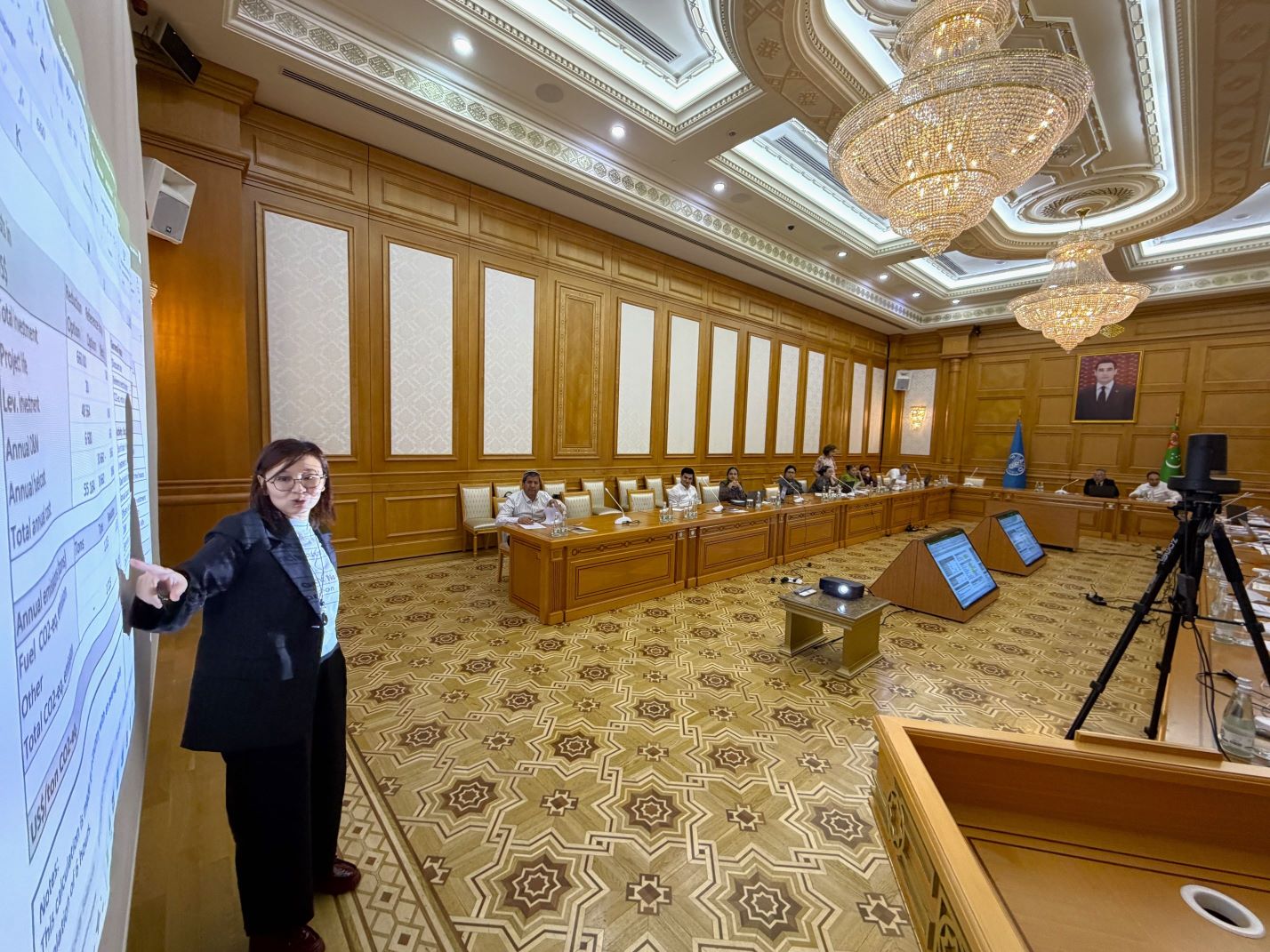 Practical Training for applying the GACMO model. Photocredit to SIC ICSD.
A key component of the event was the application of a gender-responsive approach to climate modelling and reporting. Participants explored ways to integrate gender considerations into data collection and analysis, scenario development and the selection of emission reduction measures, as well as into the preparation of qualitative sections of NDCs and BTRs. Such an approach contributes to strengthening the comprehensiveness and practical relevance of national climate reporting and is aligned with international commitments under the United Nations Framework Convention on Climate Change (UNFCCC).
The event was organized under the national project “Strengthening the Capacity of Turkmenistan to Comply with the Enhanced Transparency Framework under the Paris Agreement (CBIT)”, funded by the Global Environment Facility (GEF) and implemented by FAO and SIC ICSD. Technical support was provided through CBIT-GSP. The training also forms part of the activities identified by Turkmenistan’s stakeholders under the Roadmap and Action Plan for the Implementation of the Enhanced Transparency Framework (RAPETF) in accordance with Article 13 of the Paris Agreement.
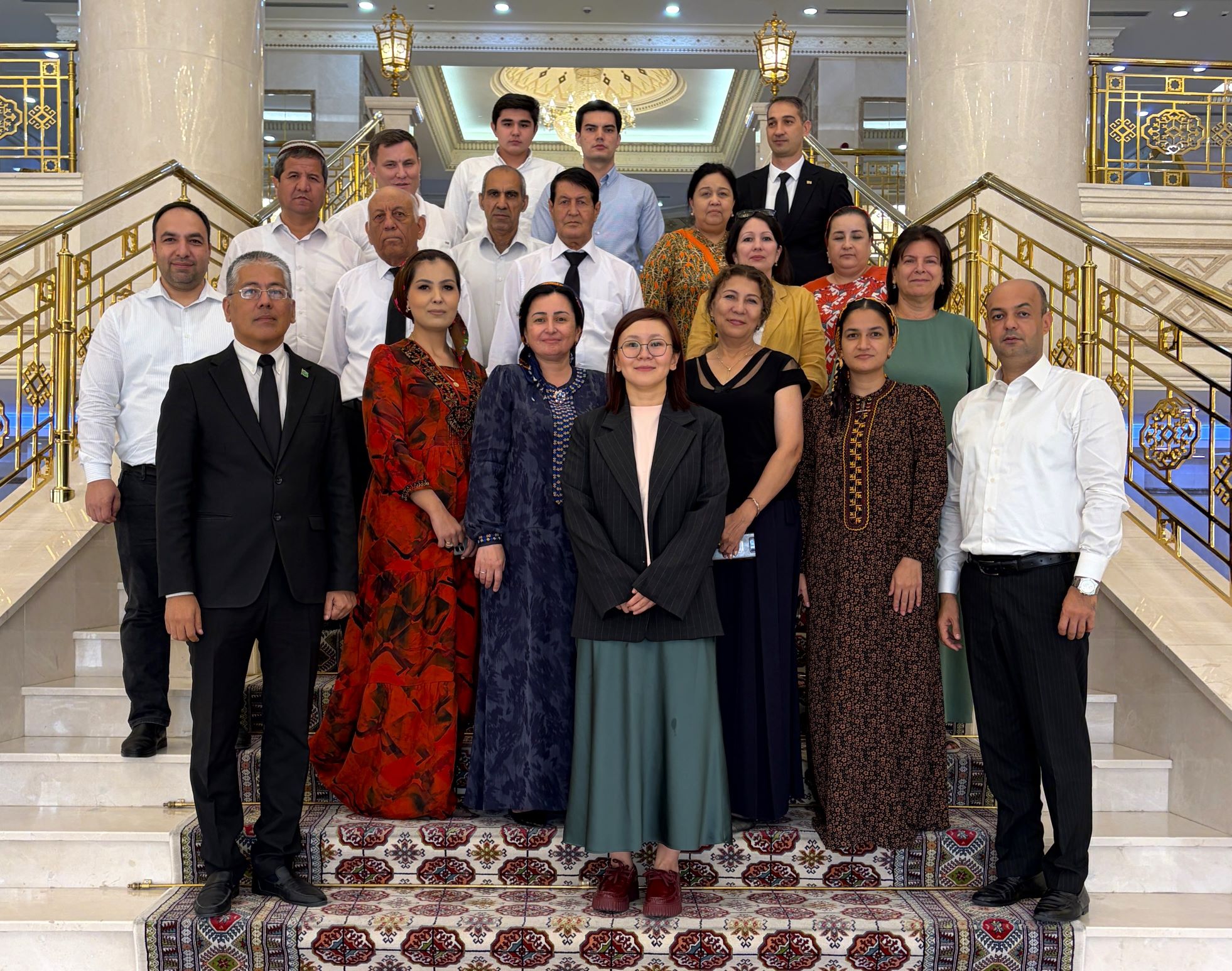 Participants of the Practical Training for applying the GACMO model. Photocredit to SIC ICSD.
Following the three-day training, participants strengthened their practical skills in applying GACMO to greenhouse gas emissions projections, assessment of mitigation scenarios and identification of potentially effective climate measures. The knowledge and skills gained provide a foundation for further strengthening national transparency systems, preparing subsequent climate reports and updating Turkmenistan’s NDCs through a more consistent, transparent and gender-responsive approach.
The event supports the achievement of:
| Priority area of REP4SD No 1 dedicated to SDG 4 on “Ensuring inclusive and equitable quality education and promoting lifelong learning op-opportunities for all” |
| 1.1 Capacity building of existing institutions including training, retraining and professional development of personnel in the field of environmental protection and sustainable development, "green" economy, climate change adaptation for interested government agencies, academic and private sectors, NGOs, etc., considering international experience. |
| Priority Area of REP4SD No 4 dedicated to SDG 13: “Take urgent action to combat climate change and its impacts” |
| 4.3 Assessment of climate risks and vulnerabilites through the application of corresponding models of a climate change impact on water resources, terrestrial ecosystems and natural disasters, tackling the development of state policies and strategies in this area. |