



Ashgabat, Turkmenistan, 11-12 February 2026 — The Scientific-Information Center of the Interstate Commission on Sustainable Development (SIC ICSD), in partnership with the Food and Agriculture Organization of the United Nations (FAO) and with the support of the Ministry of Environmental Protection of Turkmenistan, convened a national workshop entitled “Reporting Requirements under the Paris Agreement, Technical Support, Key Gaps, and Institutional and Technical Capacity Actions.” The workshop was held at the Archabil Hotel in Ashgabat under the project “Strengthening Turkmenistan’s Capacity to Comply with the Enhanced Transparency Framework under the Paris Agreement” (CBIT), funded by the Global Environment Facility (GEF).
The event brought together approximately 30 representatives of relevant ministries and government agencies, the national statistical service, scientific institutions, civil society organizations, and international partners engaged in climate policy development, data management, and national climate reporting processes.
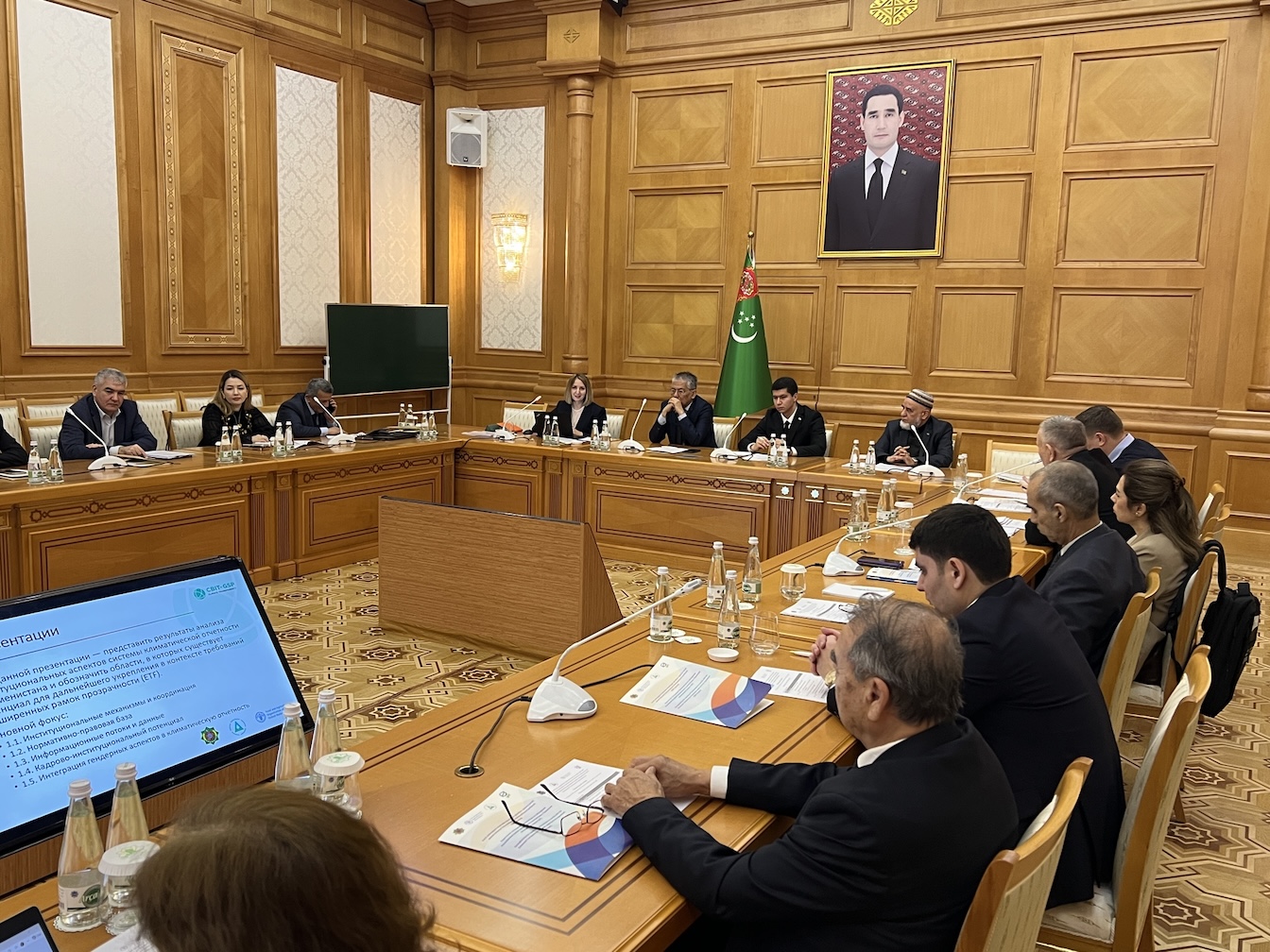 National Workshop on Reporting Requirements in progress. Photocredit to SIC ICSD.
The Paris Agreement established the Enhanced Transparency Framework (ETF) as a central mechanism for tracking countries’ progress in implementing their Nationally Determined Contributions (NDCs), preparing national greenhouse gas inventories, and strengthening mutual trust among Parties. For Turkmenistan, the implementation of ETF requirements represents both a significant institutional challenge and a strategic opportunity to modernize its climate reporting system, enhancing transparency, completeness, consistency, and comparability in line with international standards.
Under the CBIT project, SIC ICSD, in collaboration with national and international experts, conducted a comprehensive assessment of institutional and technical gaps within the national climate reporting system. As a result, a preliminary Roadmap and Action Plan (RAPETF) were developed to strengthen monitoring, reporting, and verification (MRV) mechanisms in accordance with the Modalities, Procedures and Guidelines (MPGs) of the Paris Agreement. The national workshop served as a platform to present the assessment findings, discuss priorities, and agree on next steps with key stakeholders.
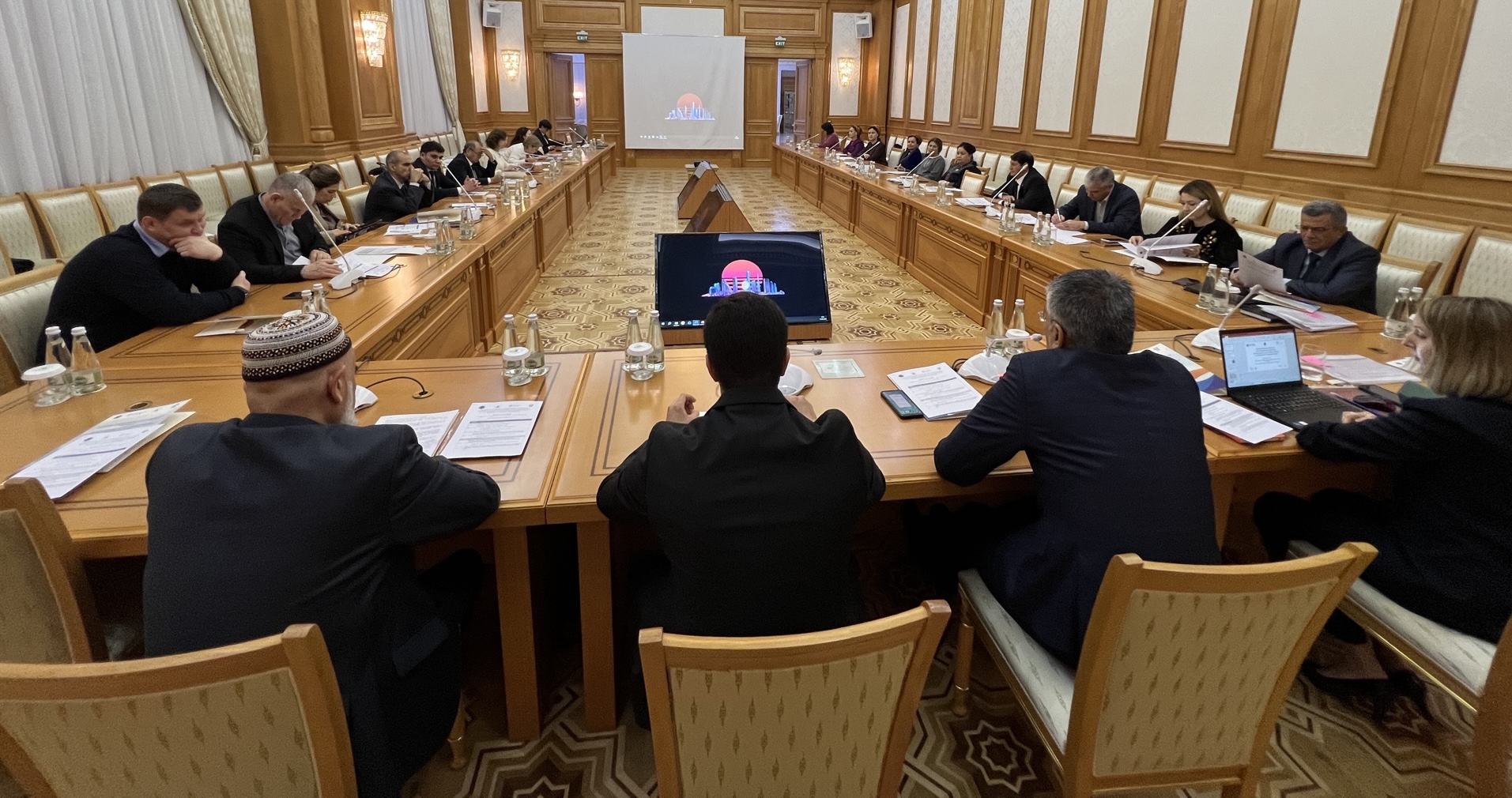 National Workshop on Reporting Requirements in progress. Photocredit to SIC ICSD.
During the two-day programme, participants examined issues related to strengthening institutional arrangements, improving greenhouse gas inventory preparation, tracking progress in NDC implementation, developing monitoring and evaluation systems for adaptation, and enhancing transparency in climate finance reporting. Particular emphasis was placed on group work, enabling participants to identify priority short- and medium-term actions, clarify institutional responsibilities, and agree on approaches for developing a gender-responsive RAPETF Action Plan.
Special attention was given to the development of tools to improve adaptation reporting and climate impact assessment, as well as to the preparation of templates and guidance for the systematic collection and reporting of climate finance data. The workshop concluded with agreement on key directions for strengthening Turkmenistan’s institutional and technical capacity in climate transparency, thereby laying the groundwork for the development of a Long-Term Low-Emission Development Strategy (LT-LEDS).
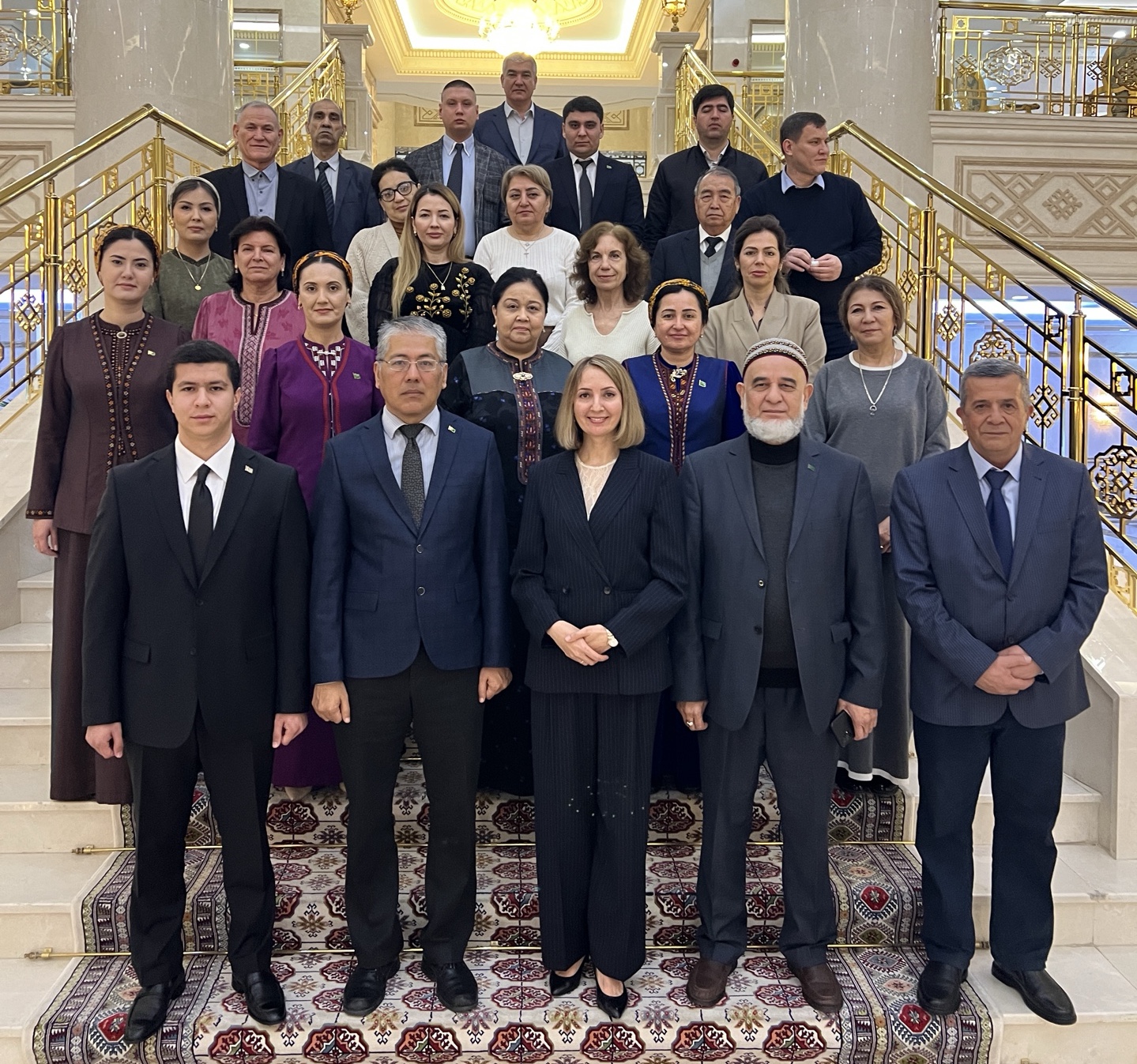
Group photo of the workshop participants. Photocredit to SIC ICSD.
The workshop reaffirmed the leading role of SIC ICSD as a national scientific and analytical platform on climate policy and international reporting, and demonstrated strong inter-agency cooperation in fulfilling Turkmenistan’s commitments under the Paris Agreement. The implementation of the project contributes to strengthening the national climate governance architecture and supports the objectives of the Regional Environmental Programme for Sustainable Development (REP4SD) by enhancing climate resilience and environmental responsibility across Central Asia.
The event supports the achievement of:
| Priority Area of REP4SD No 4 dedicated to SDG 13: “Take urgent action to combat climate change and its impacts” |
| 4.3 Assessment of climate risks and vulnerabilites through the application of corresponding models of a climate change impact on water resources, terrestrial ecosystems and natural disasters, tackling the development of state policies and strategies in this area. |