



Dushanbe, Republic of Tajikistan, 2-5 February 2026 – Representatives of the Scientific-Information Centre of the Interstate Commission on Sustainable Development (SIC ICSD) participated in a Regional Practical Training aimed at strengthening capacity in the development of greenhouse gas inventories and the assessment of climate policies in the land use, land-use change and forestry (LULUCF) sector. The event was held in Dushanbe with the support of the Central Asia Regional Climate Action Transparency Hub (ReCATH), implemented under the Initiative for Climate Action Transparency (ICAT), and hosted by the Regional Environmental Centre for Central Asia (CAREC), with technical assistance provided by the Greenhouse Gas Management Institute (GHGMI).
The training served as a continuation of a regional capacity-building event on greenhouse gas inventory methodologies and the fundamentals of climate policy assessment, which took place in October 2024 in Bishkek, Kyrgyz Republic. The current phase of the training focused on in-depth work within Modules 2 and 3, with particular emphasis on assessing the impacts of climate policies in the LULUCF sector, which plays a critical role in achieving national climate objectives across the region.
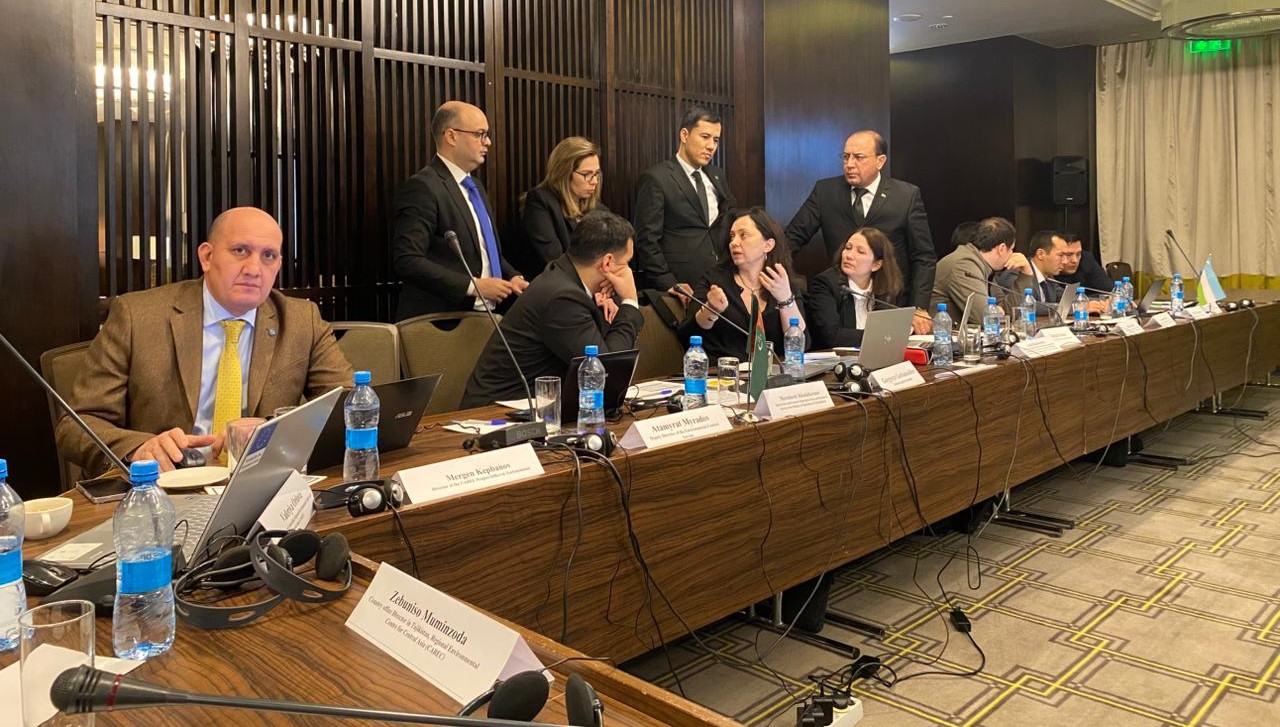 Group work during the Regional Practical Training. Photocredit to organizers of the event.
The primary objective of the training was to build and strengthen the practical knowledge and skills of members of the ReCATH Technical Working Group, national greenhouse gas inventory teams, and sectoral experts required to assess greenhouse gas emissions and removals in the LULUCF sector and to analyse related climate change mitigation measures. Through the training, participants enhanced their capacity to identify and prepare relevant data and activity parameters, track land use and land-use change processes, and apply the results to improve national greenhouse gas inventories and support the development and implementation of nationally determined contributions (NDCs).
The training programme combined theoretical and practical sessions addressing climate policy impact assessment, monitoring of NDC implementation, the application of analytical tools, including the EX-ACT model, as well as technical aspects of preparing LULUCF sector inventories in line with the guidelines of the Intergovernmental Panel on Climate Change (IPCC). Particular emphasis was placed on the exchange of national experiences, discussion of achieved results, and identification of existing challenges, contributing to a shared understanding of regional issues and potential solutions.
Following the completion of the in-person phase of the training, participants will continue working on technical assignments over the coming months, with opportunities to receive advisory support from the trainers. This approach will help consolidate the knowledge gained, deepen practical skills, and ensure their application in national contexts, thereby contributing to the further strengthening of climate action transparency and the fulfilment of international commitments by Central Asian countries under the Paris Agreement.
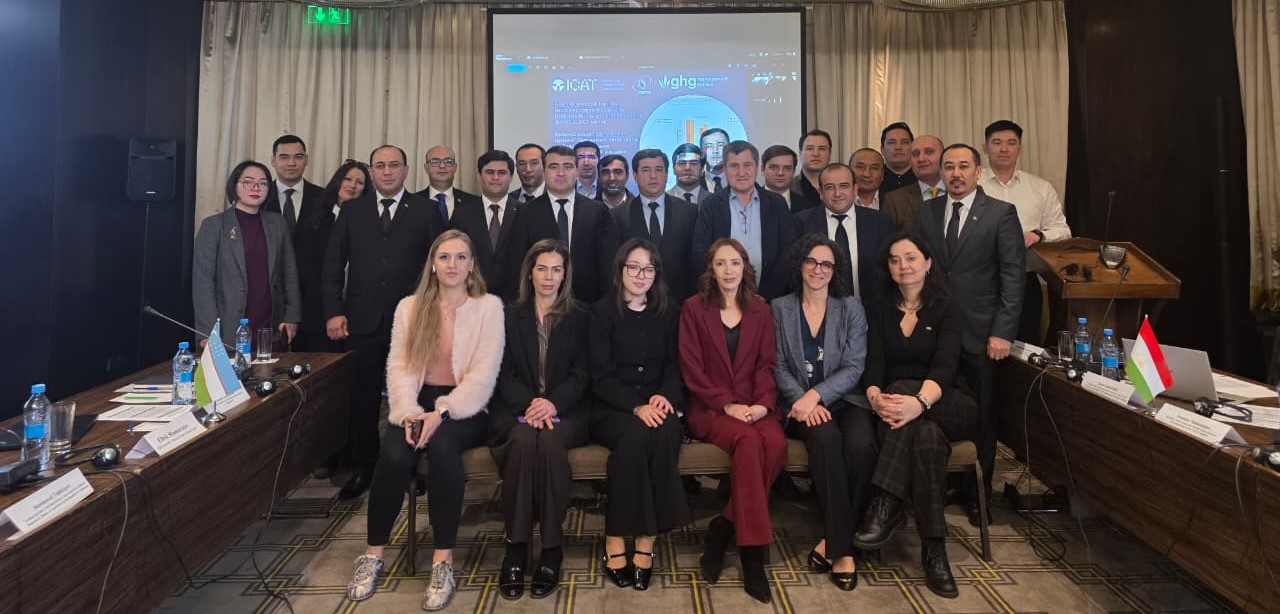 Group photo of participants of the Regional Practical Training. Photocredit to organizers of the event.
The regional training was conducted within the framework of international cooperation to enhance the capacity of Central Asian countries in the areas of climate reporting and sustainable natural resource management, and in line with the objectives of the Regional Programme on Environmental Protection for Sustainable Development in Central Asia (REP4SD).
The participation of some delegates from Turkmenistan in this Regional Training was financed under the National Project “Strengthening the Capacity of Turkmenistan to Comply with the Enhanced Transparency Framework under the Paris Agreement,” implemented by SIC ICSD with the support of the Food and Agriculture Organization of the United Nations (FAO), acting as the implementing agency of the Global Environment Facility (GEF).
The event supports the achievement of:
| Priority area of REP4SD dedicated to SDG 4 on “Ensuring inclusive and equitable quality education and promoting lifelong learning op-opportunities for all” |
| 1.1 Capacity building of existing institutions including training, retraining and professional development of personnel in the field of environmental protection and sustainable development, "green" economy, climate change adaptation for interested government agencies, academic and private sectors, NGOs, etc., considering international experience. |
| Priority Area of REP4SD No 4 dedicated to SDG 13: “Take urgent action to combat climate change and its impacts” |
| 4.3 Assessment of climate risks and vulnerabilites through the application of corresponding models of a climate change impact on water resources, terrestrial ecosystems and natural disasters, tackling the development of state policies and strategies in this area. |